
Is Maca Root Safe During Pregnancy
Is Maca Root Safe During Pregnancy?
Updated on
Reviewed by TMT editorial board

Pregnancy is a time when expectant mothers tend to pay special attention to diet and lifestyle. Pregnant women are often advised to avoid certain foods, drinks, medications, herbs, and supplements to minimize unnecessary risk during pregnancy.
Over the years, as maca root has become more popular, we’ve received more questions about whether maca is appropriate during pregnancy. It’s an important question and one that deserves a careful answer.
In this article, we’ll explore the traditional use of maca, the limits of current research, and the main considerations to keep in mind when deciding whether to use maca root products while pregnant or breastfeeding.
Simple answer:
If you are pregnant or breastfeeding, please speak with a qualified healthcare professional before using maca regularly.
Maca is a traditional Peruvian food, but pregnancy and nursing are special times. Modern clinical research on maca use during pregnancy is limited, so a cautious approach is best.
An Overview of Maca
Maca root is a vegetable native to the high-altitude regions of Peru. It grows at extreme elevations in rocky soils and a harsh mountain climate. Traditionally, people in maca-growing regions have used it as a food, often dried, cooked, powdered, or prepared in drinks and porridges.
More recently, maca root products have become available around the world in forms such as powders, capsules, extracts, chips, and blends. Nutritionally, maca contains carbohydrates, fiber, amino acids, minerals, and other naturally occurring plant compounds.
Because maca is a concentrated food powder when sold as a modern supplement, it is worth being thoughtful about serving size, product quality, and individual health circumstances, especially during pregnancy.
The Traditional Use of Maca During Pregnancy
For generations, maca has been eaten in the high Andes of Peru as part of the traditional diet. In maca-growing regions, some women have consumed maca before, during, and after pregnancy as part of normal food culture.
That traditional use is worth noting. At the same time, it does not automatically mean that every pregnant person should begin taking maca powder, capsules, or extracts without caution.
There are a few important differences to keep in mind:
- People in maca-growing regions may be accustomed to eating maca as part of a long-term traditional diet.
- Modern maca products can be more concentrated or used differently than traditional food preparations.
- Pregnancy is a time when individual health history, diet, medication use, and medical guidance matter.
- There is limited modern clinical research specifically evaluating maca use during pregnancy.
For that reason, we recommend speaking with a qualified healthcare professional before adding maca during pregnancy or breastfeeding, especially if you are new to maca.
Potential Risks and Considerations
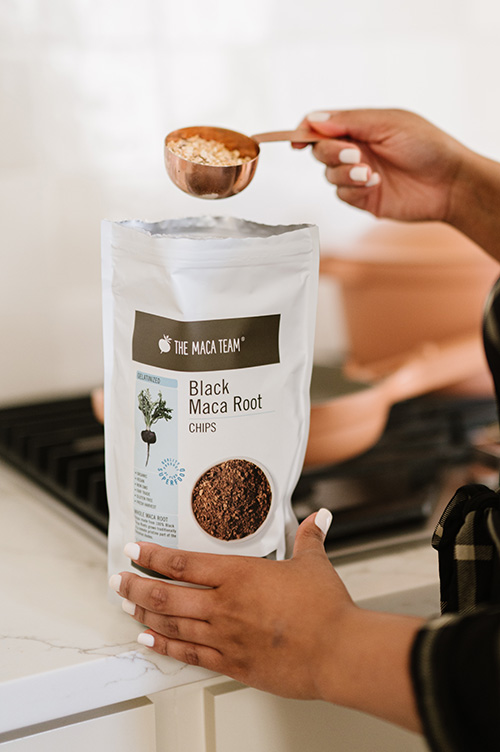
Maca is a traditional food, but pregnancy is a special situation. There are no well-established pregnancy-specific safety conclusions for maca in modern clinical research, so caution is appropriate.
Here are the main considerations to keep in mind:
- Limited pregnancy-specific clinical data: Scientific studies have not thoroughly evaluated maca use during pregnancy, so its effects during pregnancy are not well understood.
- Individual health history matters: Pregnancy, thyroid concerns, hormone-sensitive health concerns, medication use, blood pressure concerns, and other medical factors should be discussed with a qualified healthcare professional.
- Serving size matters: Like any concentrated food powder or supplement, maca should be used thoughtfully. More is not better, especially during pregnancy.
- Product form matters: Powders, capsules, extracts, chips, and blends are not all the same. Extracts and blends may be more concentrated or include additional ingredients.
- Quality matters: Choose high-quality, certified organic maca from a reputable supplier that tests for heavy metals and other contaminants.
- Your body’s response matters: If maca does not feel right, stop using it and speak with your healthcare professional.
Things to Discuss With Your Healthcare Professional
If you are considering maca while pregnant or breastfeeding, it may help to bring a few specific questions to your doctor, midwife, pharmacist, or qualified healthcare professional.
- Is maca appropriate for me during pregnancy or breastfeeding?
- Is there any reason I should avoid maca based on my health history?
- Could maca be a concern with my thyroid, blood pressure, hormones, or medications?
- Should I avoid maca extracts or blends and use only simple maca powder?
- What serving size would be appropriate if you think maca is acceptable for me?
- Are there any symptoms or changes I should watch for?
This kind of individual guidance is more useful than a general yes-or-no answer.
If You Used Maca Before Pregnancy
Some people ask whether they can continue maca if they were already using it regularly before pregnancy.
That is a different situation from starting maca for the first time during pregnancy. If maca was already part of your normal food routine, your healthcare professional may evaluate it differently than if you are adding a new supplement during pregnancy.
Even so, it is still wise to ask. Pregnancy can change digestion, taste preferences, food tolerance, medication use, and nutritional needs. Something that felt fine before pregnancy may not feel the same during pregnancy.
If You Are New to Maca
If you are pregnant and have never used maca before, we recommend being especially cautious. Pregnancy is usually not the best time to experiment with new supplements or concentrated food powders without professional guidance.
If your healthcare professional says maca is appropriate for you, start small, choose a simple high-quality product, and avoid changing several things in your routine at once.
Many people who are new to maca begin with a small amount of powder mixed into food. During pregnancy, however, the serving size and timing should be discussed with your healthcare professional.
Quality Matters During Pregnancy
Product quality is always important, but it matters even more during pregnancy.
If you and your healthcare professional decide that maca is appropriate for you, choose a maca product that is:
- Grown in Peru
- Certified organic
- Made without unnecessary additives or fillers
- Clearly labeled
- Tested for heavy metals and other contaminants
- Sold by a company that can answer sourcing and quality questions
At The Maca Team, quality and testing are central to how we source and sell maca. You can also read more about maca and heavy metals and our approach to clean, carefully sourced products.
When to Stop or Avoid Maca During Pregnancy
If you are using maca during pregnancy with professional guidance, continue to pay close attention to your body.
Stop using maca and check with your healthcare professional if you notice digestive discomfort, nausea that worsens, sleep changes, restlessness, headaches, blood pressure changes, allergic-type reactions, or anything else that feels unusual for you.
You may also find that maca simply stops appealing to you during pregnancy. Taste and food preferences can change quickly during this time. If your body clearly says no, it is fine to stop.
Final Thoughts
The guaranteed safety of using maca during pregnancy remains inconclusive because modern pregnancy-specific research is limited. While maca has a long history of traditional food use in Peru, pregnancy and breastfeeding are times when a cautious, individualized approach is best.
So, is maca root safe during pregnancy?
The most responsible answer is: ask your qualified healthcare professional before using maca while pregnant or breastfeeding. This is especially important if you are new to maca, taking medication, managing a medical condition, have thyroid concerns, have hormone-sensitive health concerns, or have any doubts.
If you and your healthcare professional decide maca is appropriate, choose a high-quality product, start small, use it thoughtfully, and listen to your body.
We hope this article has helped answer your question. If you need help understanding our maca products or quality standards, please let us know.
Enjoy the day!
Helpful Next Steps