

Bringing More Intention to Your Everyday Life with Maca Root
Modern life can make it difficult to slow down and appreciate the little things. Between work responsibilities, household tasks, errands, and endless notifications, many people

Maca is caffeine-free, but can it affect sleep? Explore what studies tell us about maca, energy, insomnia, and sleep quality—and where the science is still uncertain.

If you’ve heard that maca can help with energy, you might be wondering whether taking it could also keep you awake at night. It’s a fair question, especially if you’re sensitive to caffeine or already have trouble sleeping.
Maca is often described as energizing, but it’s quite different from coffee or an energy drink.
Let’s look at what research actually says about maca, alertness, and sleep.
Maca contains no caffeine and hasn’t been shown to act like a conventional stimulant. Some people report feeling more energetic or alert while taking it, and occasional reports of disrupted sleep exist. However, there is no convincing evidence that maca commonly causes insomnia.
If you’re concerned about sleep, trying maca earlier in the day is a sensible starting point. The evidence is still limited, so your own response matters.
No. Maca root is naturally caffeine-free.
Maca is a Peruvian Andean root vegetable containing carbohydrates, fiber, and plant compounds such as glucosinolates and macamides—but not caffeine. [6]
That’s an important difference. Caffeine blocks adenosine receptors in the brain, temporarily reducing feelings of tiredness. It’s why a cup of coffee can help you feel more awake—and why drinking one too late can interfere with sleep.
You shouldn’t expect maca to give you the same immediate jolt as coffee. And although people associate maca with increased energy, that doesn’t automatically mean it will make falling asleep difficult.
Maca’s association with energy and stamina goes back generations. In Peru, it has long been associated with nourishment and endurance.
Here at The Maca Team, we’ve specialized in Peruvian maca since 2006. Many customers tell us they feel more energetic when taking maca regularly.
Research has explored that connection, too.
In a 2016 randomized, double-blind, placebo-controlled study, researchers followed 175 adults assigned to red maca extract, black maca extract, or placebo for 12 weeks. Among participants living at low altitude, those taking maca reported improvements in perceived energy compared with placebo. Results were particularly encouraging for red maca. [1]
But the researchers measured changes in how energetic people felt over time. They weren’t testing immediate stimulation or sleep disruption, and the findings don’t necessarily apply to every maca preparation.
Feeling more energetic during the day isn’t the same as feeling wired at bedtime. That’s why we prefer to think of maca as a traditional food associated with vitality rather than simply calling it a natural stimulant.
Maca may interfere with sleep for some people, but we don’t know how often.
Memorial Sloan Kettering Cancer Center includes insomnia among subjective adverse reactions reported with maca. [7]
A small 2008 study involving 16 participants taking maca for antidepressant-associated sexual dysfunction recorded one case of sleep disruption. Researchers noted that reported effects were temporary and that a direct connection with maca was difficult to establish. [2]
Meanwhile, the larger 2016 study of red and black maca extracts found that both were generally well tolerated, with no serious adverse effects reported. [1]
Sleep disruption is worth paying attention to, but it isn’t an established or inevitable effect of maca.
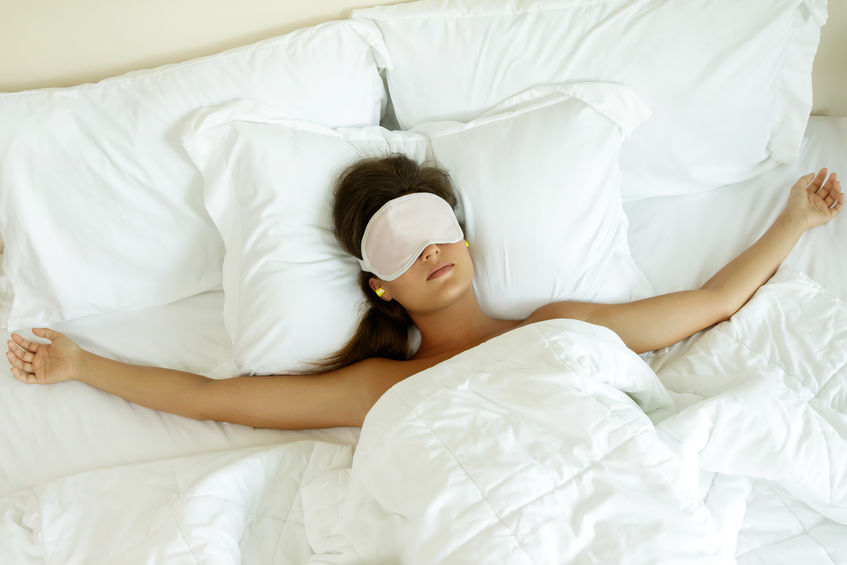
Surprisingly few studies focus on maca and sleep. In 2024, researchers at the Federal University of São Paulo published a scientific letter highlighting the need for more studies examining maca’s potential effects on sleep and quality of life. [3]
A few studies have focused on menopausal symptoms.
For example, a small 2006 study of perimenopausal women reported improvements in interrupted sleep patterns and other menopause-related symptoms during maca use. [4]
More recently, researchers in Japan conducted a randomized, double-blind, placebo-controlled study of maca extract and sleep quality in postmenopausal women. Participants took maca extract or placebo before bed for eight weeks. Those receiving maca scored better than the placebo group on a questionnaire measure of recovery from fatigue, and some menopause-related symptoms improved. [5]
Because participants took maca at bedtime, the finding suggests nighttime use doesn’t necessarily disrupt sleep. But it doesn’t prove maca treats insomnia.
These studies were small and used particular maca preparations. For now, we wouldn’t recommend maca specifically as a sleep supplement. The research simply offers a more balanced picture than the idea that maca always makes people more alert.

We usually suggest morning as a starting point, especially if you’re new to maca or sensitive to anything that seems to affect your energy. There isn’t a scientifically established cutoff time, though, and some people take maca later without any sleep problems.
We’ve covered the practical side in more detail in our article Will Maca Keep Me Up at Night? You’ll find tips there on serving size, taking maca with food, and adjusting your routine if sleep is a concern.
For a broader look at timing—not just sleep—see our guide on when to take maca.
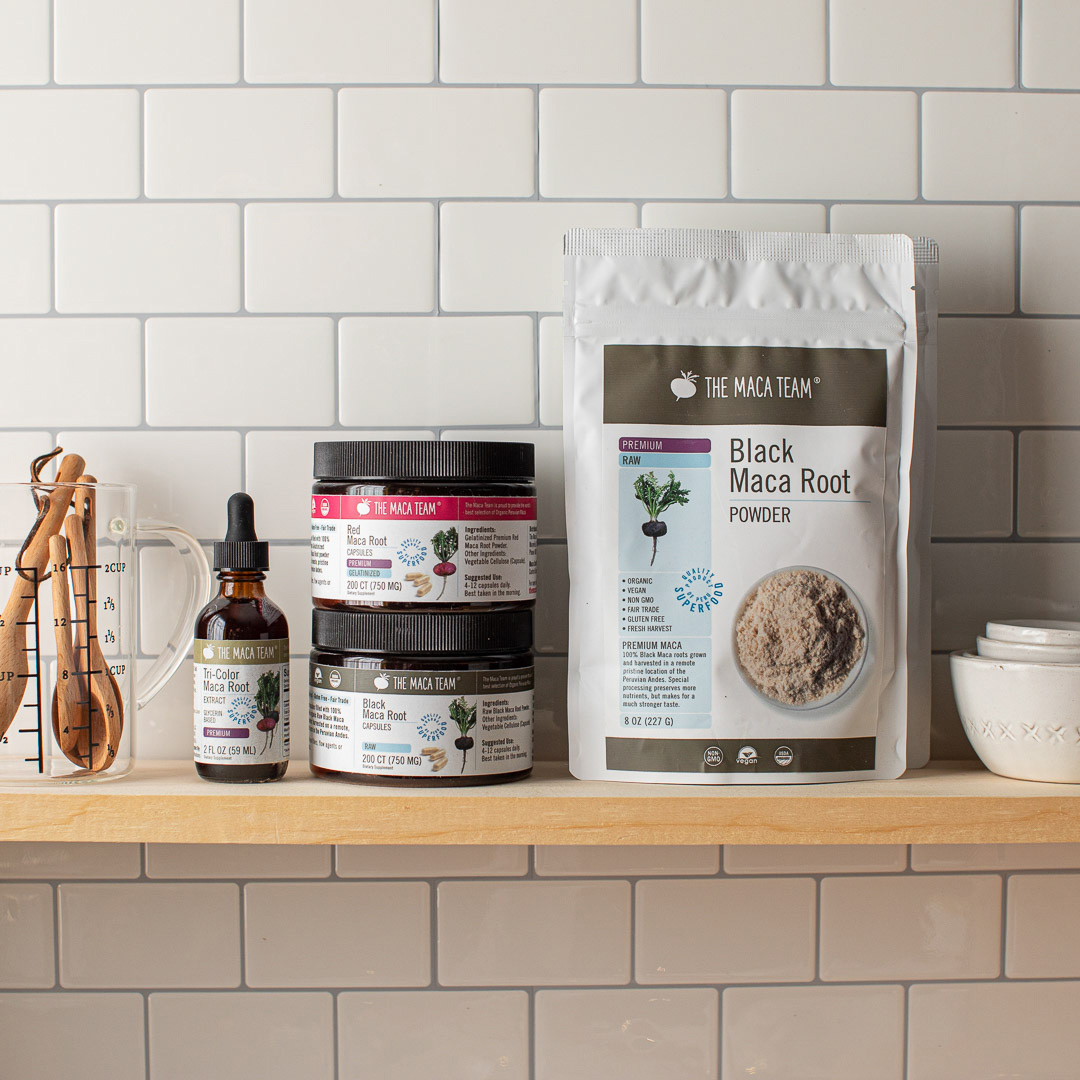
Maca comes in yellow, red, and black varieties, as well as blends, powders, capsules, and extracts. Research hasn’t shown that any one preparation is more likely to disrupt sleep.
For example, the 2016 study found some differences in perceived energy between red and black maca extracts. That doesn’t establish that black maca is more stimulating or that red maca is better at bedtime.
See our guide to black, red, and yellow maca.
Likewise, raw and gelatinized maca differ in processing and starch content, but neither has been shown to be consistently better for sleep.
Your serving size, timing, and individual response are probably more useful things to focus on.
If your sleep changes after you start maca, consider taking it earlier in the day, reducing your serving, or stopping it to see whether your usual sleep pattern returns. Also check what’s in your maca drink: coffee, matcha, and cacao may add caffeine, even though maca itself is caffeine-free.
For more on serving amounts, our maca dosage guide explains the options. Persistent sleep problems can have many causes, so it’s worth talking with a healthcare professional rather than assuming maca is responsible.
Not in the immediate, caffeine-like sense. Some studies have found improvements in perceived energy over several weeks, but they weren’t designed to show that one serving of maca makes someone more alert or keeps them awake at night.
We wouldn’t recommend maca as a way to push through sleep deprivation. Even when people feel more energetic with regular use, maca hasn’t been shown to reliably override sleepiness. If you’re consistently exhausted, it’s important to look into why.
Maca is caffeine-free and doesn’t act like coffee. Some people report feeling more energetic or alert after taking it, while occasional sleep disruption has also been reported. Limited research has found improvements in certain sleep-related symptoms, particularly in peri- and postmenopausal women.
Everyone’s response may be a little different, and the science isn’t conclusive. Our suggestion is simple: start with a modest amount, take it in the morning, and pay attention to how you feel.
If maca fits comfortably into your routine and you’re sleeping well, there’s probably no reason to worry about it keeping you awake.
Start with our beginner guide, or explore the different forms of organic Peruvian maca to find the one that fits your routine.