
Maca Sustainability
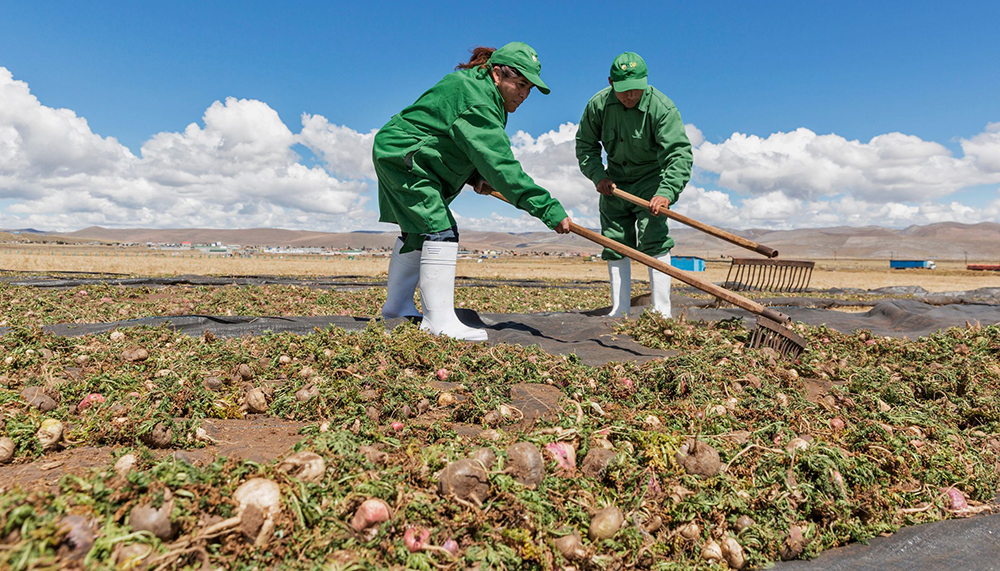
What Sustainability Means in the Andes
The high Andes are one of the world’s most fragile agricultural environments. The altitude brings freezing nights, powerful UV radiation, high winds, and thin soils. Very few crops can grow in this harsh environment — and maca is one of the rare exceptions.
For farmers in the region, sustainability involves:
- Cyclical land use rather than continuous farming (essential for cultivating maca well)
- Observing natural growing seasons
- Respecting communal grazing rights
- Maintaining biodiversity across small plots
- Protecting high-altitude ecosystems from erosion and overuse
These aren’t modern sustainability practices.
They are the original ones — passed from parent to child over generations.
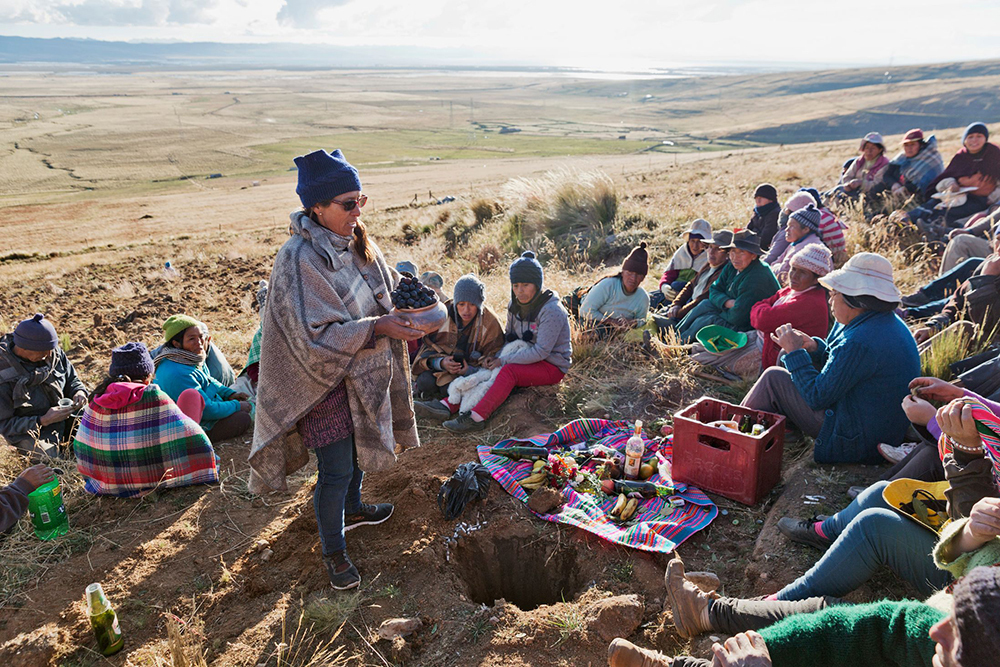
Hand Planting/Harvesting & Soil Regeneration
The soil in which maca grows plays a major role in the overall quality of the roots produced. For this reason, traditional farming honors the land in a variety of ways.
First, before every planting season, a ceremony is held called pago a la tierra (“payment to the earth”). During this ceremony, farmers bring items such as food, tobacco, and cloth out to the fields and bury them in a ritual believed to support the fecundity of the land.
Second, maca is planted in undisturbed soils by hand. This extra care helps preserve:
- Soil microbiome health
- Moisture retention
- Natural mineral balance
- Resistance to erosion
- Carbon storage in high-altitude soils
Third, after harvest, maca fields are rested and rehabilitated for 7–10 years before being planted again. This rotational cycle prevents nutrient depletion and allows the land to fully regenerate without intervention.
Large-scale maca operations rarely follow these cycles. Our partners always do.
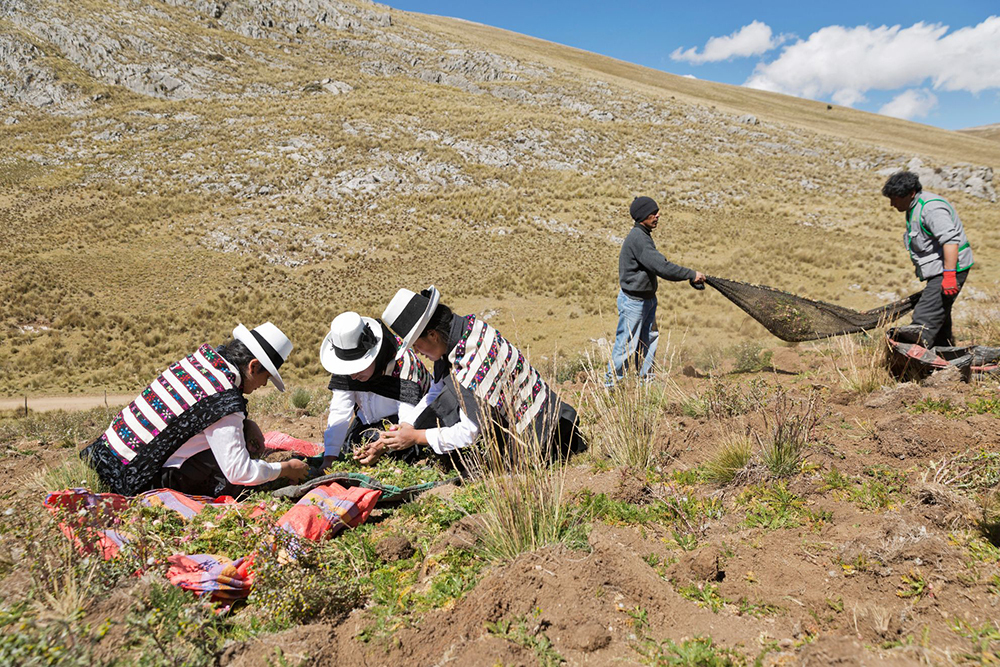
Micro-Crop Protection & Preventing Monoculture
Traditional maca is grown in small, scattered plots, each carefully selected based on soil quality, elevation, and existing biodiversity.
This helps prevent:
- Monocrop disease pressure
- Soil exhaustion
- Over-concentration of agricultural activity
- Habitat loss for native species
Micro-plot agriculture also helps preserve genotypic diversity — meaning yellow, red, and black maca varieties remain genetically distinct. This is one reason small-farm Peruvian maca is often more nutritionally robust than large-scale, low-altitude crops.
Traditional Sun-Drying
Drying is one of the most important steps in maca production.
Our partner communities typically use natural, high-altitude sun-drying, which:
- Requires zero fuel or electricity
- Enhances maca’s natural sweetness and aroma
- Improves long-term stability
- Helps preserve micronutrients
- Reflects traditional Andean post-harvest practice
For our premium maca products, fresh roots are dried in large low-temperature dehydrators (below 40°C / 120°F) in order to preserve glucosinolate content at the highest levels possible.
Small-Batch Milling Reduces Waste
After drying, maca roots are milled in small batches to support freshness and reduce waste.
This helps us achieve:
- Better control over oxidation
- Lower energy consumption
- Minimal product loss
- Higher-quality powder with consistent texture
Small-batch milling also supports lot-level tracking with precision — improving safety and reducing unnecessary overproduction.
Sustainable Packaging — Now & Future Goals
Maca is sensitive to light, humidity, and oxygen. So quality packaging is crucial to keep it fresh and potent. Even so, we strive to minimize our packaging footprint wherever we can.
Our current packaging efforts include:
- Recyclable jars and pouches
- Low-oxygen inner liners that reduce food waste by extending freshness
- Minimal ink printing to reduce chemical use
- Optimized bag sizes to avoid excess material
Future development goals:
- Compostable packaging that still protects powder integrity
- Fully mono-material pouches to simplify recycling
- Lightweight refill bags
- Carbon footprint tracking per shipment
We always balance sustainability with the need to keep powdered foods safe, dry, and stable — but the direction is clear.
Community Sustainability: Beyond Agriculture
Ecological sustainability cannot be separated from community sustainability in the Andes. Traditional maca farming relies on cohesive, thriving communities that pass on knowledge and care for the land.
Our support includes:
- Fair, predictable pricing so farmers can plan for the future
- Long-term partnerships rather than spot-buying
- Support for local decision-making, not imposing outside systems
- Cultural preservation — respecting traditional growing rhythms and rituals
Healthy communities create healthy agriculture.
Addressing Common Concerns About Maca & Sustainability
Is maca over-harvested?
Not when grown in traditional high-altitude micro-plots. The issues reported in global media typically relate to lowland, mass-produced maca, which we do not source from. Our partner communities maintain strict rotational planting cycles that prevent overuse.
Is climate change affecting maca availability?
Climate shifts impact Andean agriculture — but high-altitude maca remains relatively resilient due to its cold-adapted nature. We support farmers by providing stable pricing, supporting multi-year planting cycles, and avoiding pressure to overproduce.
Are outside buyers disrupting communities?
In some regions, yes. Large buyers can push yields beyond what the land can sustain, encourage lowland expansion, and weaken traditional cooperative structures. Our approach is the opposite: we work only with long-established, community-run farms, avoid intermediaries, and uphold traditional production rhythms.
Our goal is reciprocity — a true win-win-win for our farmers, our customers, and our small company.
Explore Further
Want to see how we verify purity and safety before maca reaches your home?
→ See our Lab Testing & COAs