
Maca and Emotional Well-Being

If you’re interested in how maca root may support emotional well-being, resilience, and overall feelings of wellness, you’re in the right place. In this article we take a closer look at maca and emotional well-being, including traditional use, research, customer experiences, and suggested use.
- Introduction to Maca Root
- Is Maca Good for Emotional Well-Being?
- How Maca May Support Emotional Well-Being
- What Science Says About Maca and Emotional Well-Being
- Customer Experiences
- Which Maca Is Best?
- How to Use Maca
- Frequently Asked Questions
- Related Topics
- Final Words
Introduction to Maca Root
What exactly is maca root? The maca plant, scientifically known as Lepidium meyenii Walpers, is a root vegetable that grows in the Andes mountains at extreme altitudes. Maca root has been cultivated in Peru and Bolivia for centuries. People native to the region have used it as a dietary staple, a traditional wellness food, and as a food for livestock.
Today, maca is still valued for its strong nutritional profile. See our full maca nutrition facts page for more detail. Maca root contains a variety of vitamins, minerals, and essential amino acids. It is often considered a superfood because it is nutrient-dense while remaining relatively low in calories. It also contains two compounds unique to maca root: macaenes and macamides, which are often discussed in relation to maca’s broader wellness-supporting properties.
Is Maca Good for Emotional Well-Being?
Maca is widely known for its relationship to energy, vitality, and hormonal wellness, but many people also use it as part of routines centered on emotional well-being. Research and user experience both suggest that maca may be relevant to mood balance, resilience, and overall quality of life.
Maca is also frequently discussed in relation to stress balance and mood balance, both of which can influence how we feel day to day.
How Maca May Support Emotional Well-Being

Maca may support emotional well-being in several different ways:
- Maca contains flavonoids and other plant compounds that researchers have studied in relation to mood and overall wellness.
- Maca is often described as an adaptogen. Adaptogens are naturally occurring substances traditionally associated with helping the body maintain balance during periods of physical or emotional stress.
- Maca is rich in nutrients including vitamins B1 and B2, calcium, magnesium, and other compounds that support overall health.
- Maca is also often discussed in relation to hormonal wellness, which can influence energy, resilience, and day-to-day emotional balance.
Researchers are still working to better understand the full mechanisms behind these effects, but interest in maca’s relationship to emotional well-being continues to grow.
What Science Says About Maca and Emotional Well-Being
To date, several research studies have looked at maca in relation to mood, quality of life, and psychological well-being. While scientists have not fully isolated all of the mechanisms involved, the research is promising.
- A 2011 review of maca includes historical testimony about the indigenous population’s belief in maca root’s ability to elevate mood.
- In 2008, researchers studying maca found that regular consumption was associated with reduced psychological symptoms in the women studied.
- A 2014 study found that regular consumption of maca extract by laboratory mice produced an “antidepressant-like” effect in that experimental setting.
- In 2016, another study reported improvements in quality-of-life measures relating to energy, health, and mood.
Overall, the existing research suggests maca may be relevant to emotional well-being and overall quality of life, though more human research is still needed.
Customer Experiences
In over 20 years of sourcing and selling high-quality Peruvian maca products, we’ve received many reviews and testimonials from customers. A number of these mention emotional well-being, resilience, and a more positive day-to-day outlook. Here is a small sample. Read more on our customer feedback page.
"I am so grateful for this stuff. I feel happier, get stressed less, and feel more emotionally steady than before. I also have more energy and can think more clearly." - Thacia
"I started taking your red maca about 6 weeks ago and noticed a real difference right away, especially in my energy level and overall mood." - Leah
"I can already see a difference in my overall mood, energy, and attitude. I can’t say enough good things about this company and the products." - Lauren Sawyer
"I’ve been exploring the full benefits maca has to offer, and one of the biggest things I’ve noticed is a calmer, more centered feeling." - Divyan Chris
"Both my husband and I have more energy, and my hormones are staying balanced so I am happy." - Wanda
"Later in the day I noticed a bounce in my step that I had not noticed before. I also noticed being more calm and settled within myself." - Vicki Smith
Which Maca Is Best?
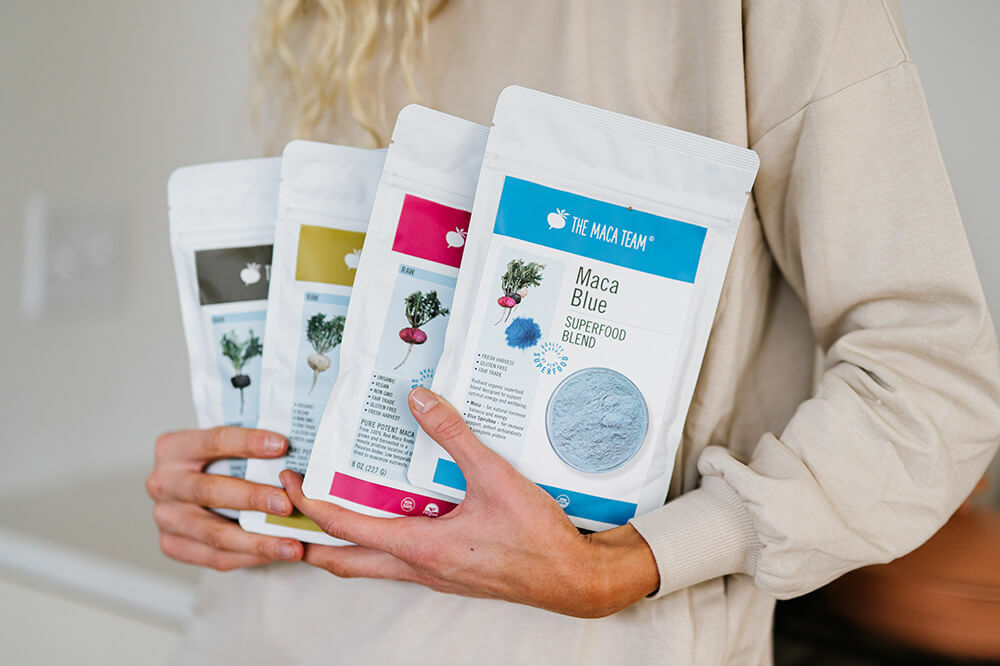
Many studies and customer reports on maca and emotional well-being have centered on black maca root and red maca root, with red maca appearing especially often in this area.
If you are new to maca, we generally recommend starting with our gelatinized (pre-cooked) red maca products. The gelatinization process removes much of the starch content and makes maca easier to digest. Another convenient option is a red maca liquid extract.
All of our maca products are sourced from our farming co-operative in Peru and are certified organic, Fair Trade, and non-GMO. They are shipped in small batches at peak season to help ensure freshness.
How to Use Maca

- Make maca a regular part of your routine. Many people use it consistently for 6–8 weeks before evaluating how it fits into their lives.
- Maca is a food, so it works best as part of a balanced diet and healthy lifestyle.
- Start small. Your maca serving size may vary, but a common starting range is 1–3 teaspoons of maca powder per day depending on body size and goals.
- Many people prefer consuming maca early in the day, often with breakfast.
See our Maca FAQs for more information.
Frequently Asked Questions
Can maca help with mood?
Maca is often discussed in relation to emotional well-being, resilience, and overall quality of life. Research is ongoing, and individual experiences vary.
Does maca support emotional well-being?
Some studies and many customer experiences suggest maca may be helpful as part of routines centered on emotional well-being and mood balance.
Which maca is best for emotional well-being?
Red maca is a common starting point, though black maca is also often used depending on individual preferences and goals.
How long does maca take to work?
Because maca is a food rather than a medication, many people use it consistently for several weeks before evaluating how it fits into their routine.
Related Topics
- Maca and Mood Balance
- Maca and Stress Balance
- Maca and Cognitive Focus
- Maca and Cognitive Health
- Maca and Natural Energy
- Learn more about all maca benefits
Final Words on Maca and Emotional Well-Being
Maca root is a nutrient-dense traditional food and a well-known adaptogen that may contribute to emotional well-being as part of a balanced diet and healthy lifestyle. Historical testimony, modern research, and customer experiences all suggest that maca may support a greater sense of resilience, vitality, and overall wellness.
Research is still ongoing, but many people find maca to be a meaningful addition to their routines.
Learn more about all maca benefits >
Enjoy the day!