
How Maca Works

People new to maca often ask us how maca works.
That matters because maca is easy to oversimplify. It is often described in broad terms like energy, balance, mood, stamina, or vitality, but those words only help if they are grounded in something more specific.
The clearest way to understand maca is this: maca works first as a food, then through its naturally occurring plant compounds, and more broadly through support rather than force.
It does not contain any type of hormones. It is not a quick-fix stimulant. It is not best understood as a product that pushes one narrow pathway in one dramatic direction. Maca is a traditional Peruvian root food with a distinctive nutritional profile, a unique phytochemical makeup, and a long history of use as a strengthening food. If you want the broader overview first, start with What Is Maca.
That does not make it vague. It makes it harder to reduce to hype.
Maca Works First as a Food
One of the most important things to understand about maca is that it is a food before it is anything else.
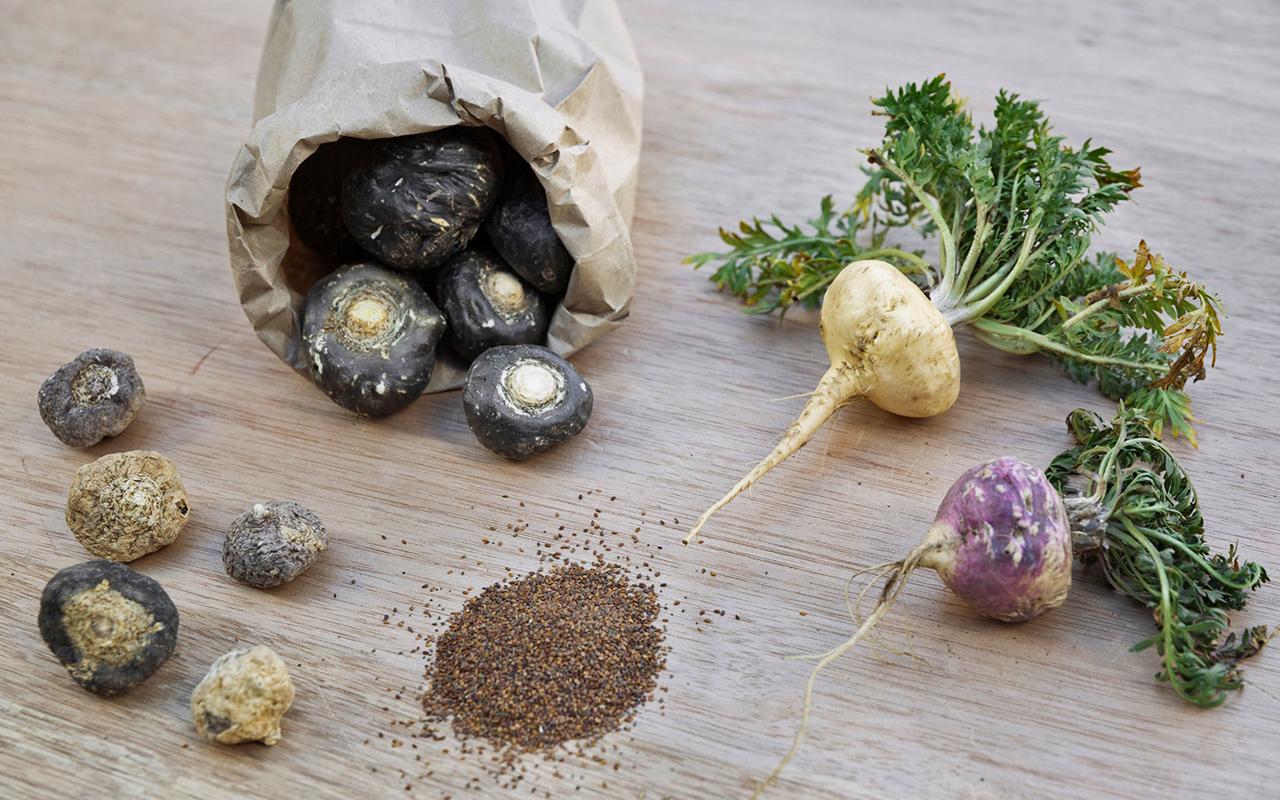
Maca is a cruciferous root grown in the high Andes of Peru. Whether it is used as powder, chips, capsules, or extract, it still begins as a root food. That matters because foods tend to work differently from isolated compounds or drug-style products. They are often broader, steadier, and less easily reduced to one simple mechanism.
That is one reason maca is usually better understood as daily support rather than a fast, dramatic intervention. It is commonly used as part of a routine. People often turn to it for support with energy, resilience, endurance, and general hormone-related wellness, but the better framework is still nourishment first. If you want a broader look at those bigger-picture themes, see Maca Benefits.
Maca Contains More Than Basic Nutrition
Part of how maca works comes from the fact that it is nutrient-dense.
Maca contains carbohydrates, fiber, amino acids, fatty acids, plant sterols, vitamins, and minerals. That helps explain why it has traditionally been valued as a strengthening food in the Andes. For a closer look at the nutritional side, see Maca Nutrition Facts.
But nutrition is only part of the picture.
Maca also contains naturally occurring plant compounds that help make it unusual, including macamides, macaenes, and glucosinolates. These compounds are one reason maca is discussed differently from an ordinary root vegetable. Research is still developing, and not every mechanism is fully settled, but maca’s reputation is not based on starch and calories alone.
A reasonable way to say it is that maca appears to work through a combination of nourishment and distinctive plant compounds, not through a single isolated ingredient.
Maca Does Not Contain Hormones
This is one of the most common misunderstandings about maca, so it is worth being clear.
Maca does not contain estrogen, testosterone, or other hormones. It is not a hormone replacement product. It does not work by supplying the body with hormones from the outside.
Instead, maca is often discussed in relation to the endocrine system, which is the body’s broader hormone-regulating network. That is a very different idea. It suggests support for the body’s own regulatory processes rather than direct hormonal replacement or forced hormonal change. For more on that topic, see Maca and Hormonal Balance.
This distinction is important because it helps explain why maca is so often described as supportive or balancing without needing to be described in exaggerated terms. If you want a more evidence-focused companion page, see Maca Research.
Why Maca Is Often Described as Balancing
People frequently say maca helps with balance. That can be useful language, but only when it is explained carefully.
Maca is often described as a balancing food because it is not usually associated with one narrow, one-direction effect. Some people focus on energy and stamina. Others are more interested in mood, resilience, or hormone-related wellness. That does not necessarily mean maca is doing something completely different every time. It may mean that support for broader regulatory systems can show up differently depending on the individual.
This is one reason maca is better understood as a foundational wellness food than as a product aimed at one isolated symptom. If you are comparing how maca is used in different contexts, you may also want to see Maca Comparisons.
Maca May Support Energy Without Acting Like a Stimulant
Maca is often associated with energy, but that does not mean it works like caffeine.
For most people, maca is not best understood as a sharp stimulant that creates a fast spike and a crash. It is more often described as steady support. That may help explain why many people build maca into a daily routine rather than use it occasionally for a jolt.
Part of that may come from its nutritional density. Part may come from the way it interacts with broader stress and endocrine-related pathways. Either way, maca is usually better understood as supporting sustained vitality than as forcing short-term intensity.
That is also one reason people often do better when they choose a form of maca they can take consistently. If you are new to it, How to Start with Maca is a helpful next step.
Preparation Matters Because Digestion Matters
Another part of how maca works has to do with the form in which it is used.
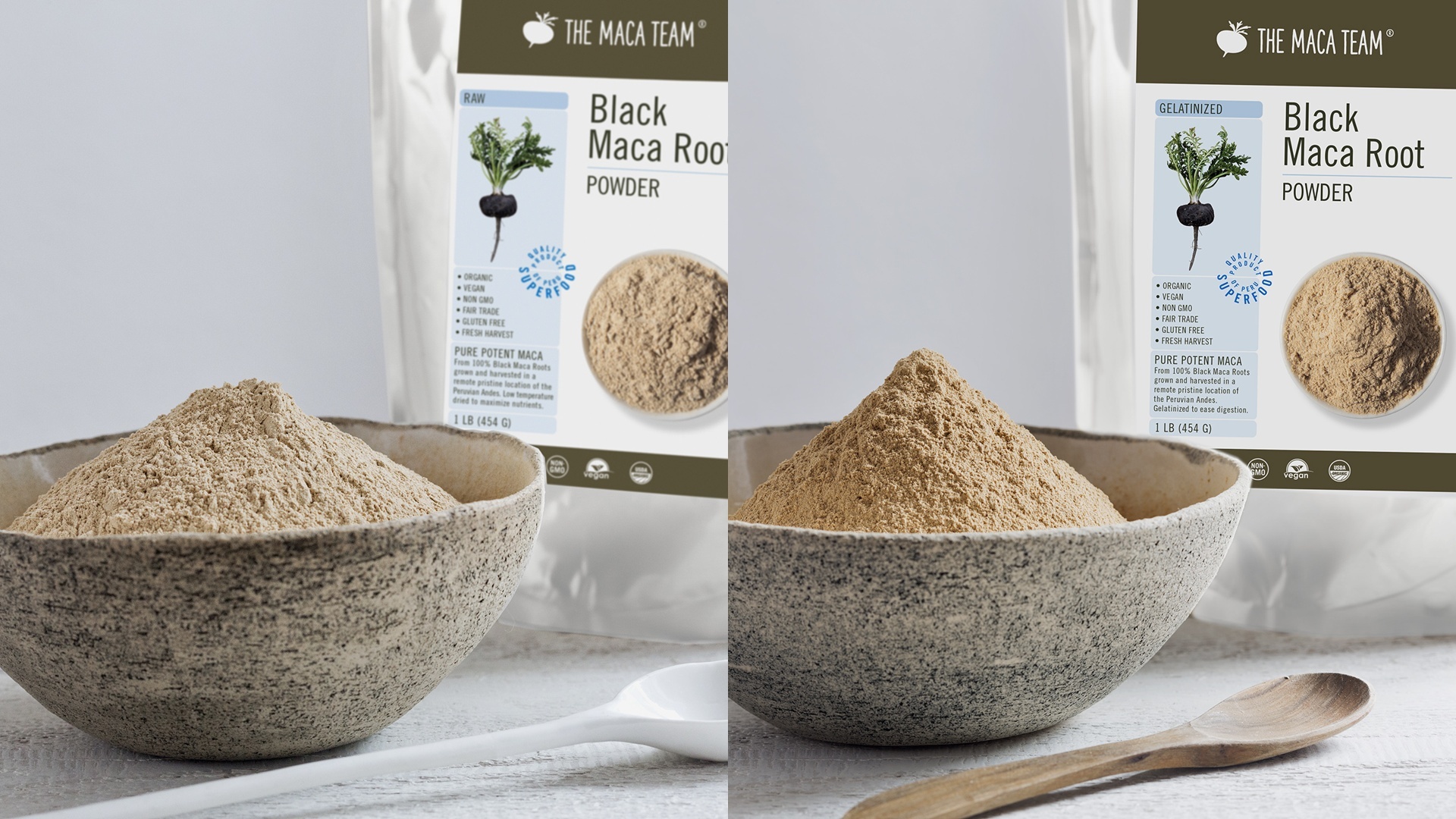
Raw maca retains its natural starch content.
Gelatinized maca is maca that has been heated and pressurized to render most of that starch inert.
That does not mean gelatin has been added. It refers to the processing method.
This matters because digestion matters. Some people do very well with raw maca. Others find gelatinized maca easier to handle and easier to use consistently. Since gelatinized maca has had most of its starch removed, it is also more concentrated by weight.
So, part of understanding how maca works is practical. The right form can make a real difference in how well maca fits someone’s digestion, routine, and long-term consistency. If you want the fuller comparison, see Raw vs. Gelatinized Maca. If you want serving guidance after that, see Maca Dosage.
Consistency Matters
Maca is not something that works after taking just one serving.
It takes time to build up in the system, so regular use—especially when starting with maca—is important. Other factors such as maca form, quality, and serving size also affect outcomes.
For people who are trying to decide what kind of maca may fit their goals best, a comparison page like Who Is Maca For? or Which Maca Is Best can be the natural next step.
What Maca Is Not Doing
It also helps to be clear about what maca is not.
- Maca is not a prescription drug.
- Maca is not a hormone.
- Maca is not a hormone replacement product.
- Maca is not generally understood as a stimulant in the usual sense.
- Maca is not guaranteed to affect every person in the same way.
A Simple Way to Think About How Maca Works
If you want the shortest useful answer, it is this:
Maca works by nourishing the body, contributing distinctive plant compounds, and supporting broader systems rather than forcing a narrow effect.
That is why maca is often discussed in connection with energy, stamina, mood, and hormone-related wellness while still being best understood as a food.
It is also why choosing the right maca matters. The form, the quality, the amount, and the fit with your own body all matter. Maca is not just about whether it works. It is also about which maca you choose and how well it fits your routine.
FAQ: How Maca Works
How does maca work?
Maca appears to work first as a nourishing food, then through its naturally occurring plant compounds, and more broadly by supporting the body’s own regulatory systems rather than forcing one narrow effect.
Does maca contain hormones?
No. Maca does not contain human hormones such as estrogen or testosterone.
Does maca change hormones?
A careful way to describe maca is that it may support the endocrine system rather than act as a hormone source or hormone replacement product. For more on that topic, see Maca and Hormonal Balance.
Is maca a stimulant?
Not in the usual sense. Maca is more often associated with steady support for energy and stamina than with the sharp effect of a stimulant like caffeine.
Why do different people describe maca differently?
Maca is a broad, food-based product rather than a single isolated compound. Form, digestion, serving size, consistency, and the individual all influence the experience.
Does raw maca work differently from gelatinized maca?
They come from the same root, but gelatinized maca has had most of its starch rendered inert. Many people find it easier to digest, and it is more concentrated by weight. For the full comparison, see Raw vs. Gelatinized Maca.
Does maca work right away?
Maca is generally better understood as something used consistently over time rather than as a product expected to produce one immediate dramatic effect.
Still Figuring Out Which Maca Is Right for You?
If this page helped you understand how maca works, the next step is choosing the right type, form, and routine for your needs.
Start here:
Next Steps