

Bringing More Intention to Your Everyday Life with Maca Root
Modern life can make it difficult to slow down and appreciate the little things. Between work responsibilities, household tasks, errands, and endless notifications, many people

Is maca a functional food? Explore its traditional Andean food history, nutritional composition, unique plant compounds, and what scientific research has found.

For centuries, people native to the high Andes have cultivated and regularly consumed maca root. Traditionally it is valued as a nourishing food and as a natural “medicine.”
Today, knowledge of this humble root has spread throughout the world. People take maca in the form of a powder, capsule or liquid extract to supplement their regular diets. And they often report outcomes like increased energy, vitality, drive and overall wellness.
Both traditional and modern use of maca leads us to a couple of questions we receive on occasion:
Could maca be considered a functional food? And what does that actually mean?
In this article we’ll answer both of those.
Although the idea that that food can contribute to health beyond basic nourishment is thousands of years old, the term “functional foods” comes out of Japan. In the 1980’s researches in Japan began examining three dimensions of food: nutrition, enjoyment and effects. Then in 1991 the Japanese government introduced “Foods for Specified Health Uses (FOSHU)”, which created a regulatory framework for certain foods to carry scientifically evaluated health claims. [1]
The basic idea was that food has 3 functions:
Functional foods were considered those that fulfilled all three.
In the 1990s and 2000s the concept spread throughout Europe and North America and since then researchers have used it to classify foods that offer unique levels of constituents such as fiber, phytochemicals, probiotics and fatty acids.
Although regulatory definitions differ country to country a useful working definition of functional food is:
A functional food is a food that provides nutritional value while also containing naturally occurring or added compounds that may offer health benefits beyond basic nutrition. [2]
Some familiar examples include:
Functional foods do not necessarily need to be exotic, concentrated, or specially formulated. Many are ordinary whole foods that have been part of traditional diets for generations.
This is where maca becomes particularly interesting.

Maca (Lepidium meyenii) is a member of the Brassicaceae family, which also includes broccoli, cabbage, mustard and turnips. It grows in the central Peruvian Andes, typically at elevations of 4,000 meters (13,000 feet) or higher. [3]
At these elevations, growing conditions are anything but easy. Temperatures regularly drop below freezing, sunlight is intense and the soil is often relatively poor. Yet maca has adapted to thrive in this environment.
The edible part of the plant is commonly called the maca root, although technically it consists of a swollen hypocotyl and root. Depending on the variety, maca roots can be yellow, red, purple, black or other shades.
Traditionally, maca roots are harvested and dried naturally in the high-altitude environment. The dried roots can then be stored for extended periods and prepared as needed.
In Peru, maca has commonly been boiled to make a nourishing drink or porridge. It has also been ground into flour and used in various cooked foods.
For the people who cultivated it, maca was not something taken occasionally in a capsule. It was part of the regular diet and an important source of nourishment.
This long history of use is one of the reasons maca is especially interesting when we consider the concept of functional foods.
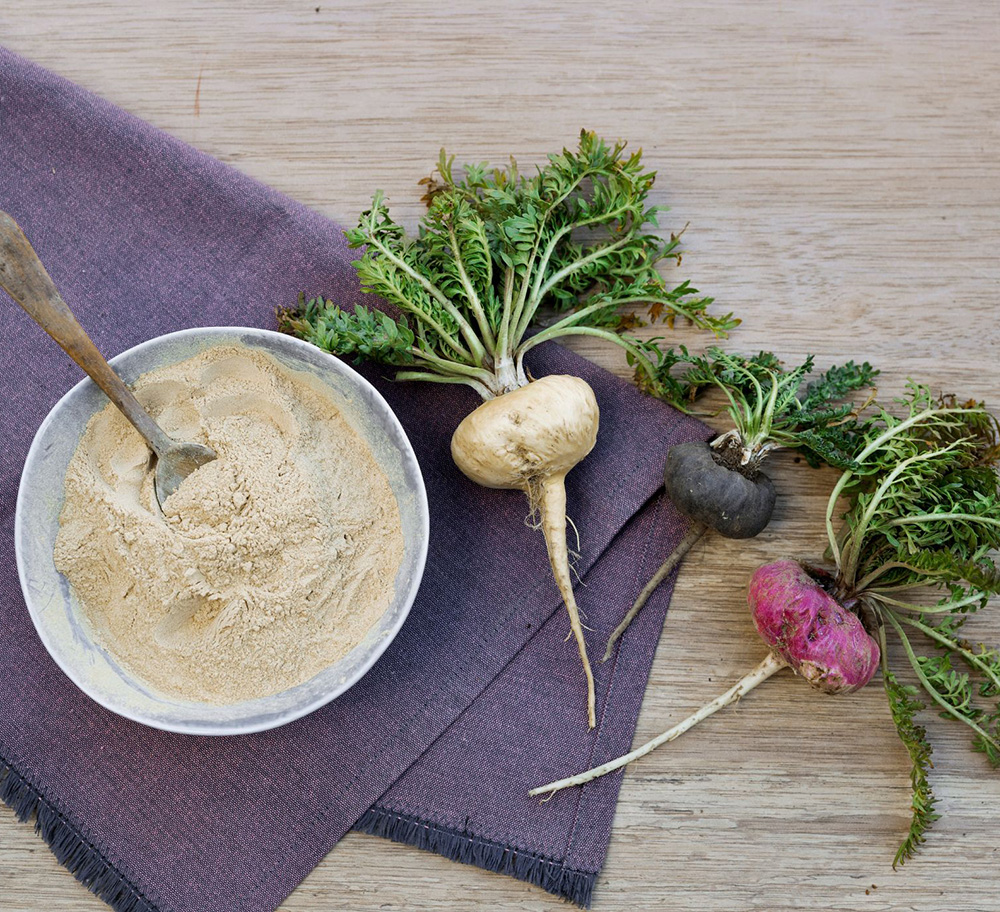
To understand why maca might qualify as a functional food, we first need to look at what it contains.
Like many root vegetables, dried maca is primarily a source of carbohydrates. But it also contains protein, dietary fiber, minerals and a variety of naturally occurring plant compounds.
Studies of dried maca have reported approximately:
These figures vary depending on the variety of maca, growing conditions and how it has been processed. [3] [4]
Maca also provides minerals such as calcium, potassium and iron, along with amino acids and other nutrients.
Of course, these nutrients are not exclusive to maca. Many other whole foods contain them.
What makes maca particularly interesting is its combination of conventional nutrients with several less common plant compounds that have attracted scientific attention.
Scientists have identified a wide range of naturally occurring substances in maca. Among the most studied are glucosinolates, macamides and macaenes.
Glucosinolates are sulfur-containing compounds found in plants belonging to the Brassicaceae family.
They are also present in foods such as broccoli, cabbage and mustard.
When plant tissues are broken down during preparation, chewing or digestion, glucosinolates can be converted into other compounds, including isothiocyanates. Some of these substances have been studied for their biological activity.
Maca has its own particular profile of glucosinolates, with benzyl glucosinolate among the prominent ones.
Macamides and macaenes are especially interesting because they are characteristic compounds associated with maca.
Macamides are a group of fatty acid derivatives that have become the subject of considerable scientific research. Laboratory and animal studies have examined their possible effects on biological processes related to the nervous system, metabolism and inflammation.
An important distinction is that much of this research involves isolated compounds or concentrated extracts. Scientists are still investigating how these findings relate to people consuming maca as a whole food. [4]
Nevertheless, these compounds help explain why maca is attracting interest beyond its basic nutritional content.
So far, we’ve established that maca provides basic nutrition and contains a number of interesting plant compounds.
But what about the third function of functional foods—the potential to influence physiological processes beyond basic nutrition?
This is where modern research into maca becomes relevant.
Over the past several decades, scientists have investigated a variety of effects traditionally associated with maca. Some areas have received more attention than others.
One of maca’s most familiar traditional associations is with strength, stamina and vitality.
Researchers have investigated its potential effects on physical performance, perceived energy and fatigue.
Some small studies have reported encouraging results, but research involving humans is still limited.
Interestingly, maca is sometimes described as an adaptogen, a term used for substances thought to help the body respond to stress. However, maca’s status as an adaptogen has not been firmly established through clinical research.
Sexual well-being is one of the better-studied areas of maca research.
In a 2002 clinical trial, researchers found that men consuming gelatinized maca reported increased sexual desire after eight weeks. [5]
What made the findings particularly interesting was that these changes were not accompanied by increased testosterone or estradiol levels.
This suggests that any effect maca might have on sexual desire does not necessarily involve raising these hormone levels.
A systematic review published in 2010 examined several studies involving maca and sexual function. It found some positive results, although the researchers concluded that the available evidence was too limited to draw firm conclusions. [6]
A smaller body of research has looked at maca’s possible influence on mood and psychological well-being.
For example, a 2016 clinical study comparing black and red maca extracts with a placebo reported improvements in some measures of mood and quality of life. [7]
Researchers have also investigated maca in relation to experiences associated with menopause. [8]
These findings are interesting, although they do not establish maca as a treatment for psychological or hormonal conditions.
Maca has a long-standing traditional reputation for supporting reproductive vitality.
Modern research has examined areas such as sperm quality, sexual function and menopausal symptoms.
Results have varied across studies, and there is not yet sufficient evidence to establish specific reproductive health benefits.
Taken together, these investigations help explain the scientific interest in maca as a potential functional food.
The research is still developing, but it has moved beyond simply identifying nutrients to examining how maca preparations might interact with human physiology.
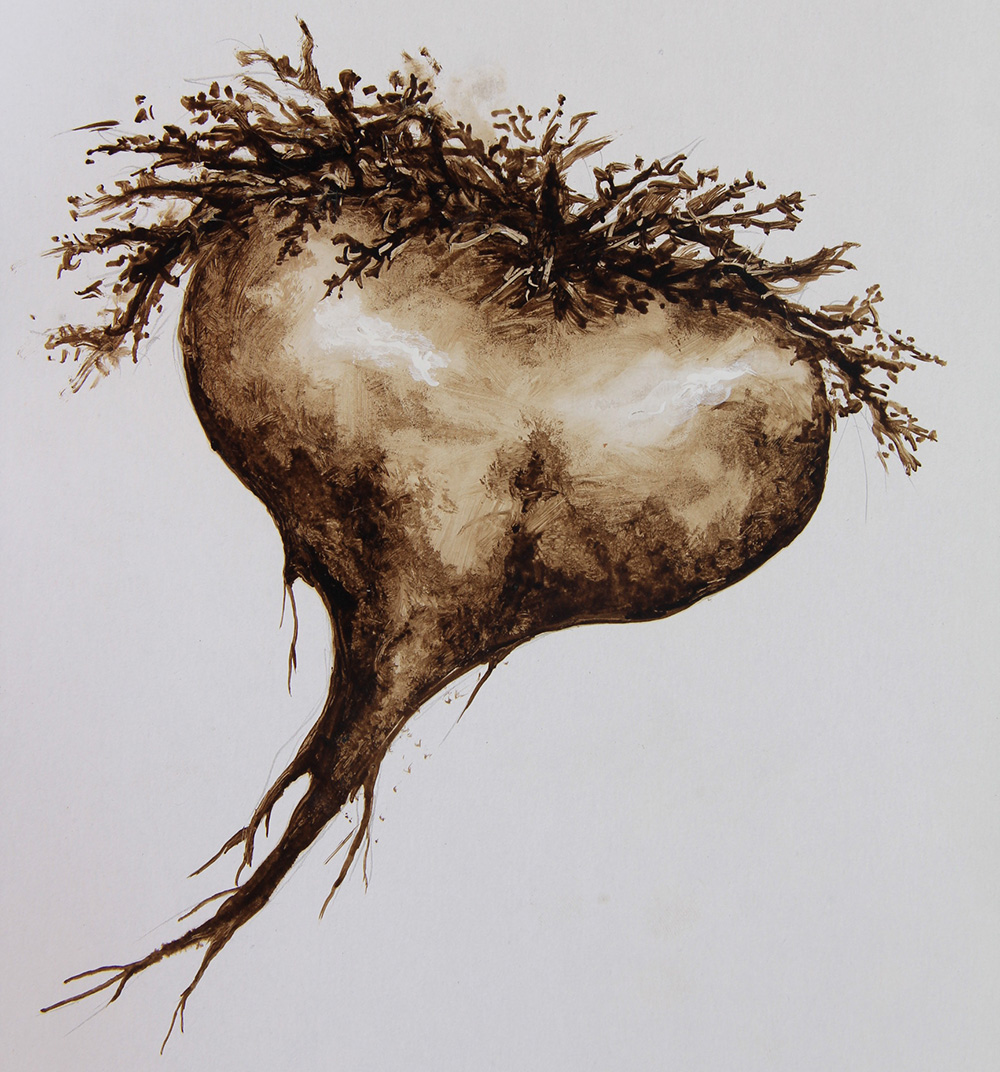
There is another important consideration when looking at maca’s functional properties.
Much of modern nutritional research focuses on individual compounds. Scientists isolate a particular substance, study its properties and investigate how it interacts with the body.
This approach is valuable, but it does not necessarily tell us everything about consuming the original food.
A whole food contains many different substances within a natural structure. These include carbohydrates, proteins, fibers, minerals and phytochemicals.
Scientists sometimes refer to this structure as the food matrix.
The food matrix can influence how nutrients and other compounds are released during digestion, how they interact with one another and how much of them becomes available for absorption. [9]
For example, eating a whole orange is not nutritionally identical to drinking orange juice or taking an isolated vitamin C supplement.
The same general principle is relevant to maca.
A traditionally prepared maca root, a whole maca powder and an extract containing concentrated macamides are not necessarily equivalent.
Each has a different composition, and the results of research on one preparation may not apply directly to another.
This is one reason we find maca’s long history as a whole food especially meaningful. Rather than looking at one isolated ingredient, we can consider the plant as a combination of nutrients and naturally occurring compounds.

Based on what we’ve explored, we believe there is a strong case for considering maca a functional food. In fact, when we look at the three functions of food outlined earlier, maca fits each of them quite well.
Does this mean maca has been scientifically proven to provide every benefit traditionally associated with it? No. But the existing research gives us good reasons to continue exploring its potential.
What we find particularly interesting is that maca was valued as a nourishing food long before the modern concept of functional foods existed.
Today, science is beginning to investigate some of the reasons why this remarkable Andean plant has attracted so much attention.
So, is maca a functional food? Based on the Japanese understanding of the term, the answer is yes. It combines traditional whole-food nutrition, a unique culinary character and potentially beneficial plant compounds in a way that fits naturally within the functional-food concept.
History of Maca
Explore how maca became an important food in Andean culture.
Maca Nutrition Facts
Learn more about maca’s naturally occurring nutrients and nutritional profile.
Maca Research
Explore scientific studies involving maca, organized by topic.
Maca FAQs
Find answers to common questions about maca and its uses.
Explore more about maca’s traditional food origins and nutritional properties, or contact our team with questions about our maca products, sourcing, and quality.