

Bringing More Intention to Your Everyday Life with Maca Root
Modern life can make it difficult to slow down and appreciate the little things. Between work responsibilities, household tasks, errands, and endless notifications, many people

Maca is a carbohydrate-rich Andean root food that also contains fiber, protein, minerals, fatty acids, amino acids, and distinctive plant compounds such as macamides, macaenes, glucosinolates, polyphenols, sterols, and alkaloids. Its exact nutritional composition varies by harvest, maca type, growing conditions, and processing.
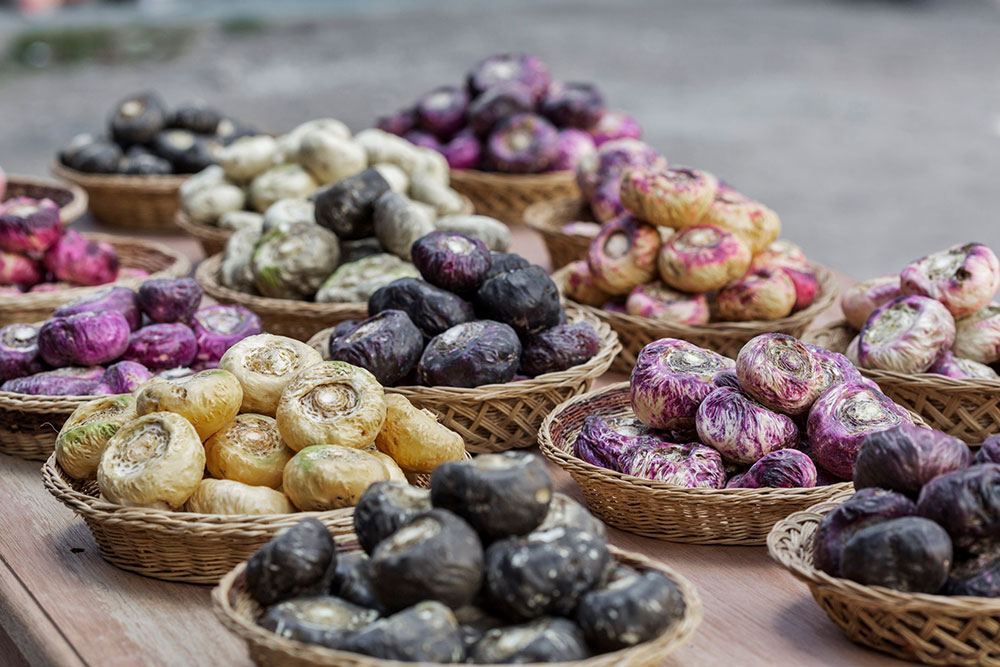
One of the reasons maca is interesting is that it sits somewhere between an ordinary food and a botanically complex plant ingredient.
At its foundation, maca is a food. Dried maca root contains mostly carbohydrates, along with fiber, protein, small amounts of fat, minerals, and numerous amino acids.
But basic nutrition does not tell the whole story. Maca also contains distinctive secondary plant compounds including macamides, macaenes, glucosinolates, alkaloids, polyphenols, and sterols. These compounds are an important part of modern maca research and help explain why maca is studied as more than simply a source of calories.
This page takes a closer look at both sides of maca’s composition. For the bigger-picture explanation of how nutrition and plant chemistry may work together, return to How Maca Works.
Dried maca root is made up primarily of carbohydrates, with smaller amounts of protein, dietary fiber, lipids, and minerals. Published analyses have also identified:
There is not one universal nutrient profile for every maca powder. Composition varies with the plant, location, altitude, growing conditions, harvest, drying, processing, and finished product.
Modern reviews provide a useful general picture of dried maca root. One comprehensive review reports approximately 59% hydrolysable carbohydrates, 10.2% protein, 8.2% dietary fiber, and 2.2% lipids. Other analyses have reported protein levels around 13–16% in dried maca, illustrating how much natural variation exists.
| Component | Reported Amount in Dried Maca | What to Know |
|---|---|---|
| Carbohydrates | About 59% in one widely cited analysis | The largest nutritional component of dried maca. |
| Protein | About 10% in some analyses; 13–16% reported in others | Maca contains plant protein, but a normal serving is too small to treat maca as a primary protein food. |
| Dietary Fiber | About 8% | Raw maca retains its natural starch and fiber structure. |
| Lipids | About 2% | Maca contains several fatty acids but is not a high-fat food. |
| Minerals & Other Constituents | Variable | Mineral and phytochemical concentrations can differ significantly among samples. |
These figures are useful for understanding maca as a food, but they should not be substituted for the Nutrition Facts panel on a specific finished product.
Research published in 2019 and 2024 emphasizes that genetics, plant part, geography, growing conditions, processing, and analytical methods can all influence measured maca composition (Wang & Zhu, 2019) (Ulloa Del Carpio et al., 2024).
Maca is primarily a carbohydrate-containing root food, so most of its calories come from carbohydrates rather than fat.
A typical 10-gram serving of plain maca powder is relatively small and generally contributes only a modest number of calories. The exact number will depend on the specific powder and how it was processed, so the product’s Nutrition Facts panel is the best source for serving-specific calorie information.
This is especially important when comparing raw and gelatinized maca, because processing changes the starch structure and can change the concentration of nutrients by weight.
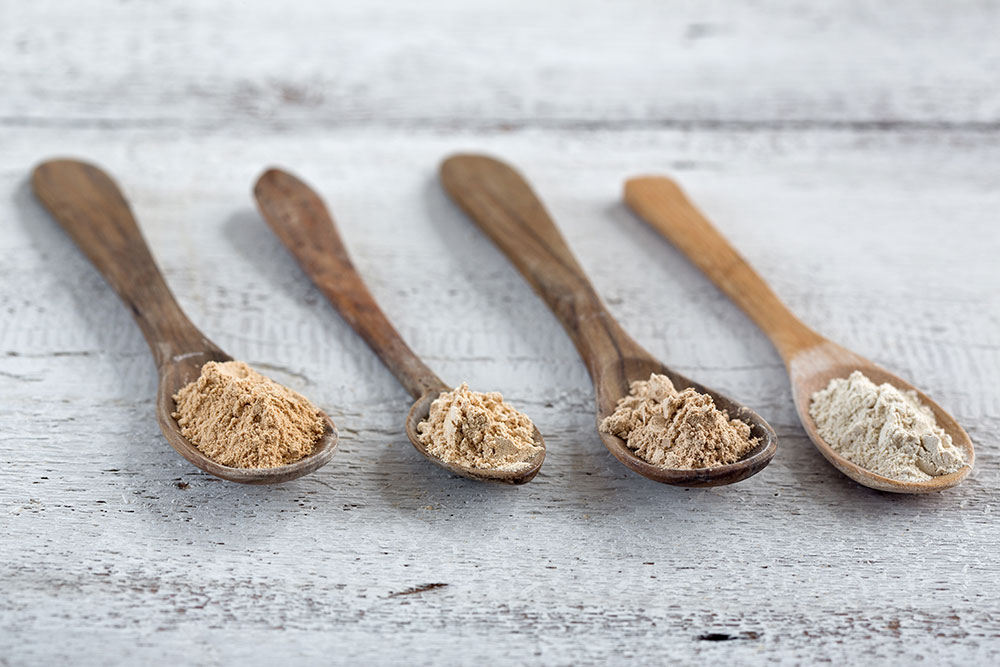
Maca contains plant protein, but this part of its nutrition is sometimes exaggerated.
Depending on the sample and analysis, dried maca has been reported to contain roughly 10–16% protein by weight. A normal serving of maca is much smaller than 100 grams, so maca should not be thought of as a replacement for beans, lentils, tofu, dairy, eggs, meat, or other concentrated protein foods.
What is interesting is the amino acid diversity within maca protein. Published analyses have identified many essential and non-essential amino acids, including:
Several of these are essential amino acids that must ultimately come from the diet.
The practical takeaway is that maca contributes a diverse amino acid profile, but its typical serving size prevents it from being considered a major dietary protein source.
Maca contains only a small amount of total fat, but researchers have identified a variety of fatty acids within that fraction.
Reported fatty acids include:
The old version of this page listed very precise microgram amounts for each fatty acid. We no longer think that is the best way to present the information because maca composition varies too much among samples for one old analysis to function as a universal nutrition panel.
Maca also should not be treated as a meaningful replacement for foods chosen specifically for omega-3 or other essential fatty acids. Its total lipid content is simply too small.
Published literature describes maca as containing vitamin C and several B-family vitamins, among other micronutrients.
Older maca references commonly report:
Exact vitamin concentrations can vary considerably, and some vitamins are also sensitive to drying, storage, heating, and processing.
For that reason, we would not recommend thinking of maca primarily as a vitamin supplement. Its nutritional value comes from the combined food matrix rather than from unusually high amounts of one particular vitamin.
Maca contains a range of naturally occurring minerals. One frequently cited review reported the following amounts in dried maca:
| Mineral | Reported per 100 g Dry Maca | Approximate Equivalent per 10 g |
|---|---|---|
| Potassium | 2,050 mg | 205 mg |
| Calcium | 150 mg | 15 mg |
| Iron | 16.6 mg | 1.66 mg |
| Copper | 5.9 mg | 0.59 mg |
| Zinc | 3.8 mg | 0.38 mg |
These figures come from reported dry-matter analyses summarized by Gonzales and should be understood as examples rather than guaranteed values for every maca powder (Gonzales, 2012).
Mineral variability is real. A comparative analysis of maca grown in Peru and China found substantial differences among samples, including differences in zinc, sodium, copper, and other elements (Zhang et al., 2015).
Simple takeaway: Maca contributes minerals to the diet, but its typical serving is relatively small. We would describe maca as a mineral-containing whole food rather than make exaggerated claims that it is an exceptional source of every mineral it contains.
Carbohydrates make up the largest portion of dried maca.
That includes starch, other carbohydrates, dietary fiber, and naturally occurring sugars. The proportions vary according to the maca itself and how it is processed.
This becomes particularly important when comparing raw and gelatinized maca.
Raw maca powder retains the root’s natural starch structure.
Gelatinized maca has been cooked with heat and moisture. This changes the starch structure and, depending on the process, reduces much of the starch in the final product.
Because material is changed or removed during processing, the finished gelatinized powder may have different nutrient concentrations by weight from a raw powder.
That is why we recommend using the actual product label rather than assuming that one universal set of carbohydrate or sugar numbers applies to every form of maca.
For a detailed explanation, see Raw vs. Gelatinized Maca.
Maca contains plant sterols, another class of naturally occurring compounds found in many plant foods.
Sterols identified in maca research include compounds such as:
The old version of this article suggested that maca’s sterols could lower blood cholesterol. We would not make that conclusion from the presence of sterols in maca alone. A compound being present in a food does not automatically establish a clinically meaningful effect at the amount people normally consume.
Maca belongs to the same botanical family as cabbage, broccoli, mustard, turnips, and other cruciferous plants. One characteristic feature of this plant family is the presence of glucosinolates.
Benzyl glucosinolate and related glucosinolates have been identified in maca, although their concentrations and profiles can differ among maca types and products.
Glucosinolates are chemically interesting because plant enzymes can convert them into other compounds when plant tissue is disrupted or processed.
They are actively studied in many cruciferous plants, but we would not translate their presence in maca into a claim that maca itself prevents or treats cancer. That goes well beyond what the evidence establishes.
Modern quality-control research also shows how complicated maca glucosinolate analysis can be. Profiles can vary, and some compounds have historically been inconsistently identified (2021 quality-control study).
Macamides and macaenes are among the compounds most closely associated with maca in modern phytochemical research.
Macamides are fatty-acid-derived amides that are widely used as characteristic chemical markers when researchers analyze maca root and maca products.
Macaenes are unsaturated fatty-acid derivatives also identified in maca.
A 2026 review of maca analytical research identifies macamides and macaenes, together with glucosinolates and alkaloids, as major compound classes of interest in modern maca chemistry (Wasilewicz & Grienke, 2026).
These compounds are one reason the question “What is in maca?” cannot be answered by looking only at a standard Nutrition Facts panel.
Researchers have now identified a much larger range of secondary metabolites in maca than was known when the original version of this page was written.
Modern analytical work has identified more than 100 secondary metabolites in maca hypocotyls, including various:
A 2024 analytical study also demonstrated substantial variation in alkaloid content among raw maca powders and finished commercial preparations, reinforcing the point that not every maca product has an identical chemical profile (2024 analytical study).
You may see a glycemic index of 55 quoted for maca online. That number also appeared in an older version of this page.
We have not found sufficiently strong published evidence to present 55 as a universal established glycemic index for maca root powder.
What we can say confidently is that maca contains carbohydrates and naturally occurring sugars. Anyone who closely tracks carbohydrate intake or blood glucose should use the Nutrition Facts panel for the actual maca product being consumed rather than relying on a generic internet GI value.
Maca’s nutritional profile helps explain its traditional role as a strengthening food, but nutrition alone probably does not explain everything being investigated in maca research.
That is where the broader plant chemistry becomes important.
Modern research increasingly looks at maca as a complex matrix containing:
This supports the framework we use on our parent How Maca Works page: maca starts as a food, but its chemistry extends beyond basic nutrition.
Not in the way a protein powder, legumes, eggs, dairy, or meat are. Dried maca may contain roughly 10–16% protein by weight depending on the sample, but typical maca servings are small. A 10-gram serving would therefore provide only around 1–1.6 grams of protein if the powder fell within that range.
Yes. Published analyses have identified numerous essential and non-essential amino acids in maca, including leucine, isoleucine, valine, lysine, methionine, phenylalanine, threonine, histidine, and others. Maca’s small serving size means it should still not be relied upon as a person’s primary protein source.
Published analyses have identified potassium, calcium, iron, copper, zinc, and other minerals. Exact amounts vary considerably among growing regions and samples.
Yes. A frequently cited analysis summarized in the scientific literature reported 16.6 mg of iron per 100 grams of dried maca, equivalent to about 1.66 mg per 10 grams. That should be treated as an example from a particular analysis rather than a guaranteed value for every maca product.
Maca contains polyphenols, glucosinolates, and other compounds studied in relation to oxidative processes. Calling those compounds “antioxidants” does not mean that eating maca has been proven to produce every antioxidant-related health effect sometimes claimed online.
Maca contains small amounts of several unsaturated fatty acids, including linoleic and oleic acids. Because maca contains relatively little total fat, it should not be considered a significant replacement for foods or oils chosen specifically as sources of essential fatty acids.
They begin with the same root, but gelatinization uses heat and moisture to change the natural starch structure and can reduce starch in the final powder. This can affect nutrient concentrations by weight. For a direct comparison, see Raw vs. Gelatinized Maca.
Maca is frequently described as an adaptogen in the wellness world, but that term should not be used as a shortcut for explaining maca’s nutritional composition or mechanism. If you want a closer look at that classification, see Is Maca an Adaptogen?
Once you understand what is actually in maca, the next step is choosing a form and serving approach that fits your routine.