Maca Root: How (and Why) To Get Started
If you’ve been exploring new ways to support your wellness routine, chances are you’ve come across maca root. This ancient Peruvian plant has gained popularity

Compare Premium and Sundried maca, including how each is dried after harvest, how their flavor and character differ, and how to choose the preparation that fits you best.
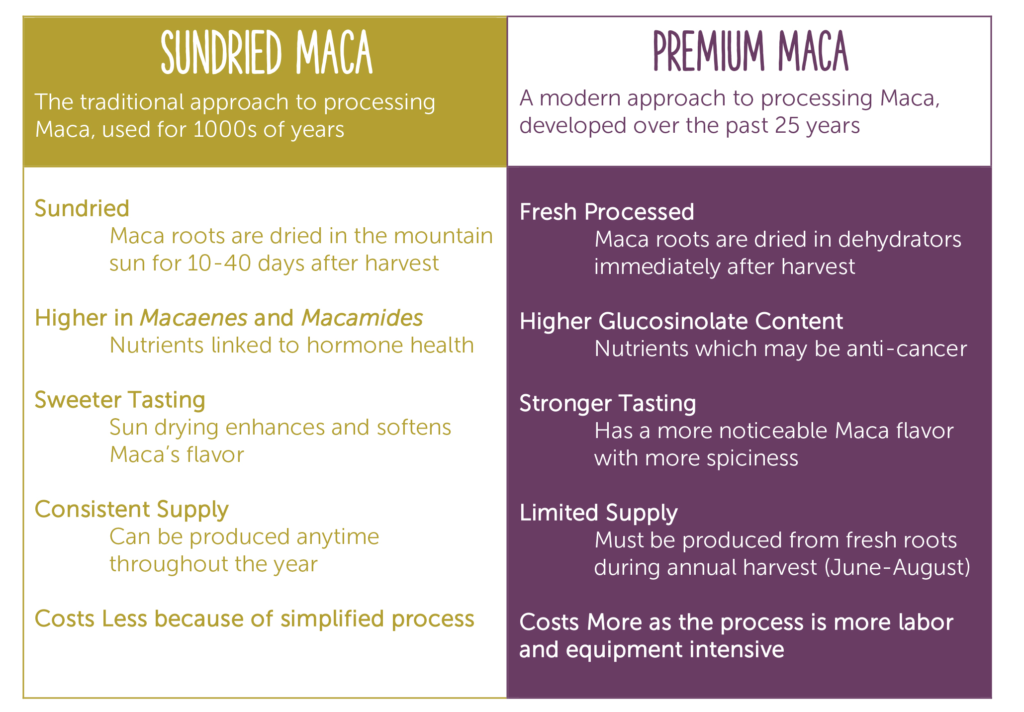
One of the more confusing things for people new to maca is seeing the words Premium and Sundried and not knowing what they actually mean.
Both come from the same Peruvian maca root. The main difference is in how the roots are handled and dried after harvest.
That difference in processing can affect flavor, product character, cost and the phytochemical profile of the finished maca.
At The Maca Team, we carry both Premium and Sundried maca in raw and gelatinized preparations. Neither is automatically “better” for everyone. They are two different processing styles, and each has its own appeal.
This page is a deeper guide within our Maca Types section, which is part of the broader What Is Maca? topic hub. If you want to understand how Premium vs. Sundried fits alongside Raw vs. Gelatinized, begin with the Maca Types guide.
For many beginners, Sundried maca is the more approachable starting point. Premium maca often appeals to experienced maca users or people specifically interested in its processing style and bolder flavor.
Neither preparation is universally better.
| Feature | Sundried Maca | Premium Maca |
|---|---|---|
| Drying method | Traditionally dried in the high-Andes sun | Fresh roots dried in dehydrators soon after harvest |
| Traditional connection | Traditional maca drying method | Modern controlled processing method |
| Flavor | Generally milder and somewhat sweeter | Generally stronger, sharper and more pungent |
| Processing control | Relies on traditional outdoor drying conditions | Uses controlled dehydration |
| Cost | Generally less expensive | Generally more expensive |
| Often a good starting point for | Beginners and people who prefer traditional preparation | People who want a more specialized processing style or bolder flavor |
Sundried maca is maca that has been dried naturally in the high-Andes environment after harvest.
This is the more traditional method and is closely connected to the way maca roots have long been handled in Peru.
The harvested roots are dried over an extended period before being cleaned, processed and eventually milled or prepared for other maca products.
Sundried maca is often preferred by people who want a traditional style of maca and a somewhat milder, more approachable flavor.
Sundried maca may appeal to you if you want:
The traditional drying process also produces a phytochemical profile that differs somewhat from maca processed immediately after harvest. That difference is part of what makes these two preparations distinct rather than simply different labels on the same product.
At The Maca Team, Premium Maca refers to a specific fresh-root processing method.
Instead of leaving freshly harvested maca roots to undergo the traditional extended sun-drying process, the roots are processed and dried in dehydrators soon after harvest.
This provides greater control over the drying process and creates a maca with a noticeably different flavor and character.
Premium maca generally has a stronger, sharper and more pungent flavor than our traditionally Sundried maca.
It also usually costs more because dehydrator drying and fresh-root processing require additional equipment and handling.
Premium maca may appeal to you if you want:
The different handling and drying methods also result in differences in the finished root’s phytochemical profile. That does not make one preparation universally superior to the other.
That depends entirely on your preferences.
Sundried maca usually has a milder, somewhat sweeter flavor. Many people find it easy to use regularly in smoothies, oatmeal, yogurt and other everyday recipes.
Premium maca generally has a stronger, spicier and more assertive flavor.
Some people really like that intensity. Others prefer the gentler taste of Sundried maca.
So the useful question is not really “Which one tastes better?”
It is:
Which flavor do you prefer?
Not automatically.
This is where maca terminology can make a relatively simple choice sound more complicated than it is.
Both preparations can be high-quality maca.
Some people prefer Sundried maca because:
Others prefer Premium maca because:
The better choice usually depends on your preferences rather than one preparation being objectively superior.
For many people new to maca, Sundried maca is the easier place to start.
Its flavor tends to be more approachable, and its traditional drying method provides a straightforward introduction to maca.
That does not mean beginners cannot use Premium maca.
If you enjoy stronger plant flavors or specifically want to try fresh-processed maca, Premium may suit you from the beginning.
There is no rule requiring you to start with one and eventually “graduate” to the other.
This distinction is especially important.
They are two separate processing decisions.
That means you can have:
If you are deciding whether you want maca to remain raw or undergo gelatinization, see our Raw vs. Gelatinized Maca guide.
The easiest way to understand maca processing is to think of it as two questions.
Those answers can then be combined.
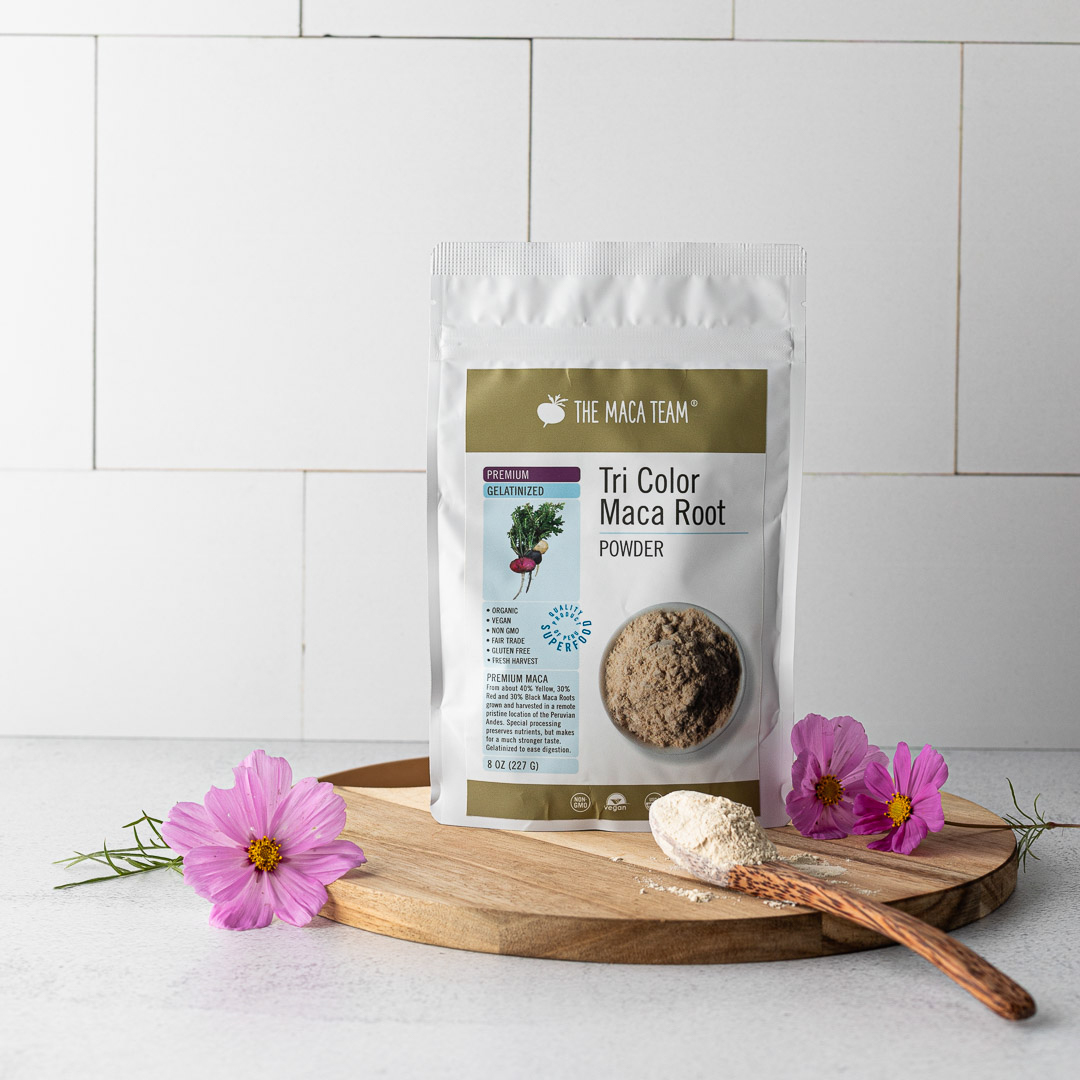
For example, Premium Gelatinized Black Maca tells you three different things:
Our broader Maca Types guide explains this framework in one place.
A simple way to decide is to focus on what matters most to you.
| If You Prefer… | Consider Starting With… |
|---|---|
| Traditional maca processing | Sundried Maca |
| A milder maca flavor | Sundried Maca |
| A more economical starting option | Sundried Maca |
| Fresh-root controlled processing | Premium Maca |
| A stronger, more pungent flavor | Premium Maca |
| Comparing different maca-processing styles | Try both over time |
If you are completely new to maca and have no strong preference, Sundried maca is often the simpler starting point.
Yes. Sundried maca uses the traditional high-Andes drying method and is closely connected to the way maca roots have historically been dried in Peru.
At The Maca Team, Premium Maca refers to a fresh-root processing method in which maca roots are dried in dehydrators soon after harvest instead of undergoing the traditional extended sun-drying process.
Premium Maca generally costs more because fresh-root processing and controlled dehydrator drying require additional equipment and handling.
Yes. Premium Maca generally has a stronger, sharper and more pungent flavor, while Sundried maca tends to be milder and somewhat sweeter.
Many beginners find Sundried maca more approachable because of its milder flavor. However, people who enjoy stronger plant flavors can start with Premium Maca as well.
Neither preparation is automatically better for everyone. They differ primarily in drying method, flavor, processing and product character. Personal preference is often the more useful way to choose between them.
No. Premium and Sundried describe how maca is dried after harvest. Raw and Gelatinized describe whether it undergoes an additional cooking process afterward.
Yes. Premium and Gelatinized describe different stages of processing, so the same maca product can be both Premium and Gelatinized.
Premium and Sundried maca are two different ways of processing the same Peruvian root.
Neither is automatically the better maca.
The better choice is the one whose processing style, flavor and overall character fit your preferences.
This page is a deeper guide within our Maca Types section. Continue with the other processing comparison or return to the parent guide to see how the different maca types fit together.
Return to Maca Types to compare the full processing framework, or use our selection guide to consider type, color and form together.