
Is Maca Safe for People with Diabetes?
If you are living with diabetes or following a blood-sugar-conscious diet, it makes sense to ask careful questions before adding any new food or supplement to your routine. Maca is a traditional whole-food root from the Andes, commonly used today as a powder, capsule, or extract. Many adults use maca as part of a general wellness routine, but whether it is right for you depends on your personal nutrition plan, serving size, medications, and health history.
Is maca safe for people with diabetes?
The neutral answer is this: maca is not a medication, and it should not be used to manage, treat, or replace care for diabetes. But for some people, maca may be able to fit into a thoughtfully planned diet when serving size, carbohydrates, and individual needs are taken into account.
Let's break this down.
Why This Question Matters
For people managing diabetes, food choices are not just about whether something is “healthy” in a general sense. They are also about how a food fits into a daily eating pattern, how much carbohydrate it contributes, and how it works alongside medication, activity level, and personal blood sugar goals.
The CDC notes that carbohydrate counting and the plate method can be useful tools for meal planning. The American Diabetes Association also emphasizes reading Nutrition Facts labels, especially total carbohydrates, when making food choices. That same practical approach applies to maca: review the label, look at the serving size, and consider how it fits into your overall day.
What Is Maca?
Maca is a root vegetable traditionally grown in the high Andes of Peru. It belongs to the cruciferous family, the same broad plant family that includes foods like broccoli, cabbage, mustard, and turnips.
For generations, maca has been used as a food. Today, it is commonly dried and made into powders, capsules, liquid extracts, and blends. Maca naturally contains carbohydrates, fiber, minerals, amino acids, and plant compounds such as glucosinolates.
Does Maca Contain Carbohydrates?
Yes. Maca comes from a root, so it naturally contains carbohydrates. That does not automatically mean it cannot fit into a blood-sugar-conscious diet, but it does mean the serving size matters.
If you count carbohydrates, use a food-tracking app, or follow a meal plan from a doctor or registered dietitian, maca should be included in that process just like any other food. The key is not to treat maca as “free” or separate from your normal nutrition plan.
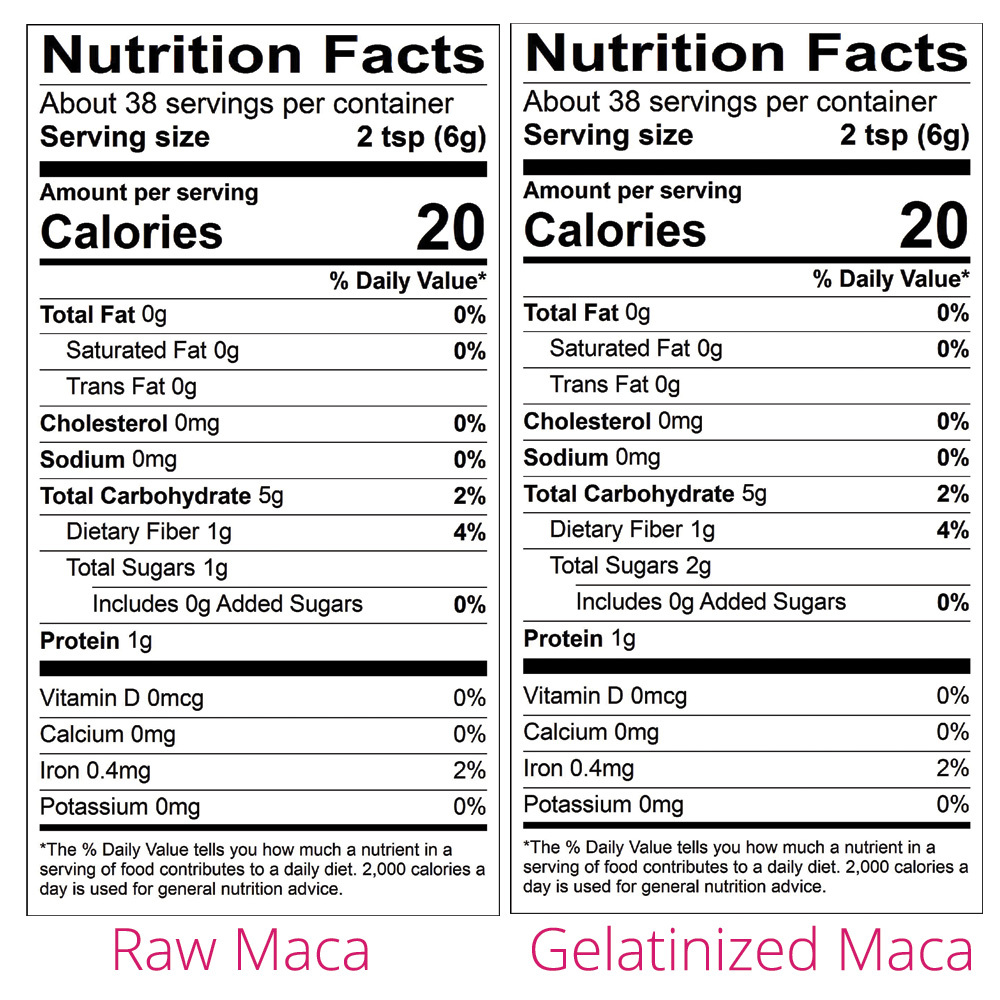
Here are the nutrition facts from both raw and gelatinized maca powders. As you can see they both contain carbohydrates and sugars. At the recommended serving size of 6 grams, raw maca contains 5g of carbohydrate (including 1g of sugar) and gelatinized maca contains 5 g of carboyhdrate (but 2g of sugar).
Can Maca Fit Into a Blood-Sugar-Conscious Diet?
For many adults, maca can be used like other whole-food powders: added to smoothies, oatmeal, yogurt, coffee, or recipes in modest amounts. But people managing diabetes should avoid one-size-fits-all answers. A serving that fits well for one person may not be the right choice for someone else.
Before using maca, consider:
- How much maca you plan to use per serving
- The total carbohydrates in that serving
- What other foods you are combining it with
- Whether your meal plan includes carbohydrate targets
- Whether you take medication that requires consistent food timing or carbohydrate awareness
- Whether your healthcare professional has given you specific nutrition guidance
What About Maca Research?
Maca continues to be studied for its nutritional profile, traditional use, and naturally occurring plant compounds. Some research looks at compounds found in maca, including glucosinolates, which are also found in other cruciferous vegetables.
However, research on maca should not be interpreted to mean that maca treats diabetes, improves blood sugar, replaces medication, or changes the need for medical care. The practical takeaway is simpler: maca is a nutrient-containing food from a traditional plant source, and anyone managing a medical condition should evaluate it as part of their full diet and care plan.
Which Type of Maca Is Best to Start With?
If your healthcare professional says maca is appropriate for you, many people start with a small serving of yellow maca or gelatinized maca.
Yellow maca is the most common and versatile maca color. It is often a good starting point for people who are new to maca.
Gelatinized maca has been heated to remove much of the starch, which makes it easier for some people to digest. This does not make it a diabetes specific product, but it may be a practical choice for people who prefer a smoother, easier-to-use maca powder.
Maca capsules may also be convenient because the serving size is pre-measured. Liquid extracts may be preferred by people who want a concentrated format, though it is still important to follow the suggested serving instructions.
How to Use Maca Thoughtfully
If you are adding maca to a blood-sugar-conscious diet, keep the rest of the recipe simple. For example, adding maca to a smoothie with sweetened juice, multiple bananas, honey, and other high-carbohydrate ingredients is very different from adding a small serving to a balanced smoothie with protein, fiber, and unsweetened ingredients.
Practical tips:
- Start with a small serving.
- Read the Nutrition Facts label.
- Pay attention to total carbohydrates.
- Consider the full recipe, not just the maca.
- Use maca consistently rather than randomly if you are tracking your diet closely.
- Ask your healthcare professional how maca fits into your personal plan.
When to Ask a Healthcare Professional First
You should speak with a qualified healthcare professional before adding maca if you are managing diabetes or another medical condition, taking medication, pregnant, nursing, preparing for surgery, or following a medically directed diet.
This is especially important if your nutrition plan requires careful carbohydrate tracking or if changes in your diet may affect medication timing or dosing.
Bottom Line
Maca is a traditional whole-food root used by many adults as part of a daily wellness routine. For people following a blood-sugar-conscious diet, the question is not whether maca is universally “safe” for everyone. The better question is whether a specific maca product, serving size, and recipe fit into your individual nutrition plan.
Review the label, consider the carbohydrates, start small if appropriate, and ask your healthcare professional for personalized guidance.
FDA Disclaimer: These statements have not been evaluated by the Food and Drug Administration. This product is not intended to diagnose, treat, cure, or prevent any disease.
If you have questions about our Fair Trade, sustainably grown maca, please contact us or call us toll-free at 888-919-8616.
Enjoy the Day!
It’s important to keep in mind that there’s no miracle cure for chronic health conditions like diabetes, which must be addressed with healthy eating and exercise habits. You should always consult with a licensed medical professional before making any significant changes to your diet. Before consuming maca, read up on the different types of maca there are and what particular benefits they might be associated with, in addition to getting an idea of your ideal serving size.
If you have any further questions about our Fair Trade, sustainably-grown maca, we’d love to hear them. Please don’t hesitate to Contact Us using our web form, or call us toll-free at 888-919-8616.
Enjoy the Day!
Recent Maca Posts
-

Fall Flavors: Maca Edition
It might still be warm outside, but that doesn't mean we're not already thinking about fall. As soon …11th Sep 2026 -
What Does Maca Root Really Do?
Maca root has become a popular addition to smoothies, coffee alternatives, breakfast bowls, and ever …30th Aug 2026 -

Back-to-School: A Simple End-of-Summer Reset with Maca
There’s something bittersweet about the end of summer. The long, carefree days start getting shorter …21st Aug 2026