
Tri Color Maca
There are no products listed under this category.
Tri-Color Maca: Traditional Peruvian Maca in a Heritage Blend
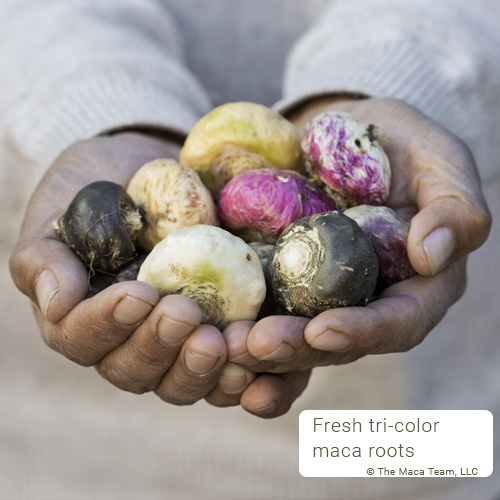
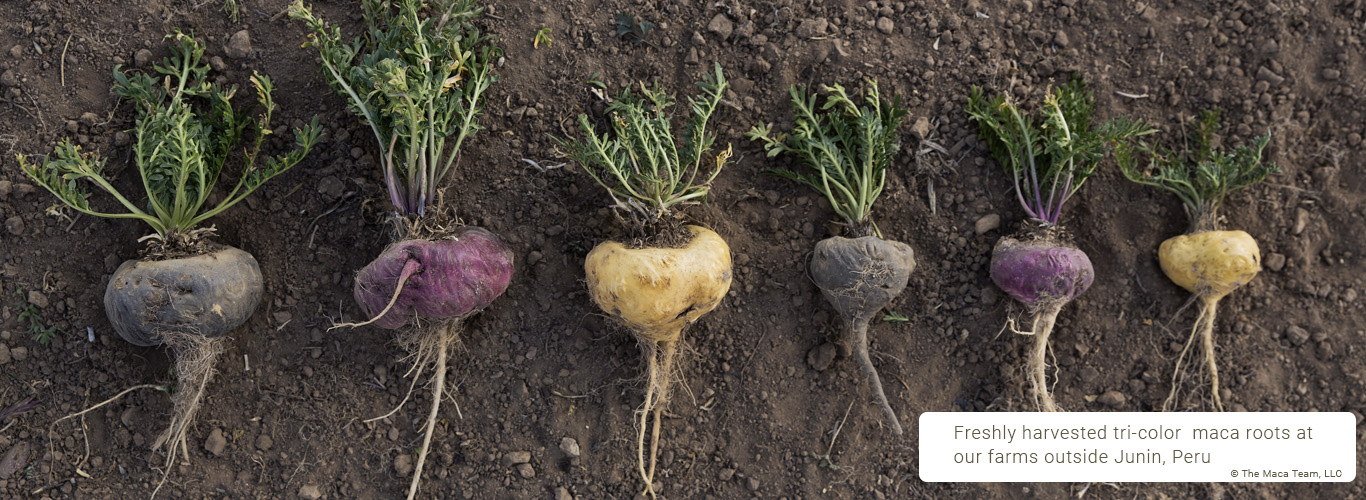
Maca roots grow at extremely high elevations in the Peruvian Andes and have been an important food of the region for thousands of years. Interestingly, the roots grow in a range of colors from light beige to golden yellow, pink to deep maroon red, and light to very dark gray or black. Within these three main color ranges there are many natural variations, including roots that are speckled or striped.
Traditionally, all the maca roots harvested from a field were grouped together, prepared together, and eaten together. The roots were not separated by color. Whatever came out of the fields in a given harvest was the maca that people used as food.
At The Maca Team, we’ve chosen to honor that tradition by offering tri-color maca products. We think of them as “heritage harvest” maca products because they reflect the long-standing growing and harvest practices of traditional maca farming.
There are a couple of practical reasons people like tri-color maca products.
First, tri-color maca is often one of the most affordable maca options. That is because less time and handling are required when roots are kept together rather than sorted by color throughout processing.
Second, tri-color maca offers a traditional blend format made from yellow, red, and black maca roots together, which many customers appreciate for its variety and heritage character.
Different Types of Tri-Color Maca
Maca roots can be processed for use in several different ways, each with its own characteristics.
Raw tri-color maca – after harvest, the roots are dried in the sun for about one month. This is the traditional way of preparing maca roots for storage and processing.
Premium raw tri-color maca – instead of sun drying, these roots are dried in low-temperature dehydrators directly after harvest. This creates a stronger tasting powder and a different drying profile from traditional sun-dried maca.
Gelatinized tri-color maca – these tri-color maca roots are also sun-dried, then pre-cooked (gelatinized) to reduce most of the starch content. Many people prefer gelatinized maca because it offers a different texture and preparation style than raw maca.
Premium gelatinized tri-color maca – this type is similar to standard gelatinized maca, except the roots are dried in dehydrators rather than in the sun before processing.
Tips for Choosing Tri-Color Maca Root Products
Our maca products are certified organic, non-GMO, fair trade, and freshly harvested. We work with small batch sizes to help ensure you receive maca from recent harvests. We also pay our farmers above market value to help create a more sustainable relationship for everyone involved in the process.
If you continue shopping elsewhere, we recommend asking the following questions about any maca product you are considering. Color matters, but so do source, quality, freshness, and handling.
- Is this maca from Peru? Peru is the traditional home of maca and remains the primary source for authentic Peruvian maca.
- What colors of maca are in this blend? It is useful to know the ratio of colors in a tri-color product.
- Is this maca organic? Organic production standards are an important consideration for many customers.
- What harvest is this maca from? Maca is generally harvested from May to July each year.
- How has this maca been stored and handled since processing? Look for products stored away from direct light, moisture, and air exposure.
Getting the Most from Your Tri-Color Maca
Because maca is traditionally used as a food, many people prefer to work it into a regular routine through smoothies, oatmeal, yogurt, baking, or warm drinks.
A common approach is to begin with a smaller serving and adjust gradually based on taste, digestion, and personal preference. If you have questions about serving size, our maca dosage guide may be helpful.
Frequently Asked Questions About Tri-Color Maca
What is tri-color maca?
Tri-color maca is a maca product made from a blend of yellow, red, and black maca roots.
Is tri-color maca traditional?
Yes. Traditionally, maca roots harvested from a field were commonly prepared together rather than separated by color.
What is the difference between tri-color maca and single-color maca?
Tri-color maca contains a blend of yellow, red, and black roots, while single-color maca products use only one root color.
What types of tri-color maca are available?
Tri-color maca is commonly available as raw, premium raw, gelatinized, and premium gelatinized maca.
How do you use tri-color maca?
Tri-color maca can be added to smoothies, oatmeal, yogurt, baking recipes, and warm drinks, depending on the format you choose.
Is tri-color maca from Peru?
Authentic tri-color maca should come from Peru, where maca has been traditionally grown for centuries.
How do I choose a good tri-color maca product?
Look for clear sourcing, Peruvian origin, organic certification when possible, recent harvest information, and good storage practices.
Where can I buy tri-color maca?
You can shop tri-color maca here and compare the available formats.
If you have any questions please let us know. We're here to help.