
Does Maca Contain Estrogen
In our two decades-plus experience with maca root, we’ve often received questions regarding maca and hormones. One of the most common is: does maca contain estrogen?
The quick answer: No. Maca does not contain estrogen, and taking maca is not the same as taking estrogen or hormone replacement therapy.
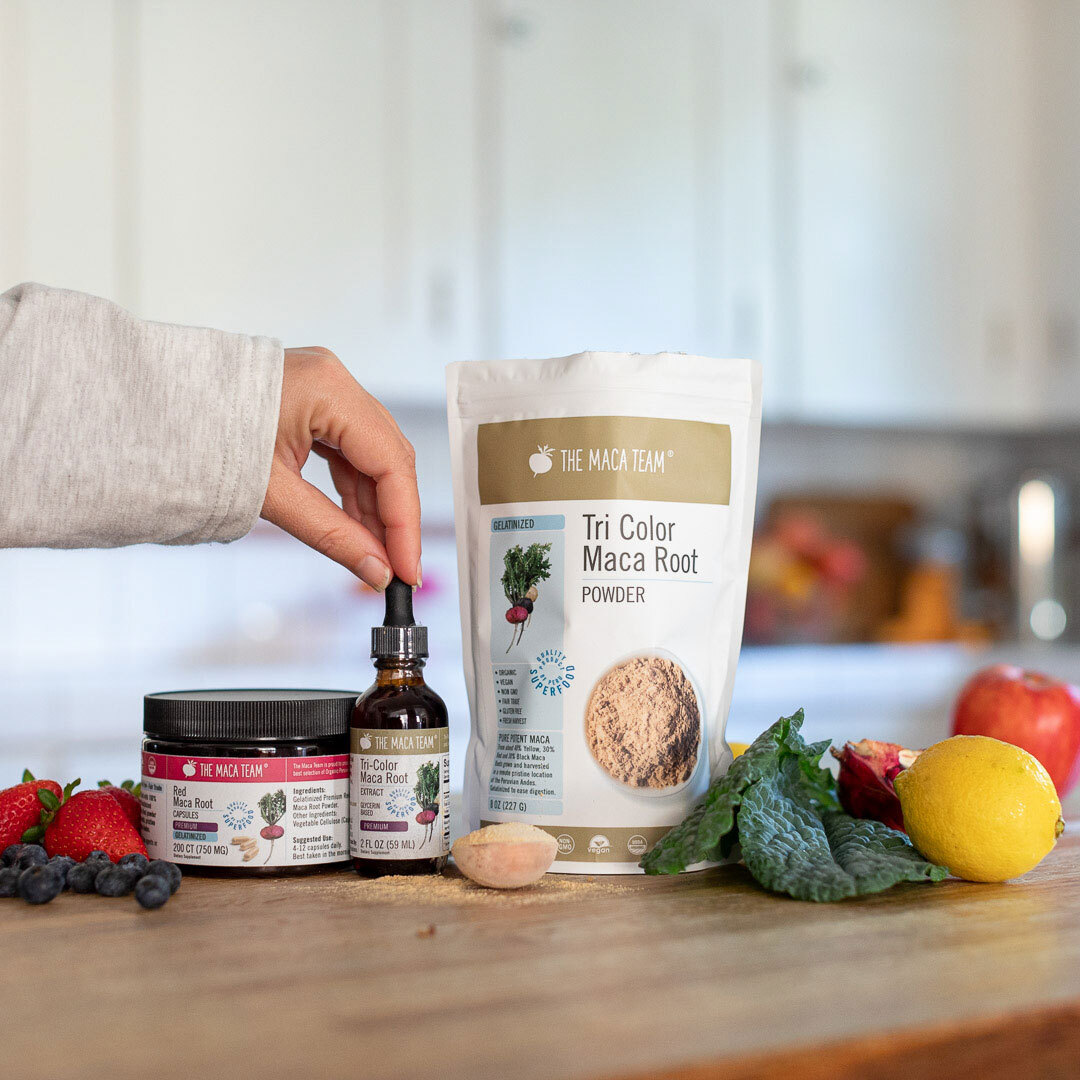
Maca is a plant food from the Peruvian Andes. Its naturally occurring nutrients and compounds include carbohydrates, protein, minerals, glucosinolates, macamides, polyphenols and plant sterols. Estrogen is not a constituent of maca root as evidenced in modern reviews of its chemical composition.[1][2]
There are a couple of reasons this question becomes confusing. First, maca has long been associated with women’s overall reproductive health, fertility and menopause. And second, laboratory research does suggest that certain maca extracts can produce estrogen-like biological activity under experimental conditions.[3]
In this article we’ll have a deeper look at what is known about how maca affects estrogenic hormones in particular.
Maca and Estrogen: The Short Version
Here are the most important distinctions:
- Maca does not supply estrogen.
- Maca does contain plant sterols, including beta-sitosterol, campesterol and other sterols.
- Some laboratory studies have found estrogen-like activity from maca extracts, although the compounds responsible have not been clearly established.
- In several controlled human studies, maca did not significantly increase estradiol levels.
- Other small studies have reported changes in estrogen and other reproductive hormones, so the possibility that maca can influence hormonal signaling in some circumstances has not been completely ruled out.
- Maca should therefore not be described as either an estrogen supplement or a proven estrogen blocker.
Does Maca Contain Phytoestrogens?
This question requires a little more care.
Phytoestrogens are plant compounds that can interact with estrogen-related pathways in the body. They are not estrogen itself, and their effects can differ considerably from human estrogen.
Maca contains several phytosterols, or plant sterols. Chemical analyses have identified compounds such as beta-sitosterol, campesterol, brassicasterol and related sterols in maca.[1]
Because these molecules have steroid-like structures, they are sometimes discussed alongside compounds that may influence hormone-related pathways. However, calling maca simply a "phytoestrogen" goes further than the current evidence supports.
Researchers have not clearly identified a particular maca compound that behaves like the well-known phytoestrogens found in foods such as soy.
There is some laboratory evidence of estrogenic activity. In one study, aqueous and methanolic maca extracts stimulated activity in estrogen-responsive breast cancer cells.[3]
But laboratory activity does not automatically mean that eating maca produces the same effect in a person. The concentration of an extract, digestion, metabolism and the amount that actually reaches tissues all matter.
Does Maca Increase Estrogen Levels?
For most people asking whether maca "contains estrogen," this is probably the more important question.
Several human studies suggest that maca can be taken without a measurable increase in circulating estradiol.
In a randomized, double-blind crossover study involving postmenopausal women, participants took 3.5 grams of maca per day. Researchers found no significant changes in estradiol, FSH, LH or sex hormone-binding globulin compared with placebo. Interestingly, some psychological and sexual-function measures improved even though estrogen levels did not.[4]

A second placebo-controlled study involving 29 postmenopausal women likewise found no significant change in estradiol, FSH or SHBG after taking 3.3 grams of maca per day.[5]
Research in healthy men has produced similar results. In a 12-week randomized trial using 1.5 or 3 grams of maca daily, researchers found no significant changes in estradiol, testosterone, LH, FSH, prolactin or other reproductive hormones.[6]
Why Do Some Studies Say Maca Raises Estrogen?
Not every study has reached the same conclusion.
A series of studies involving early postmenopausal women and a particular pre-gelatinized maca preparation reported changes in several reproductive hormones, including increases in estradiol in some participants. One study involving 168 women reported increased estradiol and decreased FSH after maca supplementation.[7] Another smaller study reported increased estradiol after longer-term use.[8]
These results are interesting, but they should be interpreted cautiously.
A systematic review of randomized trials examining maca for menopausal symptoms concluded that the number, size and methodological quality of the available studies were too limited to draw firm conclusions.[9]
So the most accurate answer is not that maca never affects estrogen. It is that there is currently no consistent evidence that maca predictably raises estrogen levels in humans.
How Can Maca Affect Hormone-Related Symptoms Without Containing Hormones?
A supplement does not have to contain a hormone to influence how someone feels.
The endocrine, nervous and reproductive systems communicate with one another through many signaling pathways. Maca also contains compounds such as macamides, glucosinolates, polyphenols and sterols that are being investigated for a variety of biological effects. Recent reviews emphasize that maca's mechanisms remain incompletely understood.[2]
This may help explain an interesting pattern in maca research: people sometimes report changes in wellbeing, sexual function or menopausal symptoms without corresponding changes in measured sex-hormone levels.
Maca, Menopause and Estrogen
Maca's long association with menopause is probably one of the main reasons people wonder whether it contains estrogen.
Some preliminary clinical studies suggest maca may help with aspects of menopausal wellbeing, but the research remains relatively small and inconsistent. Importantly, symptom improvement has occurred in studies both with and without measurable changes in estrogen.[4][5][9]
Note: For someone specifically seeking treatment for low estrogen or significant menopausal symptoms, maca and prescribed menopausal hormone therapy are fundamentally different approaches and should not be treated as interchangeable.
What About Hormone-Sensitive Conditions?
Although human research has not established that maca consistently raises estrogen, estrogen-like activity has been reported in laboratory experiments. Research into maca and estrogen receptors is still incomplete.[3]
For this reason, people with an estrogen-sensitive or other hormone-sensitive medical condition should discuss maca with their healthcare provider rather than assuming that "natural" automatically means irrelevant to hormone signaling. Our broader maca safety and side effects guide covers additional considerations for people deciding whether maca is appropriate for them.
Memorial Sloan Kettering Cancer Center similarly advises people with hormone-sensitive cancers such as breast or uterine cancer to speak with their healthcare provider before using maca.[10]
This precaution does not mean that maca has been shown to increase the risk of these conditions. It reflects the fact that the available research is not extensive enough to make that conclusion either way.
Does Red, Black or Yellow Maca Contain Estrogen?
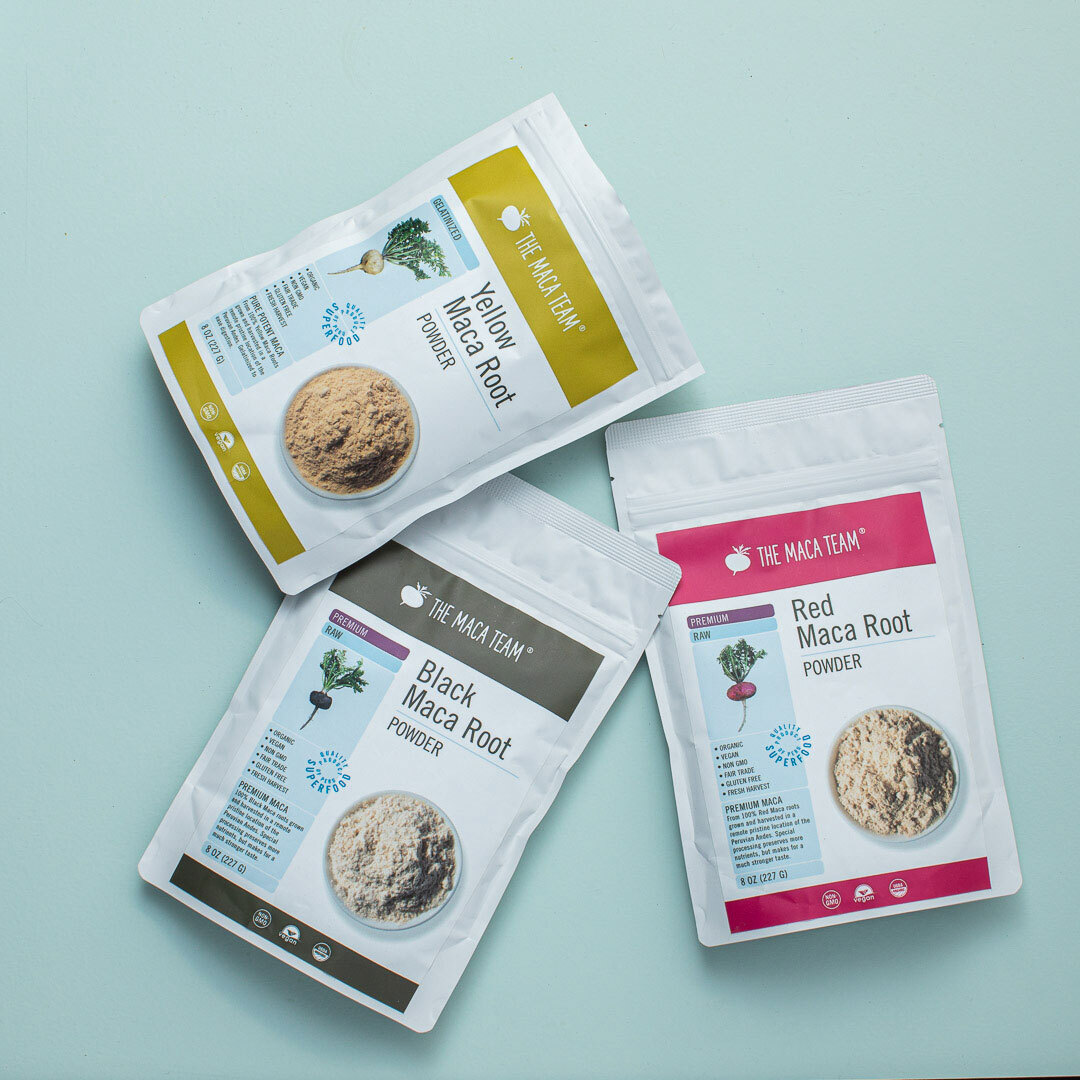
There is no evidence that red maca, black maca or yellow maca contains human estrogen.
Different maca colors do have somewhat different phytochemical profiles, and researchers are studying whether those differences help explain their varying biological effects. But none of the colors should be thought of as an estrogen supplement.
Choosing between red, black, yellow or a combination of maca colors should therefore not be based on the assumption that one provides more or less estrogen. If you want to explore how maca colors and preparation methods differ, our guide to maca types explains the main distinctions.
Is Maca a Hormone?
No. Maca is a food plant, not a hormone.
It contains naturally occurring nutrients and phytochemicals, some of which may interact with biological pathways involved in mood, energy, reproductive function and other areas. Exactly how those compounds work in humans remains an active area of research.[2]
This is also why phrases such as "maca balances hormones" can be misleading when presented as established fact. Hormones are numerous, their regulation is complex, and human studies have not demonstrated one predictable hormone-normalizing effect from maca.
A more evidence-based description is that maca has been studied for several aspects of reproductive and menopausal wellbeing, while its mechanisms remain uncertain. You can explore more published studies on our Maca Research page.
The Bottom Line
Maca does not contain estrogen and is not a plant form of estrogen replacement therapy.
It does contain naturally occurring plant sterols and other phytochemicals, and some laboratory research suggests that maca extracts can interact with estrogen-related biological pathways.
Human research tells a more reassuring but still incomplete story. Several randomized trials have found that maca did not significantly change circulating estradiol, including studies in both men and postmenopausal women. Other smaller studies have reported hormonal changes, which means the subject is not completely settled.
For most people, the important takeaway is simple: taking maca does not mean you are taking estrogen.
Anyone with a hormone-sensitive medical condition, however, should discuss maca supplementation with a qualified healthcare professional because research in this specific population remains limited.
References and Further Reading
- Dini A, Migliuolo G, Rastrelli L, Saturnino P, Schettino O. Chemical composition of Lepidium meyenii. Food Chemistry. 1994.
- Ulloa del Carpio N, et al. Exploring the chemical and pharmacological variability of Lepidium meyenii: a comprehensive review of the effects of maca. Frontiers in Pharmacology. 2024.
- Valentová K, Buckiová D, Kren V, et al. The in vitro biological activity of Lepidium meyenii extracts. Cell Biology and Toxicology. 2006.
- Brooks NA, Wilcox G, Walker KZ, Ashton JF, Cox MB, Stojanovska L. Beneficial effects of Lepidium meyenii (Maca) on psychological symptoms and measures of sexual dysfunction in postmenopausal women are not related to estrogen or androgen content. Menopause. 2008.
- Stojanovska L, Law C, Lai B, et al. Maca reduces blood pressure and depression, in a pilot study in postmenopausal women. Climacteric. 2015.
- Gonzales GF, Córdova A, Vega K, et al. Effect of Lepidium meyenii (Maca) on serum reproductive hormone levels in adult healthy men. Journal of Endocrinology. 2003.
- Meissner HO, Mscisz A, Reich-Bilinska H, et al. Hormone-Balancing Effect of Pre-Gelatinized Organic Maca: Physiological and Symptomatic Responses of Early-Postmenopausal Women to Standardized Doses of Maca in a Double-Blind, Randomized, Placebo-Controlled, Multi-Centre Clinical Study. International Journal of Biomedical Science. 2006.
- Meissner HO, Kapczynski W, Mscisz A, Lutomski J. Use of Gelatinized Maca in Early Postmenopausal Women. International Journal of Biomedical Science. 2005.
- Lee MS, Shin BC, Yang EJ, Lim HJ, Ernst E. Maca (Lepidium meyenii) for treatment of menopausal symptoms: A systematic review. Maturitas. 2011.
- Memorial Sloan Kettering Cancer Center. Maca: About Herbs, Botanicals & Other Products.
Interested in Trying Maca?
Explore our organic Peruvian maca powders, capsules and extracts, or learn more about the different options before deciding which form is right for you.