
Does Maca Make You Sleepy
Does Maca Make You Sleepy?
Updated on
Reviewed by TMT Editorial Board

Maca does not make the majority of people sleepy. Maca root is not a sedative and has no properties commonly found in sleep-promoting preparations. On the contrary, maca is generally studied in relation to areas such as energy, fatigue, mood, and overall well-being rather than drowsiness.
That said, not all people respond to maca root in exactly the same way.
During more than 20 years of working with Peruvian maca, we have occasionally heard from customers who say they feel unusually tired, relaxed, or simply a little different after taking it. If you’re here because maca does seem to make you sleepy, the experience is worth paying attention to even though it is not considered a typical effect.
In this article we’ll have a look at what the research says about maca and sleepiness or drowsiness and what you can do if you experience either of those while taking maca.
Is Sleepiness a Common Side Effect of Maca?
It is not a common response. However, maca root can affect individuals differently, and personal responses do not always match what happens to most people.
Whenever we hear from a customer reporting “sleepiness” in relation to taking maca, we like to dig a bit deeper. One of the first things we would want to know is exactly what they mean by “sleepy.”
- Sleepiness or drowsiness means you feel that you could actually fall asleep.
- Fatigue means you have low physical or mental energy, even though you may not feel sleepy.
- Relaxation means you feel calmer or less tense while remaining alert.
- Feeling “off” can include digestive discomfort, headache, restlessness, or another unfamiliar sensation.
Sometimes we find that a customer may be experiencing relaxation or digestive discomfort rather than pure sleepiness. The former is not typically an issue, and the latter can often be addressed by switching to gelatinized maca or a maca extract, which many people find easier to digest.
What Does Research Say About Maca and Tiredness?
Most maca research around this topic has focused on energy, alertness, and endurance rather than tiredness. Here are a couple of examples.
One randomized, double-blind, placebo-controlled study published in 2022 followed 60 adult women for four weeks. Participants received either a maca extract containing benzyl glucosinolate or a placebo. Fatigue scores decreased in both groups overall. However, among women younger than 45, the maca group showed a greater improvement in fatigue than the corresponding placebo group (Honma et al., 2022).
Another randomized, double-blind study followed 175 adults for 12 weeks. Participants received 3 grams per day of either placebo, spray-dried red maca extract, or spray-dried black maca extract. Researchers measured several self-reported outcomes, including energy, mood, and quality of life. Participants taking maca reported improvements in some of these measures, including perceived energy under certain study conditions (Gonzales-Arimborgo et al., 2016).
Earlier scientific reviews have also discussed maca’s traditional association with energy and stamina while emphasizing how much remains to be learned through well-designed human research (Gonzales, Gonzales & Gonzales-Castañeda, 2009).
This research is not comprehensive and should not be seen as definitively proving maca’s benefits. However, within these studies, maca tended to be associated with energy-related outcomes rather than increased fatigue.
Why Might Maca Make Me Feel Tired?
If you notice tiredness shortly after taking maca, several things are worth considering before concluding that maca itself is directly causing sleepiness.
1. You May Simply Respond Differently to Maca
We have always found individual responses to maca interesting.
Some people notice an obvious increase in energy. Some notice a more subtle sense of vitality over time. Others do not notice much of an immediate sensation at all.
And occasionally someone tells us maca makes them feel tired or unusually relaxed.
There is nothing wrong with paying attention to that response. You do not need to convince yourself that maca is energizing just because somebody else experiences it that way.
2. The Timing May Be Coincidental
Think about what else is happening around the time you take maca.
Did you take it after a large lunch? Did you sleep poorly the night before? Are you beginning a new medication or supplement? Do you normally experience an afternoon drop in energy?
If you consistently become tired at 2:00 p.m. whether you take maca or not, maca may simply be getting the blame because you recently added it to your routine.
One useful experiment is to compare otherwise similar days with and without maca.
3. You May Be Starting With Too Much
With maca, more is not necessarily better.
We generally recommend starting gradually, particularly if you have never used maca before. Beginning with a large serving makes it harder to understand how your body responds and may also increase the chance of digestive discomfort or an overall feeling of being “off.”
If you are new to maca, see our Maca Dosage Guide for our approach to gradually establishing a serving that works for you.
4. Your Maca Product May Contain Something Else
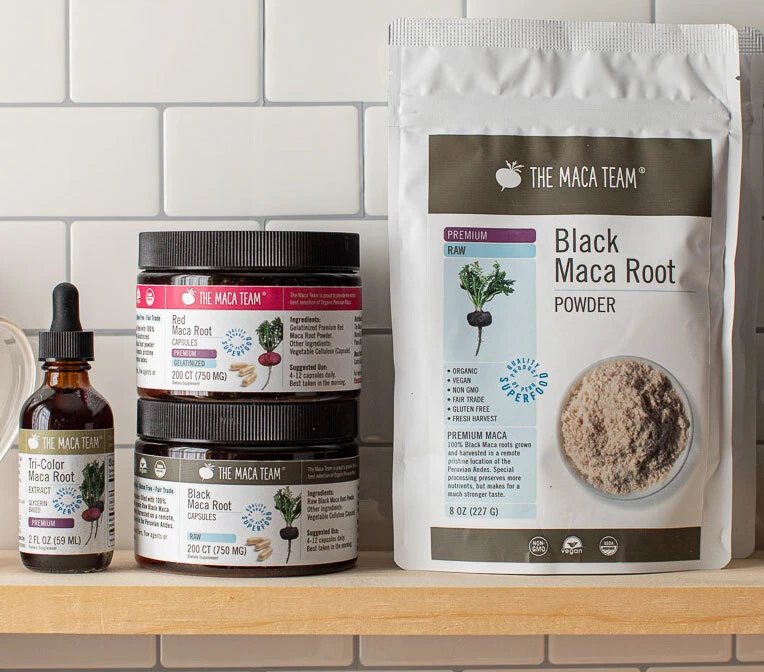
This is an easy one to overlook.
Pure maca products should contain maca and nothing else. But many products marketed as maca drinks, energy blends, superfood powders, or coffee alternatives contain several ingredients.
A blend might include:
- Coffee
- Cacao
- Mushrooms
- Other herbs
- Vitamins
- Sweeteners
- Flavoring ingredients
Those ingredients can have their own effects on energy, digestion, and sleep.
If you are trying to determine how maca affects you, using a simple maca product makes the experiment much easier.
5. Digestive Discomfort Can Make You Feel Drained
Raw maca contains its natural starches. Some people digest those starches easily, while others find raw maca uncomfortable, particularly when they begin with a larger amount.
Bloating, fullness, gas, or stomach discomfort can leave you feeling sluggish even if the maca is not actually making you drowsy.
If that sounds familiar, try taking a smaller serving with food. You may also find gelatinized maca easier to digest.
Despite the name, gelatinized maca does not contain gelatin. Gelatinization is a cooking process that removes much of maca’s starch.
You can learn more in our guide to avoiding digestive discomfort when taking maca.
What Should I Do If Maca Makes Me Sleepy?

Keep it simple.
First, stop taking maca temporarily and see whether the unusual tiredness disappears.
If you want to try it again, restart with a smaller amount and take it in the morning, preferably with food.
We recommend changing only one thing at a time. If you simultaneously change your maca product, serving size, breakfast, coffee, vitamins, and workout routine, you will have no idea which change mattered.
A Simple Approach
- Pause the maca and see how you feel.
- Check the product’s complete ingredient list.
- Restart with a smaller serving.
- Take it earlier in the day.
- Take it with food if your digestion is sensitive.
- Watch for the same response over the next several uses.
If you repeatedly become sleepy or feel unwell whenever you take maca, discontinue it.
Maca should be something that fits comfortably into your routine. There is no benefit in trying to “push through” a reaction that happens consistently.
Can Taking Maca Too Late in the Day Affect Sleep?
Possibly, depending on the person.
Maca does not contain caffeine, but many people describe it as energizing and therefore prefer taking it in the morning or earlier in the day.
Someone who is sensitive to that effect may find that taking maca late in the afternoon or evening makes it more difficult to settle down at bedtime.
Ironically, that could result in more tiredness the following day because nighttime sleep was disrupted.
This is one reason we usually suggest that new maca users begin in the morning. Once you know how maca feels to you, you can experiment with timing if you wish.
For a more detailed discussion, see our guides to When Is the Best Time to Take Maca? and Will Maca Keep Me Up at Night?
Does Maca Help You Sleep?
Maca is not a sleep aid or a treatment for insomnia.
There are people who tell us they sleep well while using maca, just as there are people who prefer not to use it late in the day because they feel more energetic.
We do not currently have good evidence that maca reliably helps people fall asleep, stay asleep, or sleep more deeply.
You may also see claims online that maca improves sleep by “balancing hormones” or “regulating cortisol.” Those explanations go beyond what has been established in human maca research.
If your primary goal is to find something that makes you sleepy at bedtime, maca would not be our first choice.
Is Maca a Stimulant?
No. Pure maca root does not naturally contain caffeine or any other type of stimulant.
Some people do report feelings of increased alertness, motivation, or drive when taking maca. That does not make maca a stimulant in the way that caffeine is, and individual responses can vary considerably.
Can I Take Maca With Coffee?
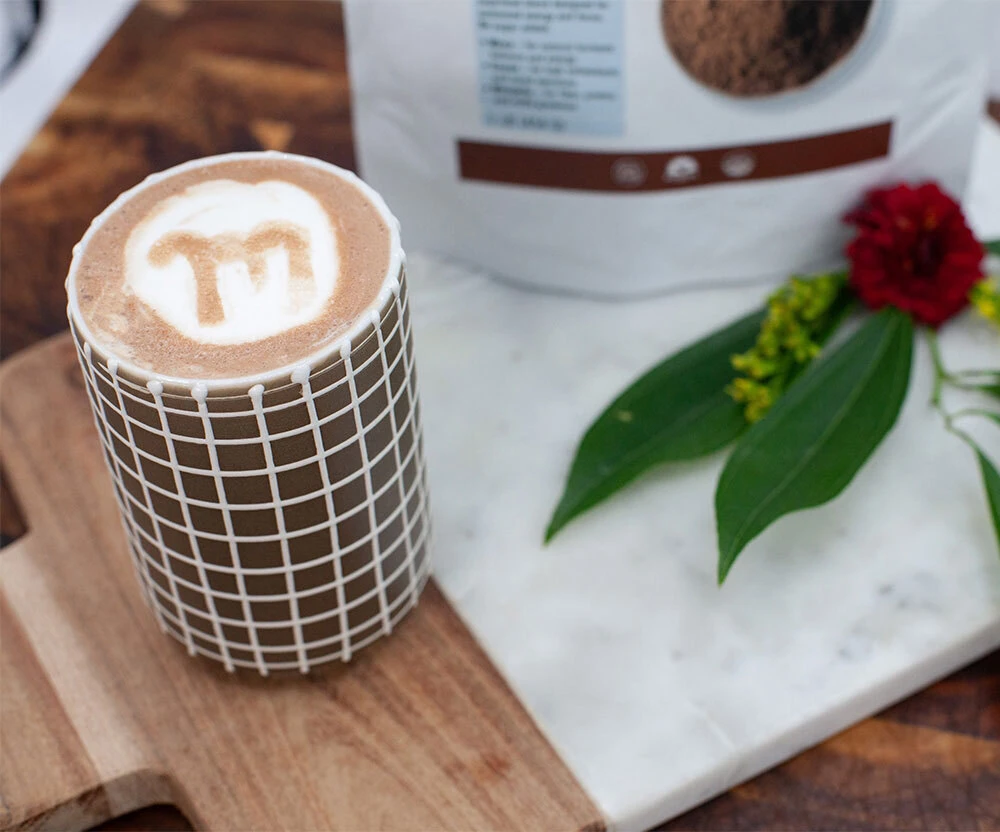
Yes. Many people combine maca and coffee.
Maca’s earthy, slightly malty flavor works particularly well in coffee, cacao drinks, smoothies, and other morning beverages.
Just remember that if you combine maca with coffee and later feel stimulated, jittery, tired, or experience an afternoon “crash,” it becomes difficult to know which ingredient contributed to the effect.
If you are specifically trying to learn how your body responds to maca, try it without caffeine first.
Once you know how maca affects you on its own, combining the two becomes much easier to evaluate.
Can Maca Cause an Energy Crash?
There is no good evidence that pure maca causes the classic stimulant “crash” associated with consuming a large amount of caffeine or another stimulant.
In fact, the limited human research examining fatigue and perceived energy has generally looked in the opposite direction.
The 2022 clinical study discussed earlier investigated whether a particular maca extract might help with fatigue (Honma et al., 2022), while the 2016 trial measured self-reported energy among people using red and black maca extracts (Gonzales-Arimborgo et al., 2016).
Neither study establishes maca as a treatment for low energy, but neither suggests that an energy crash is a characteristic effect.
If you feel energetic shortly after taking a maca product and then unusually tired later, check what else is in the product and what you consumed with it.
A maca coffee drink, for example, is very different from pure maca powder mixed into oatmeal.
Sleep, meals, hydration, exercise, caffeine, and other ingredients may all affect how energetic you feel throughout the day.
Is Raw or Gelatinized Maca Better If Maca Makes Me Feel Tired?

There is no evidence that gelatinized maca is inherently less likely to make someone sleepy.
The difference is primarily one of processing and digestion.
Raw maca retains its natural starches. Gelatinized maca has been cooked in a process that removes much of that starch, which makes it easier for some people to digest.
If what you are calling “tiredness” actually comes with bloating, heaviness, gas, or digestive discomfort, trying gelatinized maca may make sense.
If you are experiencing true drowsiness without digestive symptoms, simply switching from raw to gelatinized maca may not change the response.
Does Maca Affect Sleep Differently in Men and Women?
There is currently not enough evidence to say that maca causes sleepiness differently in men versus women.
The more useful question is how you personally respond.
Start gradually, take maca earlier in the day, and adjust from there.
Should I Take Maca on an Empty Stomach?
You can, but you do not have to.
Many people tolerate maca perfectly well on an empty stomach. Others find it more comfortable when taken with breakfast, blended into a smoothie, stirred into oatmeal, or included with another meal.
If maca makes you feel slightly nauseated, heavy, or uncomfortable — and that discomfort is contributing to feeling tired — try taking it with food.
For sensitive digestion, a smaller amount or gelatinized maca may also be worth considering.
How Long Should I Give Maca Before Deciding How It Affects Me?
There is no single timetable that applies to everyone.
Some people notice how a particular maca product feels fairly quickly. Others use maca consistently as part of their diet without noticing an obvious immediate sensation.
If you are evaluating possible sleepiness, however, you do not need to wait weeks to pay attention to a repeated response.
If you take maca several times under similar circumstances and consistently become unusually drowsy afterward, that pattern is more useful than trying to force yourself to continue taking it in hopes that the reaction will disappear.
For people who tolerate maca comfortably, consistency over time generally makes more sense than frequently changing products, colors, serving sizes, and schedules.
When Should I Talk With a Healthcare Professional?
Occasional tiredness can have countless explanations. Persistent or significant daytime sleepiness is different.
Do not automatically assume that maca is responsible if you:
- Frequently fall asleep unintentionally
- Feel dangerously sleepy while driving or working
- Continue feeling unusually tired after stopping maca
- Regularly wake up feeling unrefreshed
- Experience significant snoring, gasping, or disrupted sleep
- Recently started a medication that can cause drowsiness
- Have other persistent or unexplained symptoms
Daytime sleepiness can have many causes unrelated to maca and deserves appropriate evaluation when it is significant or ongoing.
People who are pregnant or nursing, take prescription medications, have a medical condition, or are unsure whether maca is appropriate for them should also discuss regular maca use with a qualified healthcare professional.
So, Does Maca Make You Sleepy?
Usually, no.
Current human research and commonly shared feedback do not suggest that daytime sleepiness is one of maca’s typical effects.
But your own response still matters.
If you become tired every time you take maca, do not ignore that simply because somebody else says maca gives them energy. Reduce the serving, move it earlier in the day, check what else is in your product, and see whether the response repeats itself.
One thing we have learned after working with maca for more than two decades is that there is rarely a reason to make a maca routine complicated.
Start modestly. Pay attention. Adjust as necessary.
And choose a routine that actually works for you.
Related Reading
- Will Maca Keep Me Up at Night?
- When Is the Best Time to Take Maca?
- Maca Dosage Guide
- Maca Root Side Effects and Safety
- How to Start Taking Maca
- How to Avoid Digestive Discomfort With Maca
- Raw vs. Gelatinized Maca
- Red, Black and Yellow Maca Compared
References
- Honma A, Fujiwara Y, Takei S, Kino T. The improvement of daily fatigue in women following the intake of maca (Lepidium meyenii) extract containing benzyl glucosinolate. Functional Foods in Health and Disease. 2022;12(4):175–187.
- Gonzales-Arimborgo C, Yupanqui I, Montero E, et al. Acceptability, Safety, and Efficacy of Oral Administration of Extracts of Black or Red Maca (Lepidium meyenii) in Adult Human Subjects: A Randomized, Double-Blind, Placebo-Controlled Study. Pharmaceuticals. 2016;9(3):49.
- Gonzales GF, Gonzales C, Gonzales-Castañeda C. Lepidium meyenii (Maca): A Plant From the Highlands of Peru—From Tradition to Science. Forschende Komplementärmedizin. 2009;16(6):373–380.
- Ulloa del Carpio N, Alvarado-Corella D, Quiñones-Laveriano DM, et al. Exploring the chemical and pharmacological variability of Lepidium meyenii: a comprehensive review of the effects of maca. Frontiers in Pharmacology. 2024;15:1360422.
Interested in Trying Maca?
Start with a modest serving, use it earlier in the day while you learn how your body responds, and choose the form that best fits your routine.
Explore our organic Peruvian maca powders, capsules, extracts, and whole-root products →