
Tri Color Maca Benefits
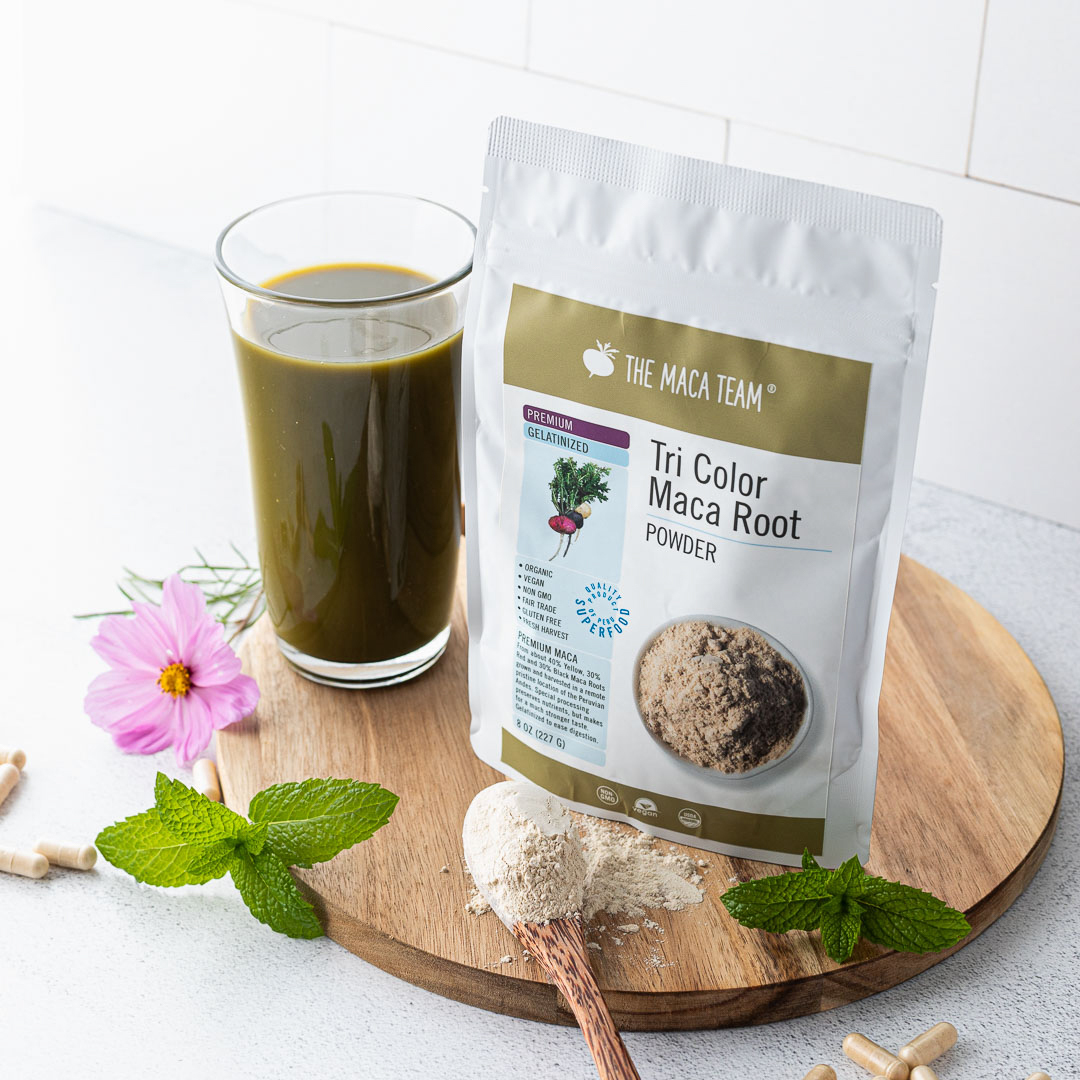
Tri-color maca combines the three primary maca color families: yellow, red and black.
Tri-Color Maca Benefits: What the Research Shows
If you’re researching tri-color maca benefits, you may be wondering whether combining red, black and yellow maca really offers something different from choosing a single color.
Tri-color maca is different from the other maca colors in one important way: it is not a separate maca phenotype. It is a blend of the three naturally occurring maca color ranges — red, black and yellow.
This approach has deep roots in the traditional use of maca. For generations in the Peruvian Andes, maca roots were generally harvested and consumed together rather than carefully separated by color. The modern practice of sorting maca into red, black and yellow varieties came much later, in the latter part of the 20th century.
At The Maca Team, our tri-color maca is a heritage-inspired blend made with approximately 40% yellow, 30% red and 30% black maca roots. That ratio is designed to provide meaningful representation of all three main colors; it should not be understood as the exact composition of every traditional maca harvest, since natural color proportions vary by location and crop.
So what does research tell us about using maca colors together?
There is some human research involving mixed-color maca preparations, and a much larger body of research involving maca generally or the individual colors. What we do not yet have is strong clinical evidence showing that a specific red-black-yellow tri-color ratio produces unique or synergistic benefits in people.
At The Maca Team, we think the most useful way to understand tri-color maca is to separate what has actually been studied from what can reasonably be inferred.
You can also explore the broader benefits of maca regardless of color.
Tri-Color Maca Benefits at a Glance
Tri-color maca is best understood as a broad, traditional-style maca option rather than a highly targeted one.
- Traditional use: Maca colors were historically harvested and consumed together rather than routinely separated into individual color products.
- Mixed-color human research: Proprietary preparations containing several maca colors have been studied in people, particularly around perimenopause and early postmenopause.
- Individual-color research: Red, black and yellow maca each have different research profiles.
- General maca research: Human studies have investigated maca for well-being, sexual function, menopause-related symptoms and physical performance, although many do not specify which colors were used.
- Synergy: There is not currently good human evidence proving that combining maca colors creates a special synergistic effect.
- Practical use: Tri-color maca gives you all three main colors without having to choose one.
For many people, that is really the point of tri-color maca.
What Is Tri-Color Maca?
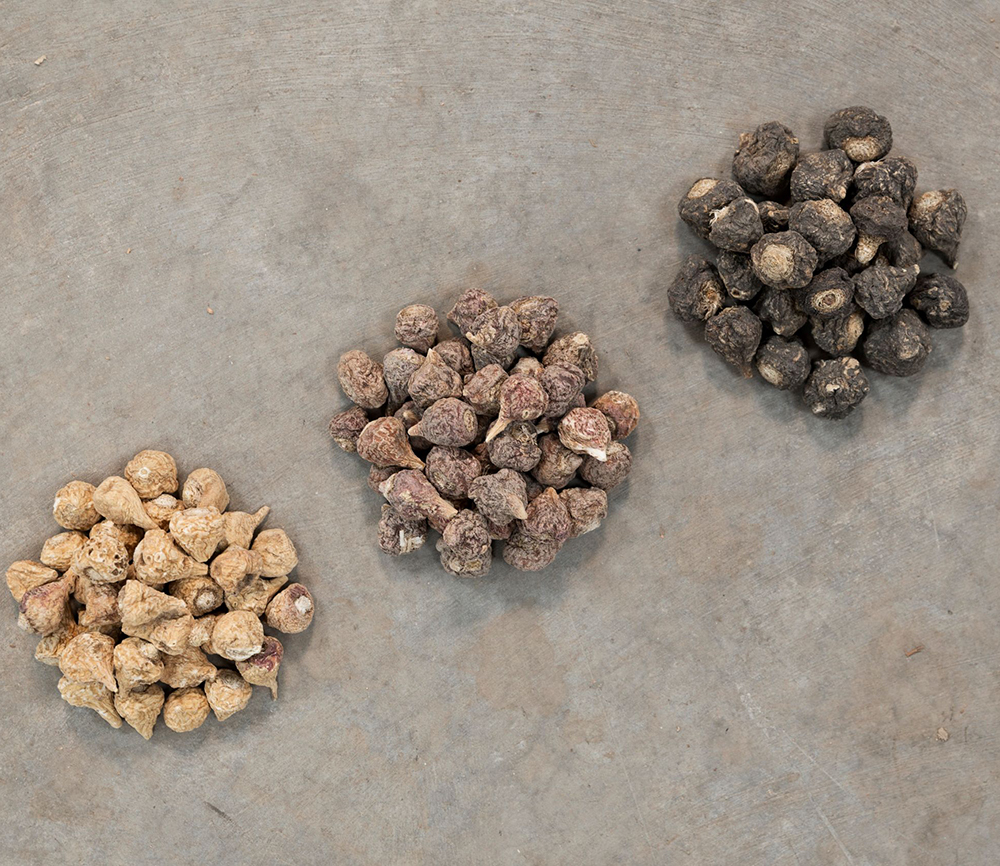
Naturally occurring maca roots come in a range of colors, with yellow, red and black the three main color families commonly separated today.
Tri-color maca is a blend of the primary maca root color families: yellow, red and black.
All three come from the same maca plant species and grow naturally in the high Andes of Peru. The differences are primarily visible in the outer skin of the roots, although researchers have also found measurable differences in phytochemical composition and biological activity among maca phenotypes.
A mixed maca harvest might contain a large proportion of yellow roots along with smaller amounts of black, red, purple and other naturally occurring colors. The exact distribution can vary substantially between growing regions and individual harvests.
That is why we describe our tri-color products as a heritage blend rather than claiming that one fixed percentage represents the traditional ratio.
Our blend of approximately 40% yellow, 30% red and 30% black maca intentionally brings the three most familiar maca colors together in one product.
Why Were Maca Colors Traditionally Used Together?
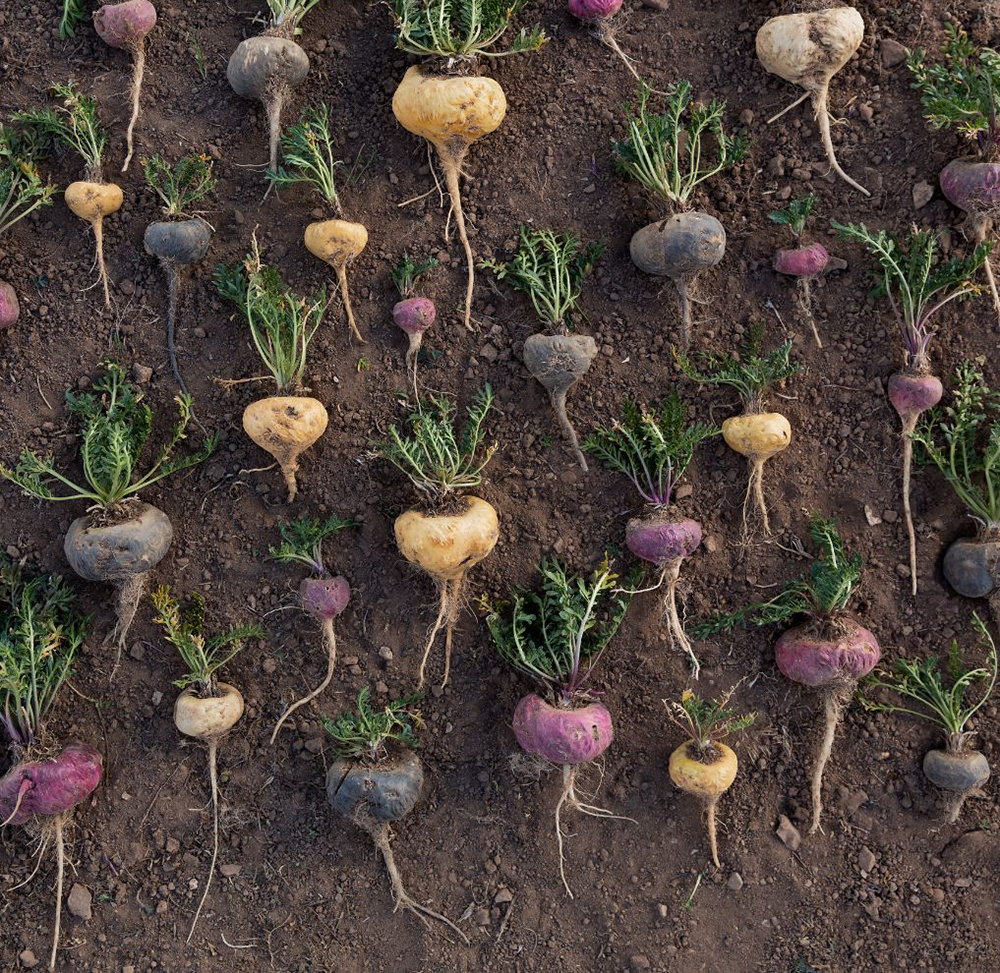
Traditional maca harvests naturally contain a mixture of root colors rather than one uniform phenotype.
The simplest answer is that this is how maca naturally grows.
Traditional maca harvests contained a variety of colors and shades. Those roots were gathered, dried, stored and eaten together. Modern growers sort and select roots by color after harvest.
Research focusing specifically on individual maca colors became more prominent in recent decades, when scientists began observing that black, red and yellow maca sometimes behaved differently in experimental studies.
That led to the modern interest in separated colors.
Single-color maca allows people to choose a phenotype with a particular research profile, while tri-color maca reflects the older practice of consuming the crop more broadly.
For a direct comparison of the individual colors, see our Black vs. Red vs. Yellow Maca guide.
Does Tri-Color Maca Have Its Own Research?
There is research involving mixed-color maca formulations, but much less research on products specifically labeled “tri-color maca.”
A 2024 review of maca colors identified mixed-color formulations as a separate area of research and noted that one proprietary preparation known as Maca-GO has been used in several animal and human studies. [1]
Maca-GO contained multiple maca colors, including black, yellow and red/purple phenotypes, prepared as a highly gelatinized standardized formulation.
That makes it relevant to the question of using maca colors together.
But it is not the same product as a 40% yellow, 30% red and 30% black tri-color maca blend. Its findings are therefore best understood as evidence that mixed-color maca has been studied in humans, not proof that every tri-color maca product will produce the same results.
What Does the Research Say About Mixed-Color Maca?
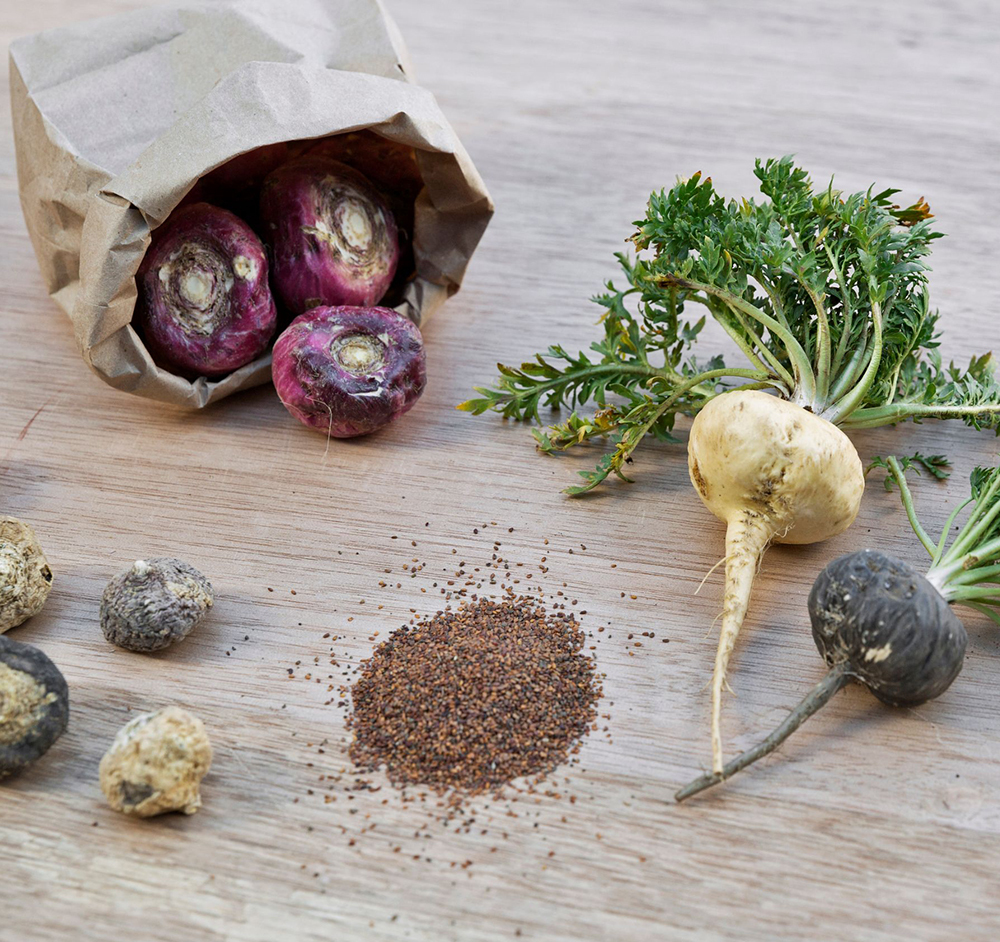
Research on mixed-color maca is more limited than research on maca generally or on individual maca phenotypes.
1. Perimenopause and Early Postmenopause Research
Some of the most substantial human research involving a mixed-color maca preparation comes from studies of Maca-GO in perimenopausal and early-postmenopausal women.
In one randomized, double-blind crossover pilot study, 20 perimenopausal women received 2 grams per day of Maca-GO or placebo during different phases of a four-month study. Researchers measured hormones, lipid markers and menopause-related symptoms. [2]
The researchers reported changes in several hormone measurements and reductions in symptom scores during maca treatment.
A larger multicenter study later included 168 early-postmenopausal women, 124 of whom completed the study. Participants received either placebo or 2 grams per day of the mixed-color maca preparation. Researchers again reported differences in hormonal measurements and menopausal symptom scores. [3]
These studies involved a proprietary standardized preparation, so they do not tell us that a different mixed-color maca blend will behave identically.
A later systematic review of maca for menopausal symptoms concluded that the available trials provided limited evidence and that the small number of studies, sample sizes and methodological limitations prevented firm conclusions. [4]
So there is human research worth knowing about, but it should not be translated into a claim that tri-color maca has been proven to treat menopause symptoms or “balance hormones.”
2. Bone and Mineral Research
Mixed-color Maca-GO research has also included measurements related to bone and mineral status.
In one early-postmenopausal study, researchers measured forearm bone density markers in a subset of participants after several months of treatment and reported changes they considered favorable. [5]
Animal studies using the same mixed-color formulation have also explored calcium and phosphorus deposition in bone and muscle tissue. [6]
The evidence is not strong enough to say that tri-color maca improves bone density in people. The human analysis involved a small subgroup, and the preparation used was a specialized proprietary formulation.
For now, this is best regarded as an area of research rather than an established tri-color maca benefit.
3. Hormones: Does Mixed-Color Maca Raise Testosterone or Estrogen?
Maca itself does not contain human hormones such as testosterone or estrogen.
Some Maca-GO studies in women reported changes in estrogen, FSH and other hormone measurements. Those findings were produced with a standardized proprietary formulation and should not automatically be applied to other maca products.
There is also one animal study using a hydroalcoholic extract made from red, yellow and black maca roots — a product known as MACAXS — in which researchers reported increased serum testosterone in male rats after six weeks. [7]
That was animal research involving a concentrated extract. It does not demonstrate that ordinary tri-color maca powder raises testosterone in men.
So we would not describe tri-color maca as a testosterone booster, estrogen booster or hormone treatment.
What Can the Individual Maca Colors Tell Us About Tri-Color Maca?
A tri-color blend contains red, black and yellow maca, and each of those colors has been investigated separately.
That research cannot prove that their effects simply add together when blended, but it can help explain the broader research profile of each component.
Black Maca
Black maca has received particular research attention involving male reproductive parameters, learning and memory, and more recently physical performance.
Some research has been conducted in humans, while much of the color-specific evidence remains animal or laboratory based.
See our Black Maca Benefits guide for the full research discussion.
Red Maca
Red maca has one of the most distinctive color-specific research profiles.
Human research has examined mood, energy and quality-of-life measures, while animal studies have investigated red maca in relation to prostate biology, bone structure and other areas.
See our Red Maca Benefits guide for a closer look.
Yellow Maca
Yellow maca is the most common and broadly used maca color.
Research has examined male and female reproductive parameters, mood-related behavior, antioxidant activity and muscle cells. A randomized human fertility study specifically involving yellow maca produced inconclusive results compared with placebo.
See our Yellow Maca Benefits guide for details.
Putting all three colors into one product therefore gives you broad representation of the primary maca phenotypes.
It does not mean that every finding from separate red, black and yellow maca studies will automatically occur in someone using tri-color maca.
Does Combining Maca Colors Create a Synergistic Effect?
We don’t currently have good evidence that it does.
“Synergy” would mean that combining red, black and yellow maca produces an effect greater than what would be expected from the individual colors alone.
To demonstrate that properly, researchers would need to compare a tri-color blend directly with the individual colors under controlled conditions. That kind of human research is lacking.
Mixed-color maca has been studied, and individual colors have measurable chemical differences, but that is not the same as proving synergy.
It is reasonable to describe tri-color maca as broad or well-rounded because it contains all three primary colors. We would not say the colors have been scientifically proven to “work together” in a special way.
What About Research on Maca Generally?
A substantial amount of human maca research does not clearly state which color or combination of colors researchers used.
That makes it difficult to apply those studies specifically to red, black, yellow or tri-color maca.
Randomized human studies have examined maca in relation to sexual function, psychological well-being, menopause-related symptoms and physical performance.
A review of studies involving sexual function found some positive results but concluded that there was not enough evidence for firm conclusions. [8]
A systematic review of maca and menopausal symptoms reached a similar conclusion. [4]
A 2022 systematic review and meta-analysis examining semen quality also found mixed results and did not show a significant overall increase in sperm concentration compared with placebo. [9]
This broader research helps us understand maca generally, but if a study did not specify the colors used, we would not call it tri-color-specific evidence.
So What Are the Real Benefits of Tri-Color Maca?
Scientifically, the clearest answer is that tri-color maca gives you all three primary maca colors in one product.
That has several practical advantages without claiming a special medical effect:
- You do not have to choose one color.
- It reflects the traditional-style practice of using mixed maca roots together.
- It can work well for couples or households in which different people might otherwise choose different colors.
- It is often more economical because the roots require less color sorting during processing.
- It provides a broad maca option for people who do not want to focus on one phenotype.
For general, everyday maca use, those are meaningful advantages.
If you are still deciding between a single color and a blend, our Which Maca Is Best for You? guide can help.
How to Choose Tri-Color Maca

Tri-color maca is available in raw and gelatinized preparations as well as powders, capsules, extracts and whole-root formats.
Once you decide on tri-color maca, you still need to choose the preparation and format that work best for you.
Raw Tri-Color Maca
Raw tri-color maca is dried and powdered without the additional cooking step used for gelatinized maca.
It is closest to traditionally dried maca and works well for people with normal digestion who prefer raw maca powder.
Gelatinized Tri-Color Maca
Gelatinized maca is cooked before being dried and powdered, which removes much of the starch.
Many people find it easier to digest.
Premium vs. Traditionally Sun-Dried Maca
At The Maca Team, we also offer both traditionally sun-dried and premium dehydrated preparations.
The main differences involve the drying process, flavor and concentration rather than the three colors included in the blend.
You can compare the differences in our Premium vs. Sun-Dried Maca guide.
Powder, Capsules, Extract or Chips
Powder is versatile and generally the most economical.
Capsules provide convenience and consistent serving sizes.
Liquid extract is compact and easy to use without mixing powder into food.
Whole-root chips provide a more traditional food-style preparation.
The best format is the one you are most likely to use consistently.
For a broader comparison, visit our Maca Forms guide or browse all of our Tri-Color Maca options.
Tri-Color Maca FAQs
Is tri-color maca better than one color?
Not necessarily.
Tri-color maca is useful if you want a broad, traditional-style maca or do not want to choose one specific color. A single-color maca may make more sense if you are specifically interested in the research profile of red, black or yellow maca.
Does tri-color maca give you the benefits of all three colors?
It gives you all three colors in one product.
That does not mean every benefit observed in separate red, black and yellow maca studies will automatically occur when the colors are blended together. There has not been enough research to make that claim.
Is tri-color maca more balanced?
“Balanced” can be a useful practical description because tri-color maca contains meaningful amounts of all three main maca colors rather than emphasizing one.
It should not be interpreted as a scientific claim that the blend balances hormones or produces physiological equilibrium.
Is tri-color maca good for energy?
Many people use maca as part of an everyday energy and vitality routine, and maca contains no caffeine.
Human maca research has investigated energy and physical performance, but there is not strong evidence specifically proving that a red-black-yellow tri-color blend increases energy.
Does tri-color maca increase testosterone?
There is no good human evidence showing that ordinary tri-color maca raises testosterone.
One animal study using a concentrated extract of red, yellow and black maca reported increased testosterone, but that finding cannot be assumed to apply to people taking ordinary tri-color powder or capsules.
Does tri-color maca contain hormones?
No. Maca does not contain human hormones such as estrogen or testosterone.
Is tri-color maca good for couples?
It can be a very practical choice.
Because tri-color maca combines the primary colors, couples or households can use one broad maca product rather than buying separate red, black or yellow products.
Is tri-color maca traditional?
The practice of consuming mixed maca roots is traditional.
The exact percentage of colors in any natural harvest varies, so a modern fixed tri-color ratio should be understood as heritage-inspired rather than an exact reproduction of every historical harvest.
Is gelatinized or raw tri-color maca better?
Neither is universally better.
Raw tri-color maca is closer to the traditionally dried root, while gelatinized maca has been cooked and has much of its starch removed.
People with sensitive digestion often prefer gelatinized maca. For more detail, see our Raw vs. Gelatinized Maca guide.
Final Thoughts
Tri-color maca may actually be easiest to understand once you stop looking for one single dramatic benefit.
Instead of choosing red, black or yellow, you get all three primary colors together in one product — an approach inspired by the way maca roots were traditionally harvested and consumed in the Andes.
There is real research involving mixed-color maca formulations, including several human trials. There is also substantial research involving the individual colors and a larger body of human research on maca generally.
What we do not yet have is strong evidence proving that one particular tri-color ratio creates unique or synergistic effects.
For people who want an everyday maca, prefer a traditional-style blend, want one product that can be shared, or simply do not have a reason to choose one color over another, tri-color maca is often one of the most practical places to start.
At The Maca Team, our tri-color products combine approximately 40% yellow, 30% red and 30% black maca roots. We offer raw, gelatinized, premium, powder, capsule, extract and whole-root preparations so you can choose the form that best fits your routine.
We hope this article has helped clarify what tri-color maca really is, what researchers have actually studied and what we still have left to learn.
Enjoy the day!
Interested in Trying Tri-Color Maca?
Compare our organic Peruvian tri-color maca powders, capsules, extracts and whole-root options, or learn more about choosing the maca that best fits your routine.
References
- Minich DM, Ross K, Frame JD, et al. Not All Maca Is Created Equal: A Review of Colors, Nutrition, Phytochemicals, and Clinical Uses. Nutrients. 2024. PMID: 38398854. View study
- Meissner HO, Mscisz A, Reich-Bilinska H, et al. Therapeutic Effects of Pre-Gelatinized Maca (Lepidium peruvianum Chacon) used as a Non-Hormonal Alternative to HRT in Perimenopausal Women — Clinical Pilot Study. International Journal of Biomedical Science. PMID: 23674976. View study
- Meissner HO, Mscisz A, Reich-Bilinska H, et al. Hormone-Balancing Effect of Pre-Gelatinized Organic Maca (Lepidium peruvianum Chacon): (II) Physiological and Symptomatic Responses of Early-Postmenopausal Women to Standardized Doses of Maca in Double Blind, Randomized, Placebo-Controlled, Multi-Centre Clinical Study. International Journal of Biomedical Science. 2006. PMID: 23675005. View study
- Lee MS, Shin BC, Yang EJ, Lim HJ, Ernst E. Maca (Lepidium meyenii) for treatment of menopausal symptoms: A systematic review. Maturitas. 2011. PMID: 21840656. View study
- Meissner HO, Mscisz A, Reich-Bilinska H, et al. Hormone-Balancing Effect of Pre-Gelatinized Organic Maca (Lepidium peruvianum Chacon): (III) Clinical Responses of Early-Postmenopausal Women to Maca in Double Blind, Randomized, Placebo-Controlled, Crossover Configuration, Outpatient Study. International Journal of Biomedical Science. 2006. PMID: 23675006. View study
- Meissner HO, Kapczynski W, Mscisz A, Lutomski J. Short and long-term physiological responses of male and female rats to two dietary levels of pre-gelatinized maca (Lepidium peruvianum Chacon). International Journal of Biomedical Science. PMID: 23674962. View study
- Ohta Y, Kawate N, Inaba T, et al. Feeding hydroalcoholic extract powder of Lepidium meyenii (maca) increases serum testosterone concentration and enhances steroidogenic ability of Leydig cells in male rats. Andrologia. 2016. PMID: 26174043. View study
- Shin BC, Lee MS, Yang EJ, Lim HS, Ernst E. Maca (L. meyenii) for improving sexual function: a systematic review. BMC Complementary and Alternative Medicine. 2010. PMID: 20691074. View study
- Lee HW, et al. Maca (Lepidium meyenii Walp.) on semen quality parameters: A systematic review and meta-analysis. Frontiers in Pharmacology. 2022. PMID: 36110519. View study