
Can You Be Allergic To Maca
Maca Allergy, Intolerance, and Reactions Explained
In our decades of experience sourcing and selling high-quality Peruvian maca products, we have occasionally received a question such as: “Is it possible to be allergic to maca?”
Based on the research we reviewed for this article, we found no published report clearly establishing a true immune-mediated allergy to single-ingredient maca. However, some people do experience digestive sensitivity or other reactions to maca, and adverse-event reports involving maca-containing products have included allergy-like symptoms.[1][2]
In this article, we’ll take a deeper look at these types of reactions and potential intolerances to maca, what symptoms deserve more attention, and what you can do if maca doesn't seem to agree with you.
Quick Answer
Yes, it is possible to have an adverse reaction to maca, but a true allergy specifically attributable to maca itself has not been clearly documented in the research we reviewed.[1][2]
Maca (Lepidium meyenii) has been eaten as a traditional food in Peru for centuries, and modern human studies generally find it to be well tolerated.[2][3] There have been adverse-event reports involving maca-containing products that included reactions such as hives, rash, and anaphylaxis. However, some of these reports involved multi-ingredient products or the concurrent use of other herbal products, so it is unclear whether maca itself was responsible.[1]
It is also important to distinguish a true allergy from a much more common issue: digestive intolerance or sensitivity to maca. Symptoms such as gas, bloating, stomach discomfort, or heartburn do not necessarily mean you are allergic to maca.[4][6]
Is Maca a Common Food Allergen?
No. Maca is not recognized as a major food allergen, and there is surprisingly little published medical research specifically investigating maca allergy.[6]
There have been adverse-event reports involving maca-containing supplements that included symptoms such as rash, urticaria — commonly called hives — and anaphylaxis. However, the United States Pharmacopeia safety review of maca noted that some cases involved products containing multiple ingredients or people using other herbal products at the same time.[1]
That makes it impossible to confidently say that maca itself was responsible.
A more recent 2024 scientific review of maca research also discussed the USP safety assessment and reported that no serious adverse events had been found for single-ingredient maca products.[2]
Overall, research suggests that maca is generally well tolerated.[2]
For example, one randomized, double-blind clinical study followed 175 adults who consumed 3 grams per day of red maca extract, black maca extract, or placebo for 12 weeks. Researchers reported no serious adverse effects attributable to maca.[3]
Other human studies reviewed in the scientific literature have reached similar conclusions.[2]
This does not mean that an individual allergic reaction to maca is impossible. Foods contain many different proteins and compounds, and individual reactions can occur.
What we can say based on the available evidence is that maca does not currently appear to be a common food allergen.
What Would a Maca Allergy Look Like?
A true food allergy involves the immune system reacting to a component of a food as though it were harmful.[4][6]
Food-allergy symptoms usually appear relatively soon after eating the food — often within minutes and generally within a couple of hours.[4]
Symptoms that would make us more concerned about a possible allergic reaction to maca include:[4][6]
- Hives
- An itchy or rapidly developing rash
- Itching or tingling in the mouth
- Swelling of the lips, tongue, face, or throat
- Tightness in the throat
- Wheezing
- Difficulty breathing
- Sudden coughing after taking maca
- Vomiting as part of a rapid reaction
- Dizziness or fainting
- A sudden drop in blood pressure
You do not need to experience all of these symptoms for a reaction to be significant.
For example, developing hives and swollen lips shortly after consuming maca would be quite different from feeling bloated several hours after drinking a maca smoothie.
That brings us to an important distinction.
Maca Allergy vs. Maca Intolerance
Many people use the word “allergy” whenever a food makes them feel uncomfortable.
Medically, however, allergy and intolerance are not the same thing.
A food allergy involves the immune system.
A food intolerance or digestive sensitivity generally does not.[4][6]
This table is only a general guide. Food allergies can also cause gastrointestinal symptoms such as nausea, vomiting, diarrhea, or abdominal pain.[4][6] That is why the timing and overall pattern of symptoms are often more informative than any single symptom.
If you develop gas or bloating after taking two tablespoons of raw maca, that alone would not normally suggest an allergy.
Hives, facial swelling, throat tightness, or wheezing shortly after taking maca are much more concerning.

Digestive Reactions to Maca Are Not Necessarily Allergies
In our experience at The Maca Team, digestive sensitivity is something we encounter much more frequently than reactions that sound like true allergies.
People occasionally tell us that maca causes:
- Gas
- Bloating
- Stomach heaviness
- Mild stomach discomfort
- Heartburn
- Acid reflux
- A burning sensation in the stomach or throat
Mild gastrointestinal upset has also been reported in human studies of maca.[2]
These symptoms can certainly be uncomfortable, but by themselves they are more suggestive of digestive sensitivity than a classic food-allergy reaction.[4][6] In our experience, they also tend to resolve quickly once the person stops taking maca.
Maca is a whole root food that naturally contains carbohydrates, fiber, starches, protein, and numerous plant compounds.[2]
Some digestive systems simply handle it better than others.
Serving size can also make a significant difference.
Someone who has never taken maca before may tolerate one teaspoon perfectly well but feel uncomfortable after suddenly taking several tablespoons.
For this reason, we generally recommend starting with a modest serving of maca and increasing gradually rather than beginning with a large amount.
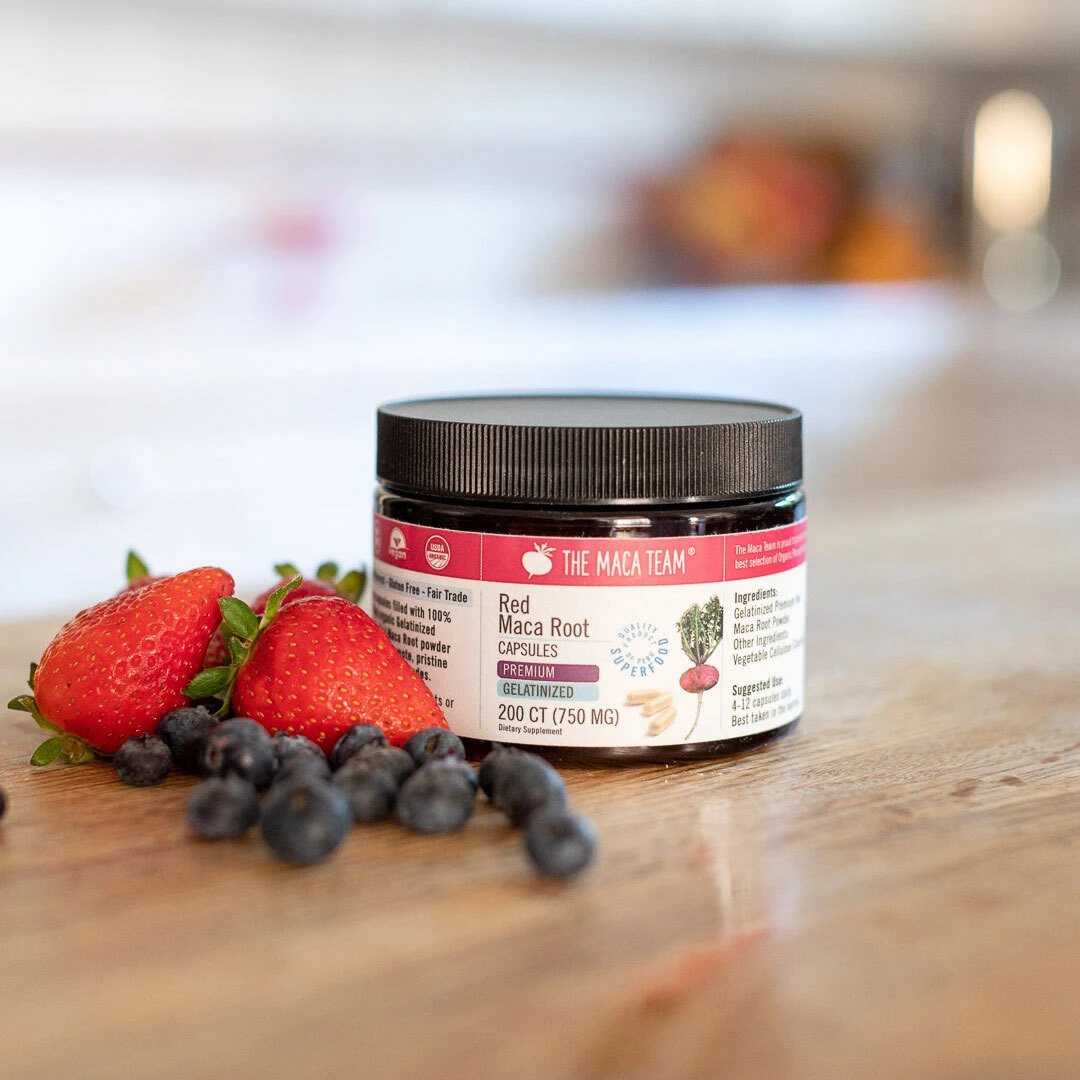
In addition, we recommend that most people new to maca start with a gelatinized maca product instead of a raw maca product. Gelatinized maca has been heat-processed, altering its natural starch structure, and in our experience many people with sensitive digestion find it easier to tolerate.[2]
If digestive sensitivity is your main concern, you may also find our guide to the best maca for sensitive digestion helpful.
This recommendation applies to digestive sensitivity, however — not to someone who has experienced symptoms suggestive of a true allergy.
What Does Maca's Relationship to Mustard, Broccoli, and Cabbage Mean?
Maca belongs to the botanical family Brassicaceae.[7]
This is the same broad plant family that includes:
- Mustard
- Broccoli
- Cabbage
- Cauliflower
- Brussels sprouts
- Kale
- Turnips
- Radishes
Because of this relationship, you may occasionally see claims online saying:
“If you're allergic to mustard or broccoli, you shouldn't take maca.”
The science is not nearly that simple.
Allergic reactions to certain members of the Brassicaceae family are well documented. Mustard allergy in particular can cause genuine IgE-mediated allergic reactions and, in some individuals, anaphylaxis.[8][9][10]
Researchers have also found evidence of allergic cross-reactivity involving mustard and other plant-derived foods.[8][10]
But belonging to the same plant family does not automatically mean that a person allergic to one plant will be allergic to all of them.
In fact, studies of mustard-allergic individuals have produced a more complicated picture. Some studies have found sensitization or cross-reactivity involving other plant foods,[8][10] while another study of three people with systemic mustard allergy found no cross-sensitivity to the other vegetables from the same botanical family that were tested.[9]
Most importantly for this article, we have not found clinical research demonstrating a specific cross-allergy between maca and mustard, broccoli, cabbage, or other Brassicaceae vegetables.
So we would not tell someone:
“You're allergic to mustard, therefore you're allergic to maca.”
That goes beyond the evidence.
What If You Have a Severe Mustard Allergy?
This is where a little extra caution makes sense.
Mustard is a well-established food allergen, and documented reactions can include severe systemic reactions and anaphylaxis.[8][9][10]
Because maca belongs to the same botanical family, someone with a history of severe mustard allergy — particularly previous anaphylaxis — may want to discuss maca with an allergist before trying it.
That recommendation is based on caution rather than evidence that mustard-allergic people routinely react to maca.
At this point, there simply isn't enough maca-specific allergy research to give a definitive answer.
Could You Actually Be Reacting to Another Ingredient?
Absolutely.
This is especially important with modern supplement blends.
Many products advertised as “maca supplements” contain much more than maca.
They may also contain:
- Ashwagandha
- Cacao
- Caffeine
- Herbal extracts
- Mushrooms
- Flavorings
- Sweeteners
- Fillers
- Flow agents
- Capsule ingredients
- Other botanical extracts
If you react to one of these products, maca may or may not be responsible.
This is one reason we have always preferred keeping maca products relatively simple.
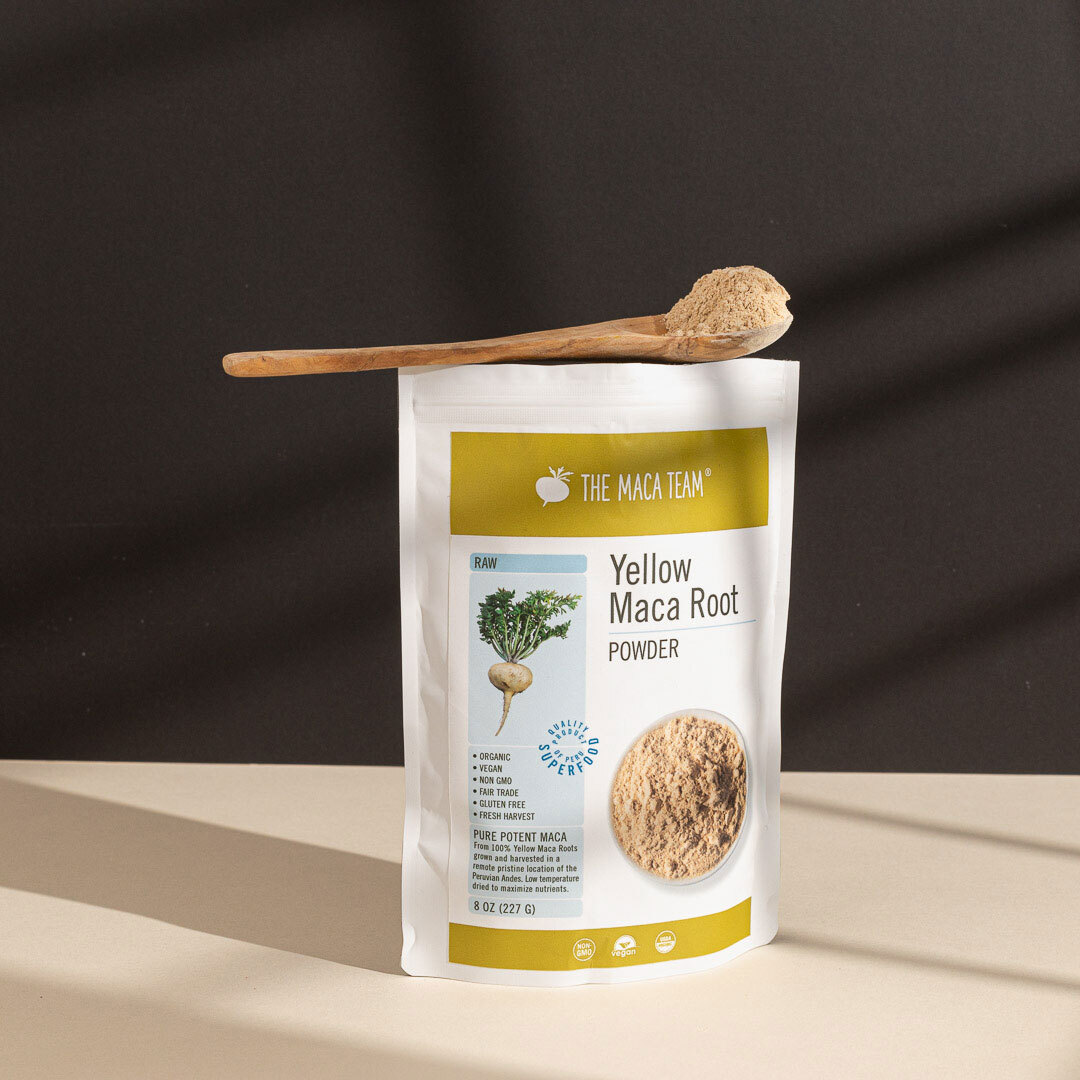
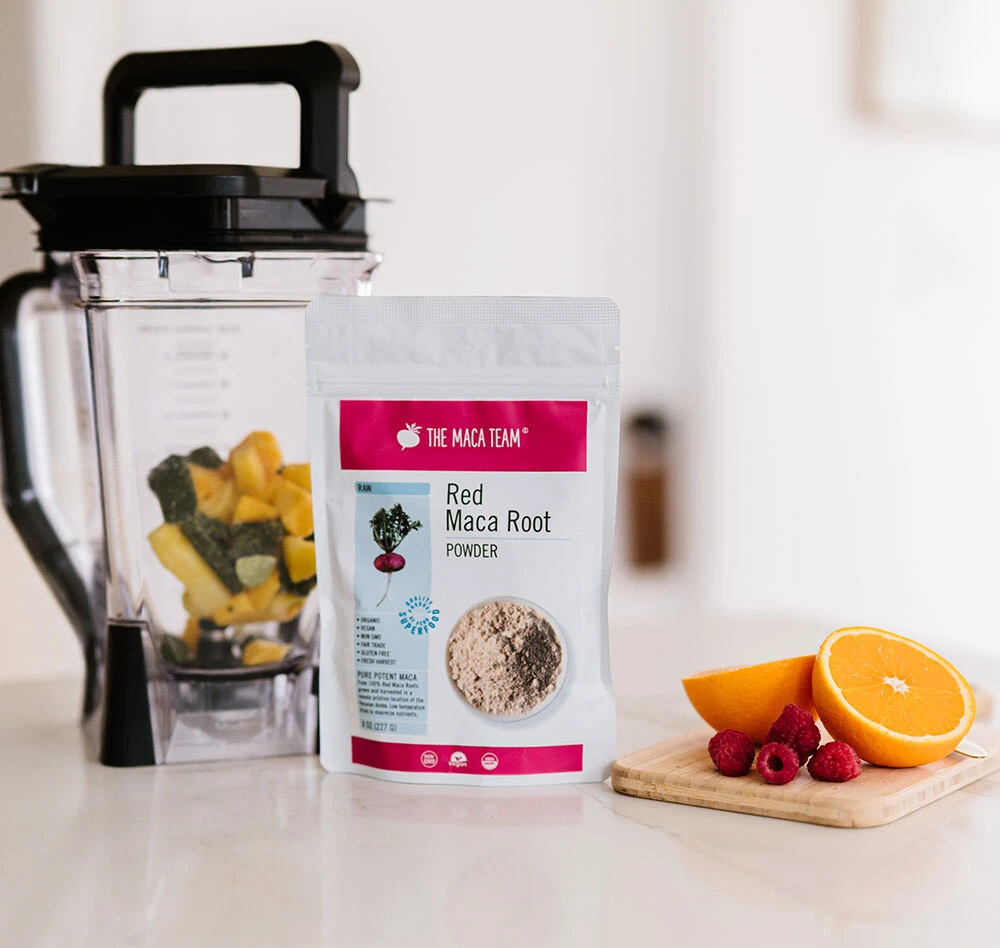
All of The Maca Team's maca powders contain 100% maca root, without added fillers, flavors, or sweeteners.
With a simple single-ingredient product, it is much easier to know exactly what you're consuming.
With a product containing 10 or 15 active ingredients, figuring out what caused a reaction becomes considerably more difficult.
What Should You Do If You Think You're Allergic to Maca?
First, stop taking the product until you have a better understanding of what happened.
If your reaction involved significant hives, swelling, breathing difficulty, throat symptoms, fainting, or rapidly worsening symptoms, treat it as a potential allergy rather than experimenting with another serving. Severe or rapidly progressing allergic symptoms can require emergency medical treatment.[4][5][6]
For a non-emergency reaction, it can be helpful to write down:
- The exact product you used
- The complete ingredient list
- How much you took
- Whether you took it with food
- How long after taking it the symptoms began
- Exactly what symptoms occurred
- How long the symptoms lasted
- Any medications or other supplements you were taking
- Whether the same reaction has happened more than once
This information can be extremely helpful if you discuss the reaction with a physician or allergist.
We have not identified a standardized maca-specific allergy test in the sources reviewed for this article. An allergist can evaluate the history of the reaction and determine whether additional testing or a medically supervised food challenge is appropriate.
If you have had a potentially serious allergic reaction, do not intentionally recreate the reaction at home simply to find out whether maca caused it.
What If Maca Only Upsets Your Stomach?
That's a very different situation.
If the symptoms are limited to mild:
- Gas
- Bloating
- Stomach heaviness
- Indigestion
- Heartburn
- Mild stomach discomfort
you may be dealing with digestive sensitivity rather than an allergy.[4][6]
In that situation, you might consider:
- Reducing your serving size
- Starting with a very small amount
- Increasing the amount gradually
- Taking maca without fruit or fruit juice
- Trying gelatinized maca instead of raw maca
If heartburn is the main issue, see our guide to maca and heartburn for a closer look at possible causes and practical adjustments.
Some people simply tolerate maca better this way.
And some people don't.
Maca is a food, not something everyone needs to force themselves to take. If even small amounts consistently make you uncomfortable, there is nothing wrong with deciding that maca simply isn't a good fit for your body.
The Bottom Line: Can You Be Allergic to Maca?
A true allergy to maca is biologically possible, but the available evidence does not establish maca as a common or clearly documented food allergen.
Based on the evidence currently available:
- Maca is not considered a common food allergen.[6]
- Human clinical studies generally show good tolerability.[2][3]
- Adverse-event reports have included hives, rash, and anaphylaxis involving maca-containing products, but these reports do not establish maca itself as the cause.[1]
- Maca belongs to the Brassicaceae family,[7] but there is currently no convincing clinical evidence showing that an allergy to mustard, broccoli, cabbage, or another cruciferous vegetable automatically means you will be allergic to maca.[8][9][10]
- Digestive reactions such as gas, bloating, stomach heaviness, and heartburn are not, by themselves, evidence of a true food allergy.[4][6]
- Gelatinized maca may be easier for some people with digestive sensitivity to tolerate, but it should not be treated as a safe alternative if a genuine allergy is suspected.
A Final Note
We believe maca is an exceptionally useful whole food, but no food or supplement is right for absolutely everyone.
If your body repeatedly gives you a clear negative response to maca, listen to it.
And if the reaction looks like an allergy rather than simple digestive discomfort, a healthcare professional or allergist is the appropriate person to help determine what happened.
Sources & References
-
United States Pharmacopeia (USP). USP Safety Review of Maca. 2012.
Review of maca safety information and adverse-event reports, including reports involving rash, urticaria, and anaphylaxis in connection with maca-containing products. The reports do not establish maca as the causative ingredient.
USP Safety Review of Maca -
Ulloa del Carpio N, Alvarado-Corella D, Quiñones-Laveriano DM, et al. Exploring the chemical and pharmacological variability of Lepidium meyenii: a comprehensive review of the effects of maca. Frontiers in Pharmacology. 2024;15:1360422. DOI: 10.3389/fphar.2024.1360422.
Comprehensive review covering maca pharmacology, human clinical research, toxicology, tolerability, and reported adverse effects.
Read the study -
Gonzales-Arimborgo C, Yupanqui I, Montero E, et al. Acceptability, Safety, and Efficacy of Oral Administration of Extracts of Black or Red Maca (Lepidium meyenii) in Adult Human Subjects: A Randomized, Double-Blind, Placebo-Controlled Study. Pharmaceuticals. 2016;9(3):49. DOI: 10.3390/ph9030049.
Randomized controlled study involving 175 adults consuming red maca extract, black maca extract, or placebo for 12 weeks.
View on PubMed -
Mayo Clinic. Food Allergy – Symptoms and Causes.
General medical guidance regarding food-allergy symptoms, timing, causes, and differences between allergy and food intolerance.
Mayo Clinic: Food Allergy -
Mayo Clinic. Anaphylaxis – Diagnosis and Treatment.
Medical guidance concerning recognition and emergency treatment of potentially life-threatening allergic reactions.
Mayo Clinic: Anaphylaxis -
American Academy of Allergy, Asthma & Immunology (AAAAI). Food Allergy.
General guidance on immune-mediated food allergy, food intolerance, allergic symptoms, common food allergens, and cross-reactivity.
AAAAI: Food Allergy -
Royal Botanic Gardens, Kew. Lepidium meyenii Walp. Plants of the World Online.
Botanical reference establishing maca (Lepidium meyenii) as a member of the Brassicaceae family.
Kew: Lepidium meyenii -
Figueroa J, Blanco C, Dumpiérrez AG, et al. Mustard allergy confirmed by double-blind placebo-controlled food challenges: clinical features and cross-reactivity with mugwort pollen and plant-derived foods. Allergy. 2005;60(1):48–55. DOI: 10.1111/j.1398-9995.2005.00644.x.
Research into mustard allergy and sensitization or cross-reactivity with related plant foods.
View on PubMed -
Jorro GJ, Morales C, Brasó JV, Peláez A. Mustard allergy: three cases of systemic reaction to ingestion of mustard sauce. Journal of Investigational Allergology & Clinical Immunology. 1995;5(1):54–56.
Reports systemic mustard allergy and found no cross-sensitivity to the other vegetables from the same botanical family tested in the three patients.
View on PubMed -
Sharma A, Verma AK, Gupta RK, Neelabh, Dwivedi PD. A Comprehensive Review on Mustard-Induced Allergy and Implications for Human Health. Clinical Reviews in Allergy & Immunology. 2019;57(1):39–54. DOI: 10.1007/s12016-017-8651-2.
Scientific review of mustard allergens, immune mechanisms, severe reactions, and cross-reactivity.
View on PubMed
Medical Disclaimer: This article is provided for educational purposes only and is not intended to diagnose, treat, cure, or prevent any medical condition. If you believe you may have experienced an allergic reaction to maca or another food or supplement, consult a qualified healthcare professional. Severe allergic symptoms require immediate medical attention.