
Maca and Women’s Reproductive Health
Introduction 
Starting or expanding a family is one of the most meaningful experiences in adult life. For some people pregnancy happens easily, while for others the process can take more time and planning. According to the National Institute of Health, approximately 9% of men and 11% of women experience fertility challenges during their reproductive years.
Because of this, many people explore lifestyle factors that support reproductive wellness, including nutrition, stress management, sleep quality, and physical activity. One traditional food that has gained attention in recent decades is maca root, a vegetable native to the Andes mountains of Peru.
This article explores the traditional use of maca and what research suggests about its potential relationship to reproductive health.
The Traditional Use of Maca
Maca is a root vegetable that grows at extremely high elevations in the Andes of Peru. Like broccoli, Brussels sprouts, and cauliflower, it belongs to the cruciferous vegetable family.
Archaeological evidence suggests maca has been consumed by Andean cultures for thousands of years. According to regional traditions, local communities observed that animals grazing on maca-rich fields appeared healthy and vigorous, which led to maca being incorporated into human diets as well.
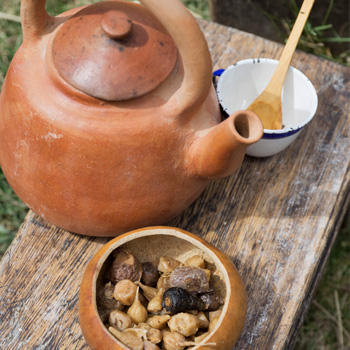
Over time maca became a highly valued crop and was even used as a form of tribute during the Incan empire. Today maca remains an important traditional food in the highlands of Peru and continues to be consumed locally for general vitality and well-being.
Research Related to Maca and Reproductive Health
In recent decades researchers have begun studying maca to better understand its nutritional properties and potential relationship to hormonal and reproductive wellness.
Several areas of interest have emerged in the scientific literature:
Vitality and Relationship Wellness
Maca has historically been associated with vitality and overall energy. Some clinical studies have explored its relationship with sexual well-being in both men and women. For example, a study published in 2002 observed changes in self-reported sexual desire among participants who consumed maca compared with a placebo group.[1]
Another study examining women experiencing antidepressant-related changes in sexual function also reported improvements in self-reported sexual well-being among participants taking maca.[2]
Hormonal and Stress Balance
Maca is often categorized as an adaptogenic food. Adaptogens are plants that may help the body maintain balance during periods of physical or emotional stress.

Researchers have explored how maca interacts with the endocrine system, which regulates hormones throughout the body. While maca does not contain hormones, some studies suggest it may influence hormonal signaling pathways associated with overall physiological balance.[3]
Cardiovascular Wellness
Some research has examined potential cardiovascular effects of maca consumption. One study observed associations between regular maca intake and improvements in blood pressure markers in women over a three-month period.[4]
Nutritional Profile
Maca is often described as a nutrient-dense food. It contains minerals such as calcium, potassium, iodine, manganese, and zinc, along with B vitamins and vitamin C. Maca also provides all nine essential amino acids, making it a complete plant protein.
Because of this nutritional composition, maca is frequently included in diets focused on overall health and vitality.
Maca and Male Reproductive Wellness
Research on maca has also explored male reproductive health. Some studies have examined markers such as sperm count, seminal volume, and motility in men consuming maca supplements over several months.[5]
Additional animal studies have explored reproductive markers in livestock consuming maca-based feed.[6]
While these studies are encouraging, researchers consistently note that more large-scale human studies are needed to better understand maca’s potential role in reproductive health.
Which Type of Maca Is Commonly Used?
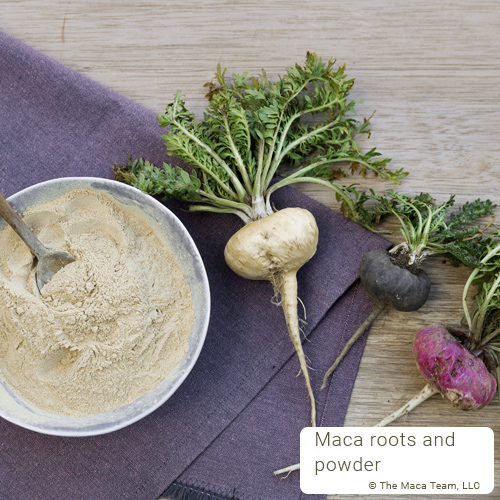
Maca grows in three primary color varieties: red, black, and yellow.
Red maca represents roughly 20–25% of harvests, black maca about 10–15%, and yellow maca approximately 60–70%.
Many women prefer red maca when focusing on hormonal wellness, while black maca is frequently discussed in research relating to male reproductive health.
If you have a sensitive digestive system, gelatinized maca (which is gently cooked to remove starch) may be easier to digest than raw maca.
Frequently Asked Questions
Does maca increase fertility?
Maca has a long history of traditional use related to vitality and reproductive wellness. Research is ongoing and individual results vary.
Does maca contain hormones?
No. Maca does not contain estrogen or testosterone. It is a food that may interact with the endocrine system indirectly.
How long do people typically use maca?
Many people use maca consistently for several weeks or months as part of a wellness routine before evaluating how it fits their needs.
Conclusion
If starting or expanding a family is something you are considering, focusing on overall health, nutrition, and lifestyle balance is often an important first step. Maca has a long history as a traditional Andean food associated with vitality and hormonal wellness.
While some individuals include maca in their reproductive wellness routines, results vary and it should not replace medical care. If you have questions about fertility or reproductive health, it is always best to consult a qualified healthcare professional.
Enjoy the day!