
Can You Take Maca While Breastfeeding
Can You Take Maca While Breastfeeding?
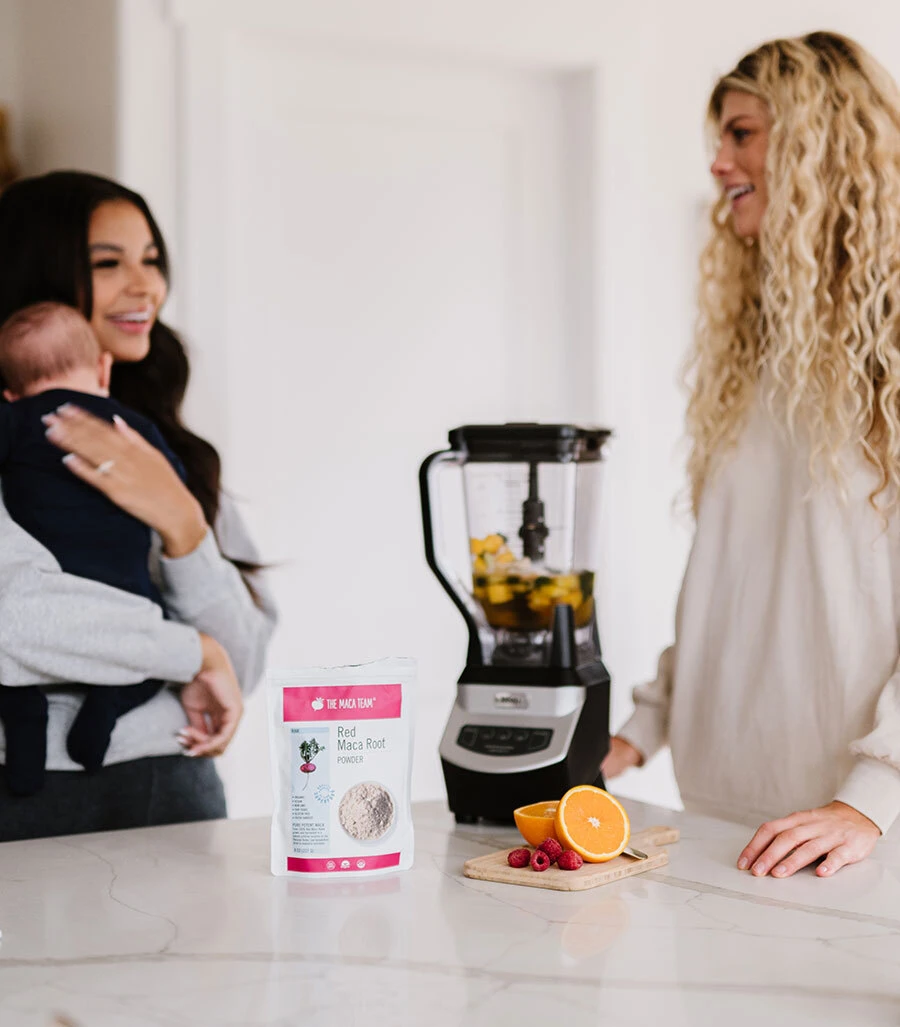
Breastfeeding often brings a whole new set of questions about food and supplements. Things you used without a second thought before pregnancy may suddenly deserve another look—not necessarily because they are dangerous, but because you are now making choices for both yourself and your baby.
One question we hear regularly is whether it is okay to take maca while breastfeeding.
For our family, this is more than an abstract question. My wife took maca for years while breastfeeding. Women in the Peruvian Andes, where maca has long been part of the traditional diet, have also eaten maca during the nursing years. Over the years, many of our breastfeeding customers have told us that maca remained part of their routines as well.
That real-world experience is reassuring. It is also supported by e-lactancia, a breastfeeding information resource maintained by health professionals, which classifies plain maca as compatible with breastfeeding.
At the same time, it’s good to understand that maca has not been studied extensively in breastfeeding mothers and babies. So, the most honest answer includes both what long-term experience tells us and what modern research has—or has not—confirmed.
The Short Answer
Yes, many women take maca while breastfeeding, and available information is generally reassuring. Maca is a traditional Peruvian food, not a pharmaceutical drug, and e-lactancia considers it compatible with breastfeeding.
However, there is no large body of clinical research focused specifically on maca use during breastfeeding. There is also no officially established breastfeeding serving size.
If you are healthy, already familiar with maca, and considering a pure, high-quality maca product, the available information does not give us a strong reason to view maca as inherently incompatible with breastfeeding. If you are new to maca, take medication, have a health condition, or have a premature or medically fragile baby, it makes sense to check with your doctor, midwife, pharmacist, pediatrician, or lactation professional first.
What Is Maca?
Maca is a cruciferous root vegetable native to the high Andes of Peru. It is commonly identified by the botanical name Lepidium meyenii.
In Peru, maca has traditionally been dried and cooked or prepared in porridges, drinks, and other foods. It has been valued as a nourishing staple in a region where few crops can survive the high altitude and difficult growing conditions.
Today, maca is available as powder, capsules, liquid extracts, chips, and blends. Many adults add it to smoothies, oatmeal, warm drinks, or recipes as part of a general wellness routine.
Maca naturally contains carbohydrates, fiber, amino acids, minerals, and unique plant compounds. It does not contain added hormones, and it should not be thought of as a hormone medication.
Traditional and Real-World Use of Maca While Breastfeeding
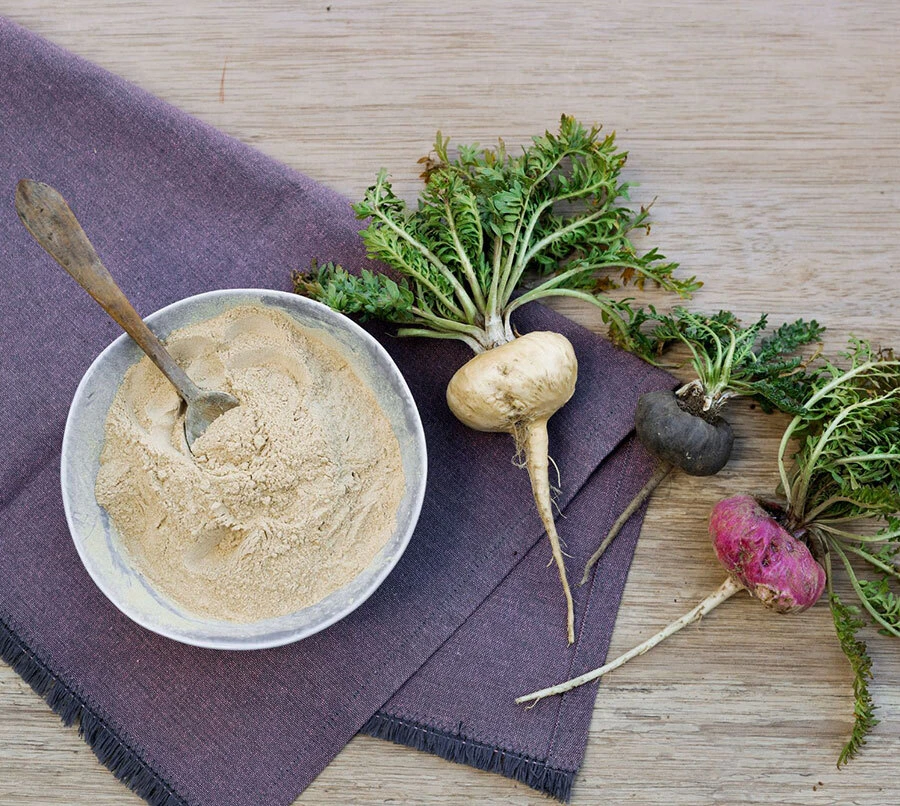
Modern clinical research is valuable, but it is not the only kind of useful information. Traditional food use and long-term experience can also help us understand how a food fits into real life.
Maca has been eaten in the Andes for generations—including during the years when women were pregnant, recovering from birth, and breastfeeding. In that setting, maca was not an exotic supplement. It was part of the local food culture.
Our Family’s Experience
Our own experience at The Maca Team also matters. We have worked with maca for more than 20 years. My wife used maca for years while breastfeeding, and many customers have shared similar experiences with us.
This does not prove that every product and serving will be right for every mother. But it is meaningful evidence of use, and it helps explain why we do not believe breastfeeding mothers need to be frightened of maca.
What Does Modern Research Tell Us?
Research on maca in adults is generally reassuring. Human studies have found maca to be well tolerated, and reviews describe its long history as a traditional food.
What is missing is research designed specifically around breastfeeding. Scientists have not clearly established:
- Whether maca’s natural plant compounds pass into breast milk
- Whether maca changes milk production
- What serving size is ideal during breastfeeding
- Whether powders, capsules, and concentrated extracts should be treated in exactly the same way
This gap is common with traditional foods and supplements. Breastfeeding mothers and babies are rarely included in clinical trials, so formal studies often lag far behind real-world use.
An absence of breastfeeding-specific trials does not mean that maca has been shown to be unsafe. It simply means we should avoid claiming that science has answered questions it has not directly studied.
Why Do Different Websites Give Different Answers?
If you have searched this topic already, you may have found one website saying maca is safe and another saying to avoid it. This can be confusing.
The difference usually comes down to how a source handles limited research.
E-lactancia is a breastfeeding reference website operated by APILAM, a nonprofit association of physicians and other healthcare professionals specializing in breastfeeding research and support. It considers maca compatible based on its traditional use as a food, its general safety information, and the absence of a known pattern of harm. Other websites automatically advise against almost any herb or supplement that has not been formally studied in breastfeeding women.
Our view is more balanced:
Traditional use, our family’s experience, customer experience, and the e-lactancia assessment are all reassuring. The limited clinical research means we should stay honest and avoid guarantees—not that women should be afraid of maca.
Does Maca Pass Into Breast Milk?
We do not currently know whether maca’s naturally occurring compounds pass into breast milk or, if so, in what amounts.
That may sound concerning, but similar information is unavailable for many ordinary foods, herbs, and supplements. Not every traditional food has been tested through breast-milk studies.
There is also no established rule saying that a mother needs to wait a certain number of hours or pump and discard her milk after using maca.
If you have already taken maca while breastfeeding, there is usually no reason to panic. If you have a specific concern, you can share the product, ingredients, and amount with your pediatrician, pharmacist, or lactation professional.
Does Maca Increase Breast Milk Supply?
Maca has not been proven to increase breast milk supply.
Some online sources promote maca as a “hormone-balancing” supplement or natural galactagogue—the term for something used to encourage milk production. Those claims go beyond the available research.
This does not mean that a breastfeeding mother cannot enjoy maca as part of her food or wellness routine. It simply means we should not promise that maca will increase milk supply.
If you are concerned about supply, the most useful first steps are usually to look at:
- How frequently your baby nurses or milk is expressed
- Latch and milk transfer
- Your baby’s weight gain and diaper output
- Pump fit and technique, if you are pumping
- Your nutrition, hydration, medication use, and postpartum health
An International Board Certified Lactation Consultant (IBCLC), pediatrician, midwife, or breastfeeding medicine professional can help identify what is actually happening.
Can Maca Reduce Milk Supply?
There is no reliable evidence that maca reduces breast milk supply either.
Milk production naturally changes over time and can be affected by feeding patterns, illness, stress, medication, sleep, and many other factors. If you notice a change after introducing maca—or any new food or supplement—you can pause it and see whether the change continues.
What About Maca for Postpartum Energy?
The postpartum period can be exhausting. Interrupted sleep, physical recovery, changing routines, and the work of caring for a baby can leave almost anyone feeling depleted.
Many adults use maca as part of a routine intended to support energy, stamina, and general vitality. This is also one reason maca may appeal to breastfeeding mothers.
Does the Form of Maca Matter?

Plain maca powder is close to the traditional food-style form commonly used today. Capsules may contain the same maca powder in a convenient premeasured format. Gelatinized maca has been heated to remove much of its starch and may be easier for some people to digest.
Liquid extracts and multi-ingredient blends deserve a closer look. Extracts are more concentrated, while blends may contain several herbs or added ingredients with their own breastfeeding considerations.
For a breastfeeding mother who wants to use maca, a simple, single-ingredient powder or capsule is generally easier to evaluate than a complex blend. This does not mean that powder has been clinically proven safer. It simply means you know exactly what you are taking.
If You Used Maca Before or During Pregnancy

Continuing a familiar food is different from experimenting with a new supplement for the first time.
If maca was already part of your routine and you tolerated it well, that is useful information. My wife’s long-term use while breastfeeding is one example of this familiar-food approach, and many customers have described the same kind of continuity.
If you stopped maca during pregnancy and want to start again after delivery, you may still want to begin gradually and pay attention to how you feel. Our related guide, Is Maca Root Safe During Pregnancy?, offers more context about maca during that stage of life.
When Does It Make Sense to Ask a Professional?
Checking with your healthcare professional is especially sensible if:
- Your baby was born prematurely or has a medical condition
- You are taking prescription medication
- You have thyroid concerns or another health condition
- You are using several supplements at once
- You are considering a concentrated extract or multi-ingredient blend
- You have never taken maca before
- You want to use maca specifically for low milk supply or significant postpartum fatigue
These situations do not automatically mean that you cannot take maca. They simply make an individualized answer more valuable.
A Practical Way to Start
There is no official breastfeeding-specific maca serving size. If you and your healthcare professional decide maca is a good fit—or if you are returning to a familiar maca routine—a simple approach makes sense:
- Choose a plain, single-ingredient maca product
- Begin with a small amount rather than a full serving
- Add only one new supplement at a time
- Take maca with food if you have sensitive digestion
- Choose a supplier that provides independent batch testing
- Notice how you and your baby respond
Our general advice for people new to maca is to begin with a small amount and gradually work up. You can read more in our maca serving guide. During breastfeeding, individual guidance should take priority over a general adult serving recommendation.
Why Maca Quality Matters
Quality matters for every maca user, and breastfeeding is a particularly good time to choose carefully.
Maca products can differ in where they are grown, how they are processed, and whether other ingredients have been added. Like other crops, maca can also pick up naturally occurring substances from the soil or become contaminated through poor handling.
Look for maca that is:
- Grown in Peru
- Certified organic
- Clearly labeled
- Free from unnecessary fillers or added herbs
- Tested by an independent laboratory
- Supported by a current Certificate of Analysis (COA)
Every batch of The Maca Team’s maca is tested by independent ISO/IEC 17025:2017 accredited laboratories. Current COAs are available on our product pages. You can learn more in our maca testing and COA guide and our article about maca and heavy metals.
The Bottom Line
Many women use maca while breastfeeding. Maca has been part of the traditional diet in the Peruvian Andes for generations, my wife used it for years while breastfeeding, and many of our customers have shared similar experiences. E-lactancia also classifies plain maca as compatible with breastfeeding.
The formal research specific to breastfeeding is limited, so we cannot promise that every form, serving, and circumstance is right for every mother and baby. But limited research is not the same as evidence of danger.
For a healthy breastfeeding mother considering a plain, high-quality maca product, the available information and long history of use are generally reassuring. If you are new to maca, use medication, manage a health condition, or have a premature or medically fragile baby, ask a qualified healthcare professional for guidance.
Frequently Asked Questions
Is maca safe while breastfeeding?
Maca has a long history as an Andean food, many women have used it while breastfeeding, and e-lactancia classifies plain maca as compatible. Direct clinical studies in nursing mothers and babies are limited, so individual circumstances still matter.
How much maca can I take while breastfeeding?
Clinical research has not established a breastfeeding-specific serving. If you are new to maca, a small amount of a plain product is a sensible starting point, but personalized guidance should take priority over a general adult serving.
Is gelatinized maca better while breastfeeding?
Gelatinized maca contains much less starch than raw maca and may be easier for some adults to digest. It has not been proven safer specifically for breastfeeding mothers or babies.
Are maca capsules okay while breastfeeding?
Capsules may contain the same maca found in powder form. Look at the complete ingredient list, serving size, and product quality rather than judging the product only by its format.
What about maca extracts and blends?
Extracts are more concentrated, and blends contain additional ingredients that need to be considered separately. A plain, single-ingredient powder or capsule is easier to evaluate during breastfeeding.
Can maca help with postpartum tiredness?
Many adults use maca as part of a routine for energy, stamina, and vitality. It has not been proven to treat postpartum fatigue, however, and persistent or severe tiredness should be discussed with a healthcare professional.
Can I give maca directly to my baby?
We do not recommend giving maca directly to an infant unless the baby’s pediatrician specifically advises it. Babies have different nutritional needs from adults. See our guide to maca for children, infants, and older adults for more context.
Related Reading
References and Further Reading
- E-lactancia. Maca and Breastfeeding: Compatibility Assessment. Updated April 3, 2023.
- National Library of Medicine. LactMed: About Dietary Supplements.
- U.S. Food and Drug Administration. Questions and Answers on Dietary Supplements.
- The Royal Women’s Hospital. Herbal Medicines and Breastfeeding.
- Brodribb W; Academy of Breastfeeding Medicine. ABM Clinical Protocol #9: Use of Galactogogues in Initiating or Augmenting Maternal Milk Production. Breastfeeding Medicine. 2018.
- Del Carpio NU, et al. Exploring the Chemical and Pharmacological Variability of Lepidium meyenii: A Comprehensive Review of the Effects of Maca. Frontiers in Pharmacology. 2024.
- Gonzales-Arimborgo C, et al. Acceptability, Safety, and Efficacy of Oral Administration of Extracts of Black or Red Maca in Adult Human Subjects. Pharmaceuticals. 2016.
Medical note: This article provides general educational information and is not a substitute for personalized medical advice.
FDA disclaimer: These statements have not been evaluated by the Food and Drug Administration. This product is not intended to diagnose, treat, cure, or prevent any disease.