
Bringing More Intention to Your Everyday Life with Maca Root
Modern life can make it difficult to slow down and appreciate the little things. Between work responsibilities, household tasks, errands, and endless notifications, many people

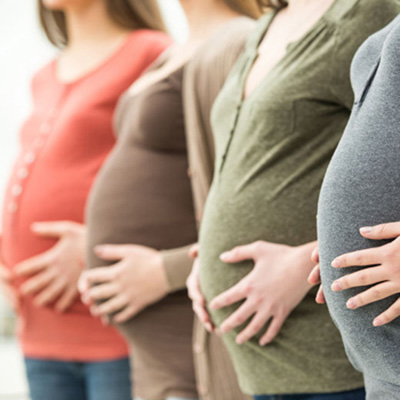
If you are pregnant and wondering about maca, the question is personal: is it safe for your baby, and is it safe for you?
Perhaps maca has been part of your morning routine for years. Perhaps you have only just heard about it. Either way, understanding its food history, the research, and other women’s experiences can help you make sense of the advice you encounter.
At The Maca Team, we’ve received many questions about whether maca is appropriate during pregnancy. It’s an important question that deserves a careful answer.
In this article, we’ll explore maca’s traditional use, what research has and hasn’t established, and the considerations that can help you make an informed decision. We’ll also briefly address breastfeeding.
There is not enough human research to establish whether maca is safe during pregnancy. In our review of the available literature, we found no human study or case report establishing that maca itself causes miscarriage, birth defects, or other pregnancy complications. However, the absence of documented harm is not proof of safety. The U.S. Pharmacopeia’s pregnancy caution reflects this lack of safety information. [1]
Research outside human pregnancy has reported some adverse findings, including reproductive toxicity in microscopic worms exposed to maca extract. These findings do not demonstrate harm during human pregnancy, but they reinforce the need to distinguish limited evidence from established safety. [2] [3] [4]
Long before maca appeared in capsules or smoothie recipes, it was a food grown and eaten in the high Andes of Peru.
Historical accounts describe its use for sustenance centuries ago. Roots were traditionally dried for storage, then cooked and prepared as drinks and other foods. That history represents generations of experience with eating maca as part of everyday life. [8]
For us at The Maca Team, this food tradition is an essential part of understanding the root. Our relationships with Peruvian growers keep its origins close to the work we do today.
A community study in Carhuamayo, Peru, surveyed men and women aged 35–75. Around 80% consumed maca, and 85% of those consumers reported using it for nutrition. Many had eaten it since childhood, mainly as drinks made from naturally dried roots.
Liver and kidney measurements assessed in a subgroup were within normal ranges. The researchers concluded that their observations supported maca’s safety as a food in this population. This observational study did not establish pregnancy safety, but it adds direct observations of traditional consumers to the historical record. [9]
The USP review cites estimates of 50–100 grams of dried maca roots daily in traditional food use, compared with approximately 1–3 grams in supplement use. [1]
These estimates are not a universal serving size or a recommendation for pregnancy. They show that maca’s food history includes meaningful quantities, rather than only occasional traces. Differences in preparation also matter when comparing those amounts.
Our general maca serving guide provides additional context about typical use outside pregnancy, but those amounts should not be interpreted as established pregnancy-safe doses.
A 2020 feature published by the Food and Agriculture Organization of the United Nations describes maca as a food valued by athletes, children, and pregnant women. It discusses its use in drinks, porridges, breads, and cakes, and describes Peruvian producers drying, baking, and milling the roots. [10]
This documents maca’s place in a food culture that includes pregnant women. It is an agricultural feature, not a clinical pregnancy recommendation, and it does not track mothers’ or babies’ health outcomes.
The food history provides context and some reassurance about general tolerability. Detailed records of pregnancy exposures and outcomes remain a missing piece.
When drawing on traditional use, preparation is part of the story.
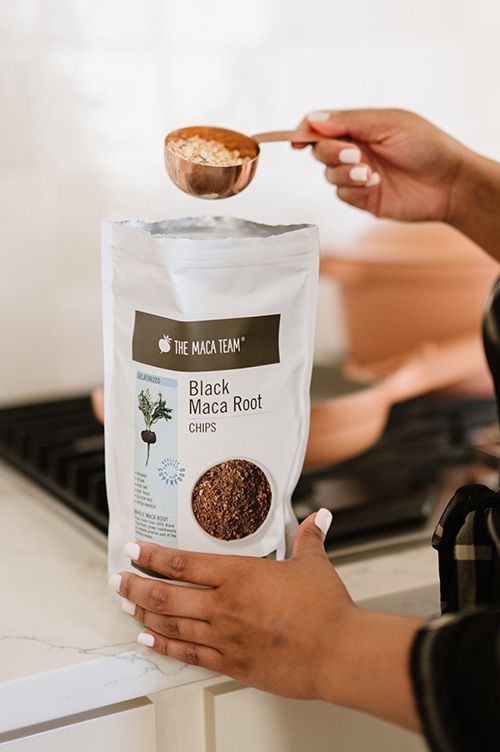
Dried, cooked roots have the closest connection to the food practices described above. Raw powder, gelatinized powder, and concentrated extracts involve different processing methods. Gelatinized maca is heat processed; despite the name, no gelatin is added. Our raw versus gelatinized maca guide explains the differences.
Health Canada recognizes maca root powder’s history of safe food use while distinguishing it from extracts, which can concentrate particular constituents. Its assessment found insufficient evidence to establish acceptable conditions for using maca root extract as an ingredient in supplemented foods. This decision does not establish pregnancy safety for either form. [11]
There is also no established pregnancy-safe color or preparation. Red, yellow, black, and tri-color maca have not been compared adequately in pregnant women. These details help identify what someone is taking, rather than tell us which maca to recommend during pregnancy.
Two mouse studies offer relevant, although limited, information.
A 2004 study examined embryos from mice given maca extract during the first four days of pregnancy. Researchers found no toxic effects on the development, condition, or appearance of the embryos examined before implantation. [5]
The extract was injected into the abdominal cavity rather than eaten, and the study covered only this early stage. It was not an assessment of an entire pregnancy.
In a 2005 study, female mice received an oral yellow maca extract before, during, and after pregnancy. Implantation and several reproductive and offspring-survival measures were similar in treated and untreated groups. The maca group had larger litters. [6]
These results offer some reassurance within the scope of the studies. They are not evidence that maca improves human pregnancy outcomes, and they cannot establish a safe human dose.
A 2016 trial of red and black maca extracts reported no serious adverse effects attributable to maca over 12 weeks. Pregnant women were specifically excluded. That supports tolerability in the adults studied, while leaving the pregnancy question unanswered. [7]
If you have heard maca described as “hormone balancing,” it is reasonable to wonder what that means during pregnancy.
The research does not support one simple answer about maca’s effects on hormones. In a small trial involving 14 postmenopausal women, researchers found no significant changes in the reproductive hormone measurements they examined. Other studies have reported different hormonal findings. [14] [15]
These studies involved circumstances very different from pregnancy. They do not establish that maca helps maintain pregnancy hormones, or that it has no effect on them. “Hormone balancing” is therefore too broad a description to answer whether maca is appropriate during pregnancy.
Together, the research provides useful information about particular preparations and populations. What remains missing is adequate research following pregnant women and their babies.
Over the years, some of our customers have shared personal accounts of using maca during pregnancy with us. We appreciate the trust involved in sharing these experiences.
Here are three examples, using excerpts from their original reviews.
“I took 5 capsules of the Red Maca all throughout my pregnancy with permission from my OB. I had a very healthy and easy pregnancy and just had all natural delivery. I’m happy to say our rainbow/maca root baby was born September 5!”
— Kelli Adams Johnson
“I am pregnant, 5’4″ and 150#, and I take 1/2 pipette of either red or yellow maca first thing in the morning. … And it helps me get at the day! I feel more productive and upbeat.”
— Ashley
“I swear by maca, because before i had my son, i had seven recurrent miscarriages. A natural fertility person recommended maca. So when i found out i was pregnant again, i started taking maca, and i actually carried my son. He’s now a happy healthy seven year old.”
— S.A.
These stories reflect the individual experiences and beliefs of the women who shared them.
Kelli reports using maca throughout pregnancy with her obstetrician’s permission and subsequently having a healthy delivery. Ashley describes using maca during an ongoing pregnancy but does not report a birth outcome. S.A. describes a successful pregnancy after seven previous miscarriages.
These accounts do not establish that maca prevented miscarriage, contributed to a healthy delivery, or is safe for other pregnancies. In particular, S.A.’s experience cannot tell us whether maca played any role in her pregnancy outcome.
Customer experiences are self-reported rather than medically verified. They have no comparison group, and we do not hear from everyone who uses our products. A clinician’s advice to one customer also reflects that person’s individual circumstances.
What these accounts do tell us is that some women have chosen to use maca during pregnancy, sometimes with their healthcare professional’s involvement. They add a human perspective to the discussion, while leaving the scientific questions unanswered.
Some readers arrive at this question because they began using maca before pregnancy. A positive pregnancy test can leave them wondering whether continuing the same routine is important.
Becoming pregnant while taking maca does not establish that maca caused conception, or that continuing it is necessary to maintain the pregnancy. Research about fertility also addresses a different question from research about safety after conception.
That distinction helps separate two experiences that are often discussed together online: using maca while trying to conceive and using it while pregnant. Your reason for starting is useful context for the conversation with your prenatal care team.
Maca’s longstanding use as a food, observations in traditional consumers, and limited mouse pregnancy studies provide reasons for some reassurance. Human pregnancy research has not yet established how a particular product or serving amount affects mother and baby.
This is where a conversation with your obstetrician, midwife, or another qualified prenatal healthcare professional can be useful. You can bring the evidence together with the details that matter for you: your health history, pregnancy, other supplements or medicines, and the reason you use maca.
A photo of the label and a note about your usual amount make that discussion more concrete. You might ask:
A product containing only maca is different from a blend that also contains other herbs, mushrooms, coffee, or added nutrients. Each additional ingredient—and its amount—needs consideration. Research about maca alone cannot establish the suitability of the whole blend. [13]
A single-ingredient product makes that review simpler, but it is not automatically proven safe during pregnancy. The complete ingredient list is more informative than the product name, whether you use a powder, capsules, or a drink mix.
There are two separate questions here: what is known about maca, and what is in a particular maca product.
A published case report described a woman’s blood lead level increasing after she began using maca powder and decreasing after she stopped. Her earlier lead exposure during pregnancy had been linked to a ceramic mug; the maca-associated increase happened about a year later. The report concerns possible contamination, not evidence that maca’s own compounds harmed a developing baby. [12]
It illustrates why sourcing, clear labeling, and batch testing deserve attention. You can learn more in our article about maca and heavy metals.
At The Maca Team, independent testing information is available through our Certificates of Analysis page and the “Test Results” tabs on product pages. If the displayed report is for a different batch from the one you have, our team can help locate yours.
A Certificate of Analysis reports the tests performed on a particular batch. It can help answer questions about contaminants, but it does not substitute for pregnancy research. Organic certification and country of origin answer different questions, too.
Taking maca before a positive pregnancy test does not, by itself, mean that harm occurred. Sharing the product, amount, and timing with your prenatal care team gives them something specific to assess. [13]
There is no need to assume that something has gone wrong simply because maca was part of your routine. At the same time, the lack of adequate pregnancy research means that past use cannot automatically establish that continuing is appropriate.
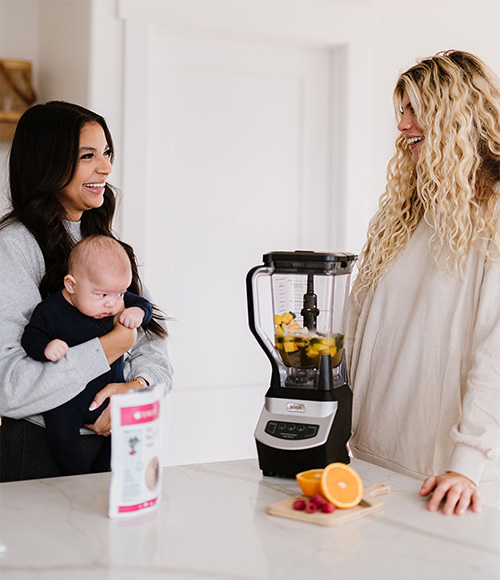
Pregnancy can bring changes in digestion, sleep, appetite, and general wellbeing, making it difficult to know what is causing a particular symptom.
If you notice new or worsening digestive discomfort, nausea, headaches, restlessness, sleep changes, or other unusual symptoms after taking maca, stop using the product and discuss those changes with your prenatal healthcare professional.
These symptoms are not necessarily caused by maca, and severe or concerning symptoms during pregnancy deserve prompt medical attention regardless of their suspected cause.
For more general information, see our guide to maca root side effects and safety considerations.
Breastfeeding raises a related but separate safety question.
There is also insufficient maca-specific research to establish its safety during breastfeeding. In particular, adequate evidence about its effects on nursing infants is lacking. Traditional food use and positive individual experiences do not answer those questions.
MotherToBaby notes that many herbal products have not been adequately studied during breastfeeding and encourages discussing their ingredients with a healthcare professional. [13]
If you are breastfeeding, the product’s complete ingredient list, preparation, and amount are useful details to share with your healthcare professional before starting or continuing maca.
For a more detailed discussion, see our separate article: Can You Take Maca While Breastfeeding?
Whether you are considering maca for the first time or have enjoyed it for years, you deserve an answer that takes both your wellbeing and your baby’s wellbeing seriously.
Our team can help with ingredients, preparation, sourcing, and testing information, while your prenatal healthcare professional can help you decide how those details fit your pregnancy.
Medical disclaimer: This article is for educational purposes and does not replace individualized medical advice, prenatal care, or prescribed treatment. Consult your prenatal healthcare professional about starting or continuing maca during pregnancy. Customer experiences are personal reports and do not establish safety, effectiveness, or expected outcomes.
FDA disclaimer: Statements about dietary supplement benefits have not been evaluated by the Food and Drug Administration. The Maca Team products are not intended to diagnose, treat, cure, or prevent any disease.
There is not enough human research to establish maca’s safety during pregnancy, although our literature review did not identify demonstrated human pregnancy harm caused by maca itself. Speak with your qualified healthcare professional before starting or continuing regular maca use.
Research specifically evaluating maca while breastfeeding is also insufficient. Its effects on nursing infants are not well established. Discuss the product and its ingredients with your healthcare professional before use. Read our full guide to maca while breastfeeding.
Maca has a long history of use as a food in the Peruvian Andes. A Food and Agriculture Organization feature describes maca as a food traditionally valued in a culture that includes pregnant women. However, this is not the same as having documented studies of maca consumption and pregnancy outcomes. [10]
Taking maca before discovering a pregnancy does not automatically mean harm occurred. Tell your healthcare professional what you were using, how much, and when, and ask whether continuing is appropriate.
Because pregnancy-specific safety research is limited, starting maca for the first time deserves particular consideration. Discuss your reason for wanting to use it and the specific product with your prenatal healthcare professional.
Yes. Clear ingredients, reliable sourcing, and testing for contaminants such as heavy metals are important considerations. However, even a carefully tested product has not automatically been established as safe during pregnancy.
If you develop new or worsening discomfort after taking maca, stop using it and discuss the symptoms with your healthcare professional. Do not assume maca is the cause of symptoms that could have another pregnancy-related explanation.
Learn about situations where additional caution may be appropriate, or contact our team with questions about maca products, sourcing, and testing.