
Maca and Nutritional Benefits
Curious about how maca root can contribute to your nutrition and overall wellness? In this article, we explore the key nutrients found in maca, the types of compounds that make it unique, and practical ways to incorporate maca into your daily routine. Use the links below to jump to specific sections.

- What Is Maca Root?
- What Are the Macronutrients in Maca?
- The Key Vitamins and Minerals in Maca Root
- The Unique Phytonutrients and Bioactive Compounds in Maca
- Customer Experiences
- How To Get the Most from Maca Root
- Which Maca Has the Most Nutritional Content?
- Is Maca O.K. for Everyone?
- Frequently Asked Questions
- Final Words
Maca and Nutritional Benefits
Maca root is a nutrient-dense food that contains carbohydrates, fiber, plant protein, minerals, and a range of phytonutrients. Many people use maca as part of a wellness-oriented diet focused on energy, vitality, and overall nutritional support. Whether blended into smoothies, added to coffee, or used in baking, maca can be a simple way to broaden the nutrient variety in your daily routine.
What Is Maca Root?
Maca root is a unique cruciferous vegetable that grows in the mountains of Peru and Bolivia at very high altitudes. People native to the Peruvian Andes have cultivated it for thousands of years and consumed it both as a staple food and as a traditional wellness food.
In the past 50 years, maca root has become an important superfood for many people around the world. Due to its dense nutrient content and long history of traditional use, maca root powder has become a popular addition for people seeking a broader, food-based nutritional routine.
Over the past 20 years, research on maca has highlighted its unusual nutritional profile. Although it comes from the brassica family, maca contains a distinctive combination of nutrients and bioactive plant compounds that continue to attract scientific interest.
What Are the Macronutrients in Maca?
Macronutrients are the nutrients in food that provide energy and key structural support for the body. Typically, they include carbohydrates, protein, fat, and fiber.
In maca root, the distribution of the main macronutrients is approximately: 60–75% carbohydrates, 10–14% protein, 8–10% dietary fiber, and 2–3% fats. From this profile, maca can be understood as a low-fat food with a balanced combination of carbohydrates, fiber, and plant protein.
The dietary fiber in maca supports digestive wellness and contributes to overall dietary fiber intake. The protein in maca is 100% plant-based and includes a broad amino acid profile, including the essential amino acids. Finally, the carbohydrates in maca make it a naturally energy-providing food that many people use as part of active or demanding lifestyles.
The Key Vitamins and Minerals in Maca Root
Maca root also contains several vitamins and minerals in meaningful quantities.
The major vitamins in maca root include:
- Vitamin C in raw maca. Note that pre-cooked or gelatinized maca products contain less vitamin C because it is heat-sensitive.
- B vitamins including B1, B2, and B6, which are commonly discussed in relation to energy metabolism and general wellness.
The major minerals in maca root include:
- Iron
- Copper
- Calcium
- Potassium
- Zinc
These nutrients are part of the reason maca is often described as a nourishing addition to a balanced diet.
The Unique Phytonutrients and Bioactive Compounds in Maca
Beyond its common nutrients, maca root also contains a variety of phytonutrients and bioactive compounds that make it nutritionally distinctive.
Four major categories of note are:
- Glucosinolates – These compounds are also found in other cruciferous vegetables and are often studied in relation to antioxidant activity and plant defense mechanisms. Our premium maca products contain higher glucosinolate levels.
- Flavonoids – These plant compounds are often discussed in relation to oxidative balance and general wellness.
- Alkaloids – These are part of maca’s unique phytochemical profile.
- Plant sterols – These naturally occurring compounds are one reason maca is often discussed in relation to broader nutritional and hormonal wellness.
Maca’s combination of macronutrients, micronutrients, and plant compounds is what makes it stand out as a food.
Customer Experiences
Customers report a wide range of reasons for incorporating maca into their nutrition routines. Here are a few examples:
"I have been looking for a good food that can provide an excellent amino acid profile for an active lifestyle and workout routine. This product provides that. It has great nutrient value and I enjoy the flavor. I incorporate it into my oatmeal each morning and intend to keep using it long term as part of my overall nutrition program." - L.J.
"This is an absolute cornerstone of my personal nutrition. I love the natural feeling of energy and vitality maca gives me. Capsule form makes it very easy to take regularly and travel with." - Matthew Hall
"I've been using black maca for a couple of years as a nutritional boost. I mix a heaping teaspoon with water in the mornings before going to the gym. It gives me more energy and endurance." - Jeff Austin
"We are retired and use maca for the nutritional boost. We use maca in blender drinks and it helps keep energy levels steady throughout the day." - The Gardeners
"I've tried various maca brands over the last 20 years and The Maca Team brand is very special. There is definitely a difference in quality and freshness." - Janis Ihrig
How To Get the Most from Maca Root
To get the most from maca, it helps to use it regularly and consistently. Maca is a food, so many people prefer incorporating it into their daily diet rather than using it occasionally.
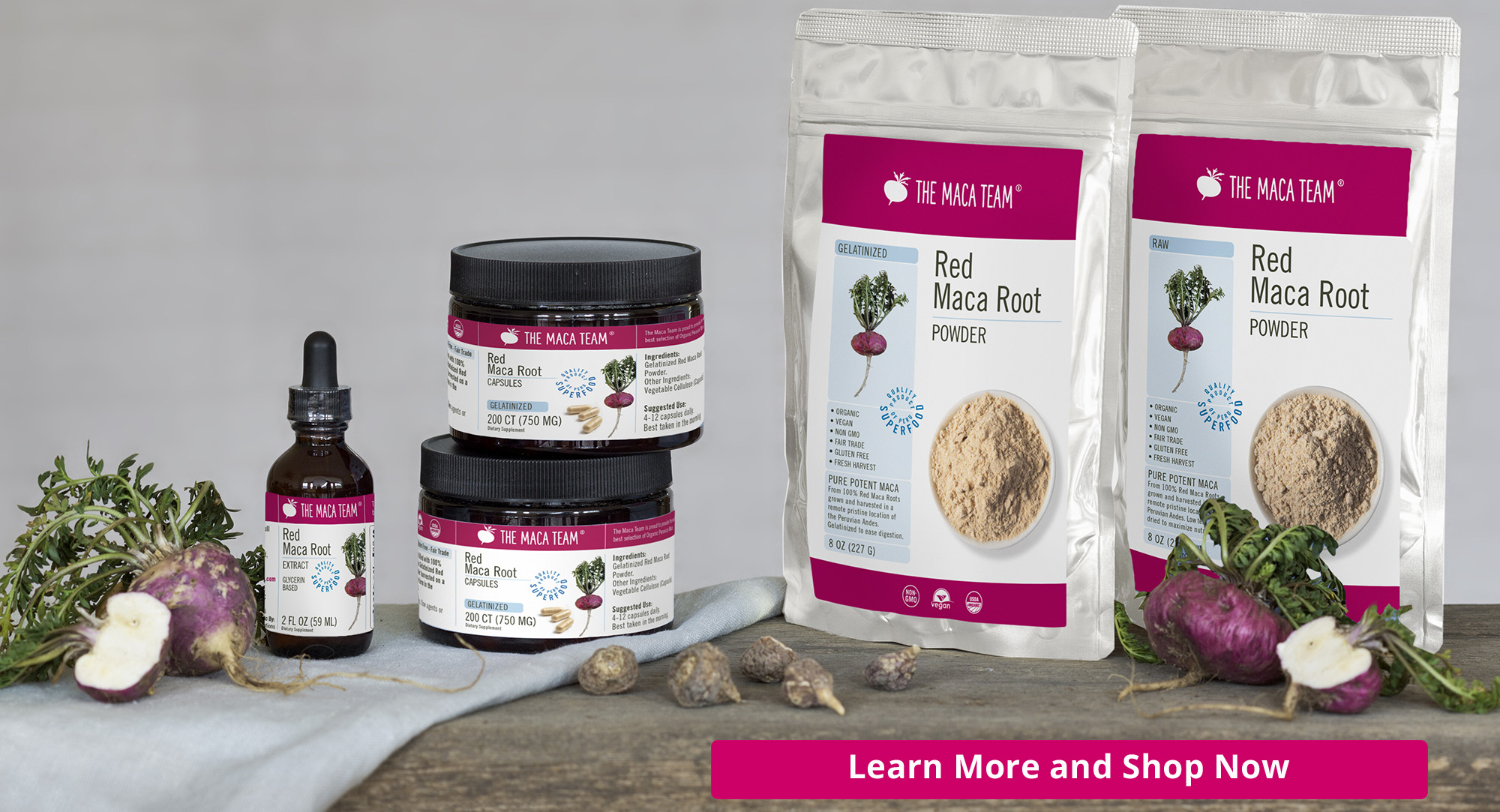
A common daily serving range is between 3 and 9 grams for most people. Maca can be used in powder, capsule, or extract form. Whichever form you choose, consistency is generally the key to evaluating how it fits into your routine.
Which Maca Has the Most Nutritional Content?
All maca colors are broadly similar nutritionally, though red maca is often described as slightly higher in certain phytonutrient levels. For that reason, many people choose red maca when they are primarily interested in nutritional benefits.
More important than color, however, is product quality. Any maca product you take should ideally be:
- Grown in Peru
- Organically grown
- Harvested at the right time
- Processed shortly before packaging
- Stored properly to preserve freshness
Is Maca O.K. for Everyone?
Maca root is a food and is suitable for most people. Those with digestive sensitivity often prefer gelatinized maca instead of raw maca because it is easier to digest.
If you have any doubts or concerns about adding maca root to your diet, consult a knowledgeable healthcare professional.
Frequently Asked Questions
What nutrients are in maca root?
Maca contains carbohydrates, fiber, plant protein, vitamins, minerals, and a number of phytonutrients including glucosinolates, flavonoids, and plant sterols.
Is maca a good source of protein?
Maca contains plant protein and a broad amino acid profile, though it is typically used as part of a varied diet rather than as a primary protein food.
Which maca is best for nutritional benefits?
Many people choose red maca for nutritional benefits, but freshness, quality, and proper sourcing are usually more important than color alone.
How should I take maca for nutrition?
Maca can be taken in powder, capsules, or extract form. Many people use it daily in smoothies, oatmeal, coffee, or other foods.
Final Words
In conclusion, maca is a nutrient-dense food with a distinctive combination of macronutrients, micronutrients, and plant compounds. Its long history of use and unusual nutritional profile are part of what make it such a valued addition to many people’s diets.
Enjoy the day!